
Idaho Climate
Wood Floors in Idaho's Dry Climate: What to Actually Expect
Boise's high-desert air is hard on solid wood — winter gaps are normal physics, not a defect. Here's how acclimation, humidification, and product choice really work here.
Idaho Climate · 7 min read
The Treasure Valley sits in high-desert country, and that single fact shapes how wood floors behave here more than any brand name or finish ever will. Summers are hot and dry, winters are cold and drier still once the furnace is running, and the swing between the two is wider than what wood floors experience in much of the country. None of that means you can't have a beautiful hardwood floor in Boise, Meridian, or Eagle — plenty of homes here have them, and they hold up for decades. It just means the floor will behave like wood in a dry climate, and it's better to know what that looks like before installation day than to be surprised in January.
Wood Is Always Chasing the Air Around It
Wood is hygroscopic: it constantly takes on or gives up moisture until it reaches a balance point with the humidity of the air around it. The USDA Forest Products Laboratory's Wood Handbook — the standard engineering reference on the subject — describes this balance point as equilibrium moisture content, and it moves whenever indoor humidity moves. When the air is more humid, boards absorb moisture and expand across their width. When the air dries out, they release moisture and shrink. The wood isn't failing when it does this; it's doing exactly what wood does.
In Idaho, the dry side of that cycle is the one that matters. Once outdoor temperatures drop and forced-air heat runs for weeks at a stretch, indoor relative humidity in an unhumidified Treasure Valley home can fall to genuinely desert-dry levels. Boards shrink, and thin gaps open between them — most visibly in solid wood floors, in wider planks, and in rooms with the most heating runtime.
Winter Gaps Are Normal — Within Reason
Here's the honest version most flooring ads skip: some seasonal gapping in a solid wood floor is normal in this climate. Hairline gaps that appear in the depths of winter and close back up by summer are the floor breathing with the seasons, not an installation defect. What's not normal is gapping that keeps widening year over year, boards that cup or crown, or gaps large enough to catch debris permanently — those point to a moisture problem, an acclimation shortcut, or a product mismatch that deserves a real diagnosis.
The difference between a floor with modest, tidy seasonal movement and one with distracting gaps usually comes down to three decisions made before the first board goes down: what product was chosen, how it was acclimated, and how the home's humidity is managed afterward.
Acclimation Done Right — Not Just "Leave the Boxes Out"
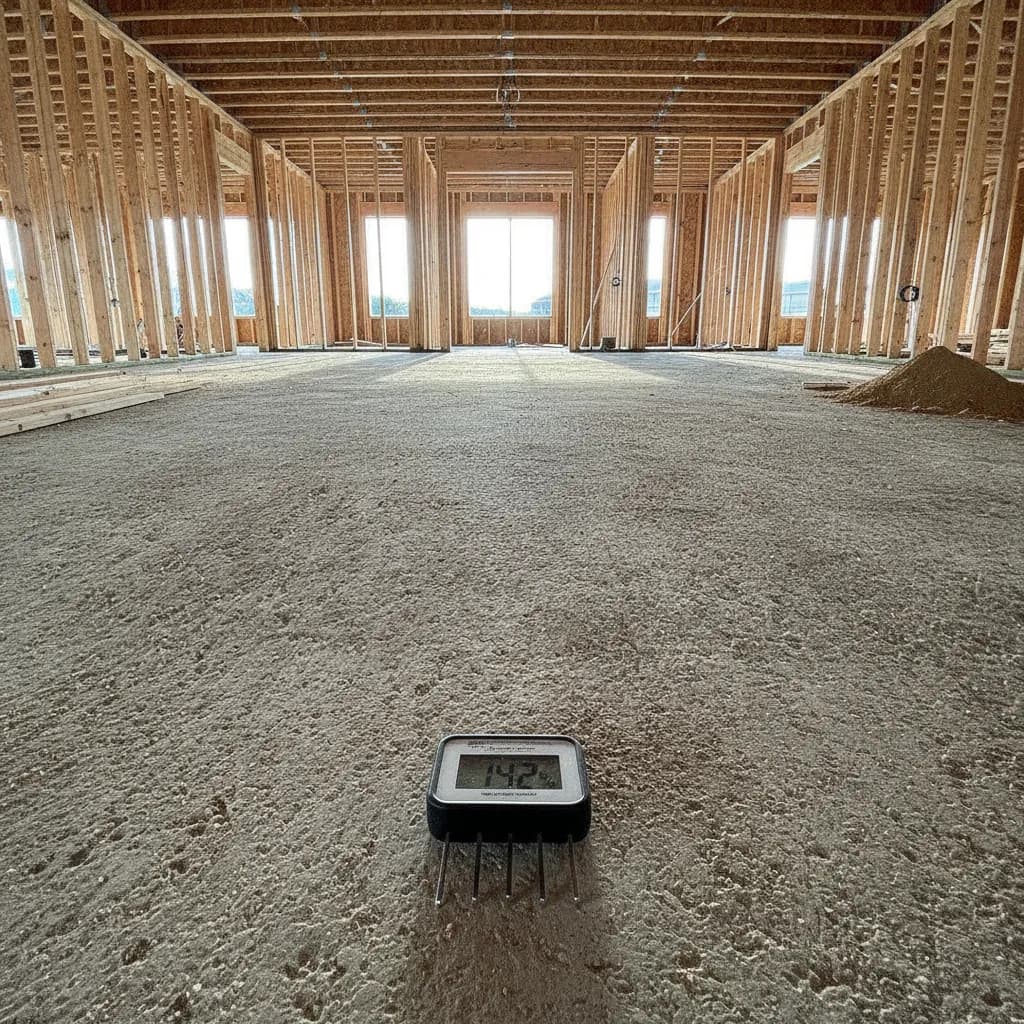
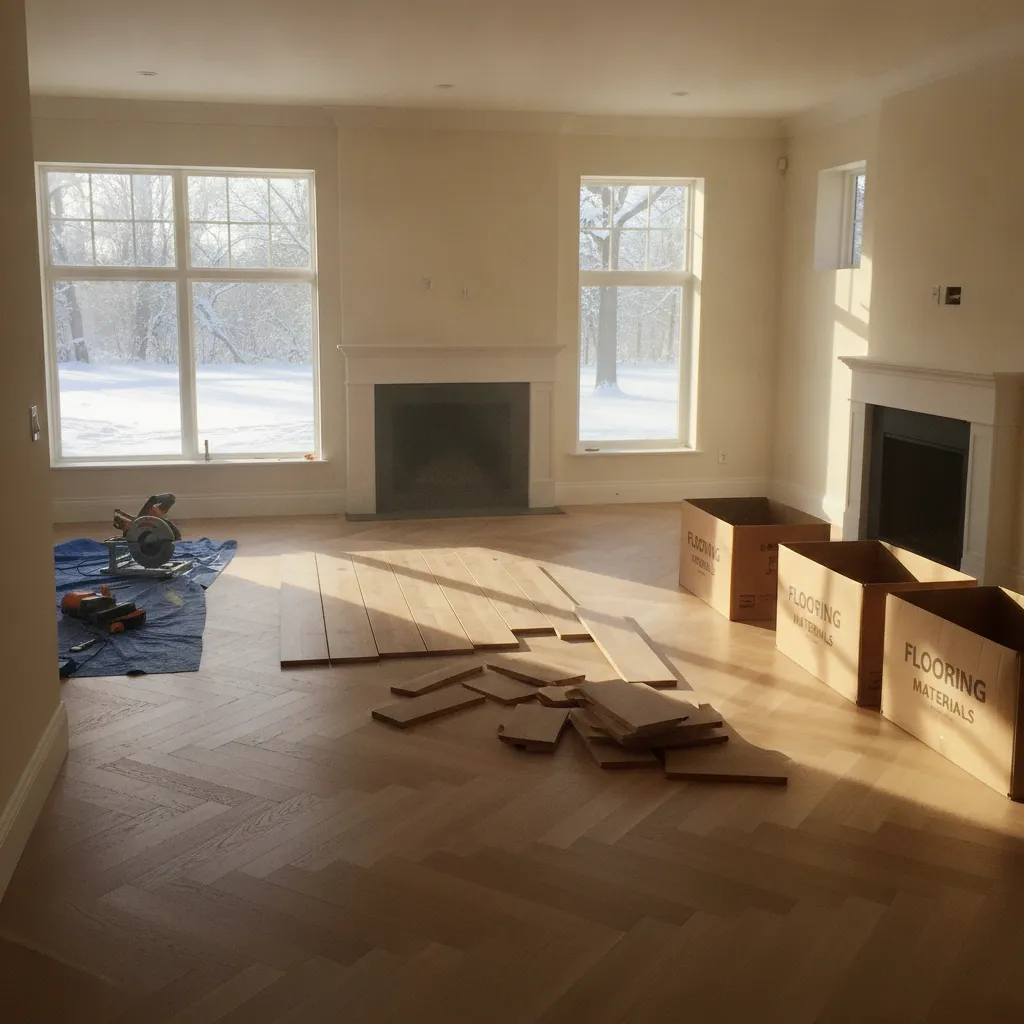
The National Wood Flooring Association's installation guidance treats acclimation as conditioning the flooring to the environment it will actually live in — not simply letting boxes sit in the garage for a fixed number of days. That distinction matters in Idaho. A stack of flooring acclimating in an unconditioned garage in February is equalizing to the wrong environment entirely. Proper acclimation happens inside the conditioned space, with the HVAC running at normal living settings, and it continues until the wood's moisture content is verified with a meter to be in the right relationship with the subfloor — not until a calendar says time's up.
This is also why new-construction timing matters. A house that just had drywall mud, texture, and paint go in is temporarily far more humid than it will ever be again. Flooring acclimated to that short-lived humidity spike will shrink hard once the house dries to its real baseline. Patience here is cheap; gaps are not.
Humidification Helps — Honestly, With Limits
A whole-home humidifier is the single most effective thing an Idaho homeowner can do for a solid wood floor, and we'd rather tell you that plainly than pretend product choice alone solves the climate. Keeping indoor relative humidity in a steadier band through the winter narrows the swing the wood experiences, which directly narrows seasonal gapping. As a practical target, the EPA's indoor-air guidance recommends keeping indoor relative humidity below 60 percent and ideally between 30 and 50 percent — a range that happens to overlap nicely with what wood floors prefer.
Now the honest limits. In a cold Idaho January, holding 40 percent indoor humidity can push moisture into cold window frames and wall cavities as condensation, so there's a ceiling on how far you can humidify safely — and it depends on your windows and insulation, not on what the floor would like. A humidifier narrows the seasonal swing; it doesn't eliminate it. If someone promises you a gap-free solid wood floor in this climate with no caveats, they're selling, not advising.
Product Choice: Where Engineered Earns Its Keep Here
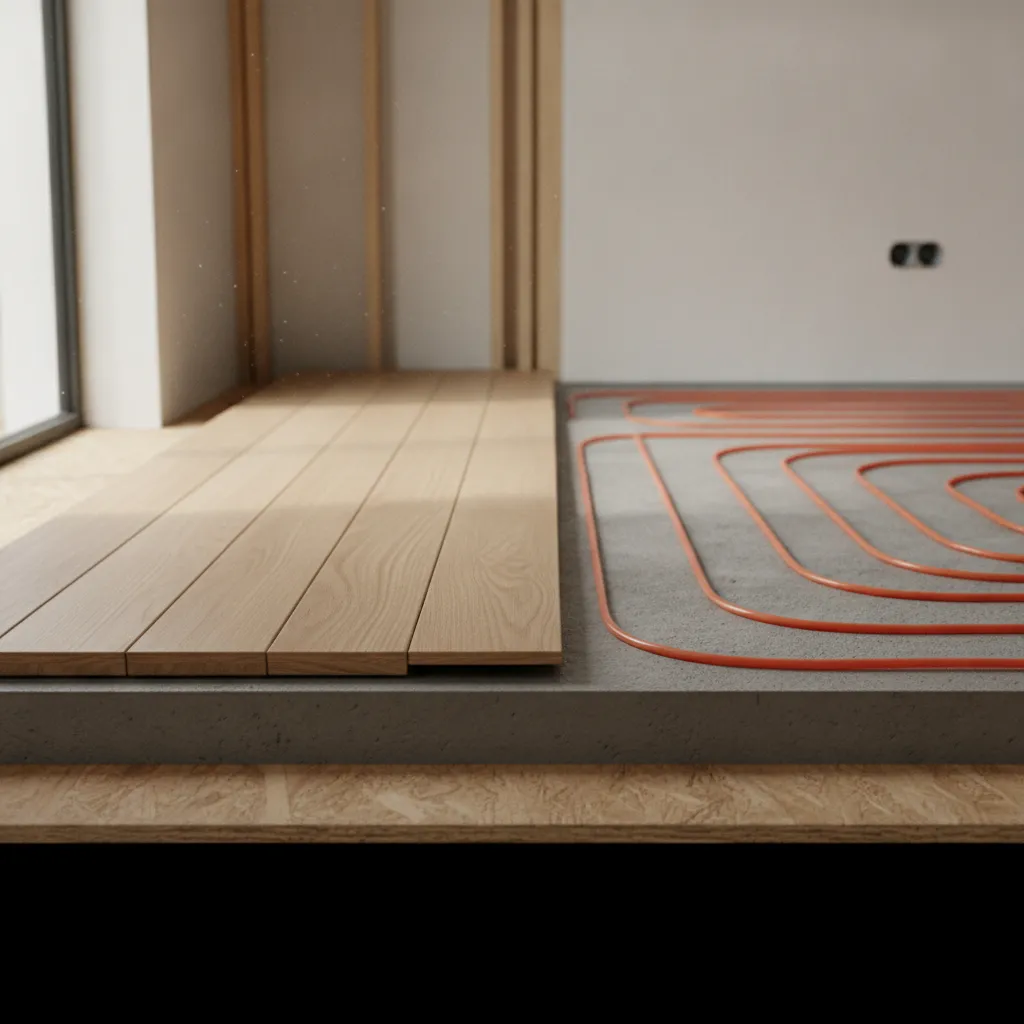
Engineered hardwood — a real wood wear layer over a cross-laminated core — was built for exactly this problem. The layered core resists the width-wise shrinking and swelling that drives gapping, which is why engineered products handle Idaho's humidity swing more gracefully than solid wood of the same species and width. Solid wood remains a great choice here, especially in narrower widths and with good humidity management; it just asks more of the homeowner. Wider planks amplify everything — more width means more absolute movement per board — which is a bigger conversation we cover separately.
What We Recommend for Treasure Valley Homes
Acclimate properly inside conditioned space and verify with a moisture meter rather than a calendar. Run a whole-home humidifier in winter if you're choosing solid wood, and aim for a steady band rather than a perfect number. Favor engineered construction for wide planks, for homes on slabs, and for anyone who doesn't want to think about humidity. And treat modest winter gaps in solid wood as the honest cost of a natural material in a high-desert valley — the same dryness that opens them in January closes them in July.
If you're weighing solid versus engineered for a home anywhere in the Treasure Valley, Alderwood Flooring will give you a straight answer for your specific house, subfloor, and habits — free estimates, no pressure.
Sources
National Wood Flooring Association — technical standards and installation guidance: https://nwfa.org/technical-standards/
USDA Forest Products Laboratory, Wood Handbook: Wood as an Engineering Material (FPL-GTR-190): https://research.fs.usda.gov/treesearch/37440
U.S. EPA — indoor humidity guidance (30–50% RH recommendation): https://www.epa.gov/mold/mold-course-chapter-2
Explore related
Ready for Floors You'll Love?
Ready to talk through your project? Free estimates throughout The Treasure Valley & Boise Metro.