Buying Guide
Builder-Grade LVP: When to Keep It and When to Upgrade
Most new Treasure Valley homes come with the LVP the builder's allowance covered — not the LVP you'd choose. An honest framework for deciding whether it stays.
Buying Guide · 6 min read
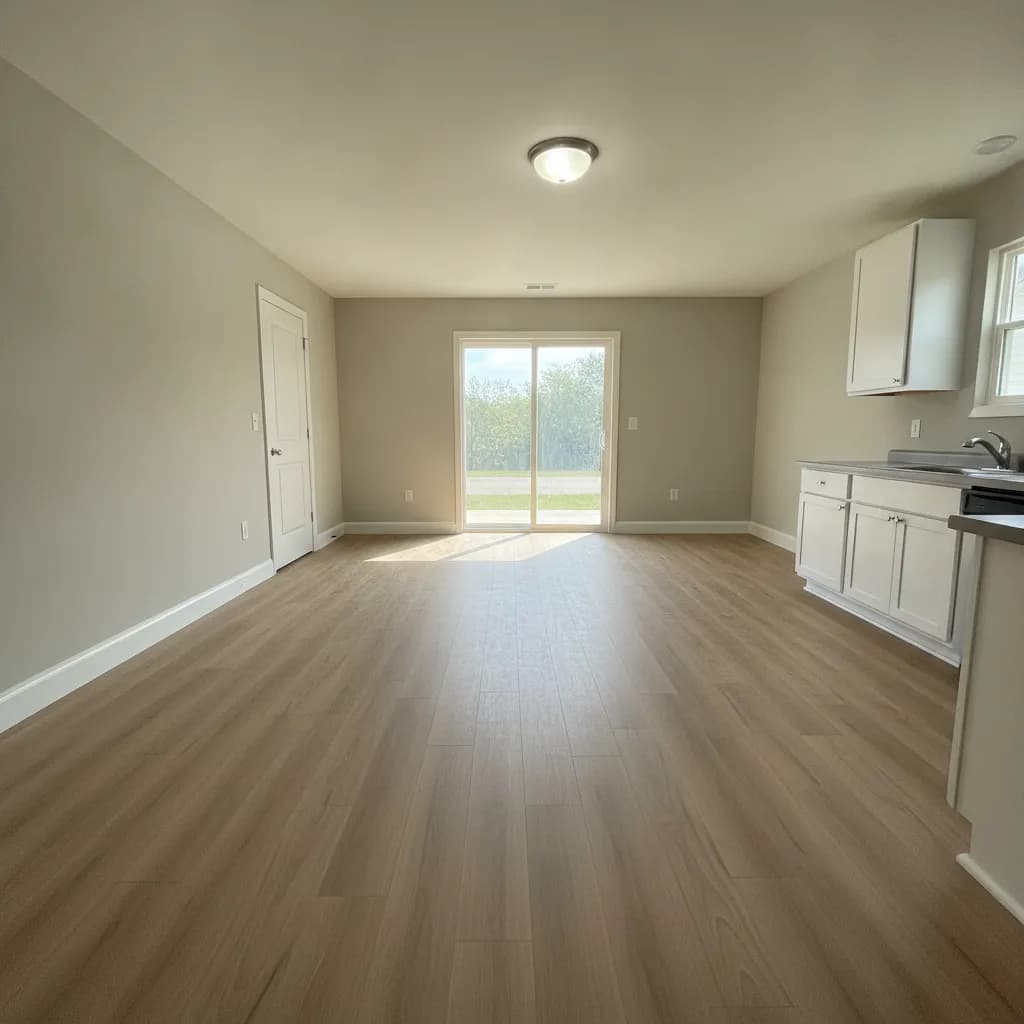
If you bought a new home in Nampa, Kuna, Star, Caldwell, or one of Meridian's newer subdivisions in the last several years, there's a strong chance you're standing on builder-grade luxury vinyl plank right now. It photographs well, it survived the model-home tour, and it was almost certainly chosen by a purchasing department optimizing cost across hundreds of houses — not by anyone thinking about your dogs, your kids, or your next fifteen years in the house. That doesn't automatically make it bad. It makes it unknown, and the honest move is to evaluate it rather than assume in either direction.
What "Builder-Grade" Actually Means
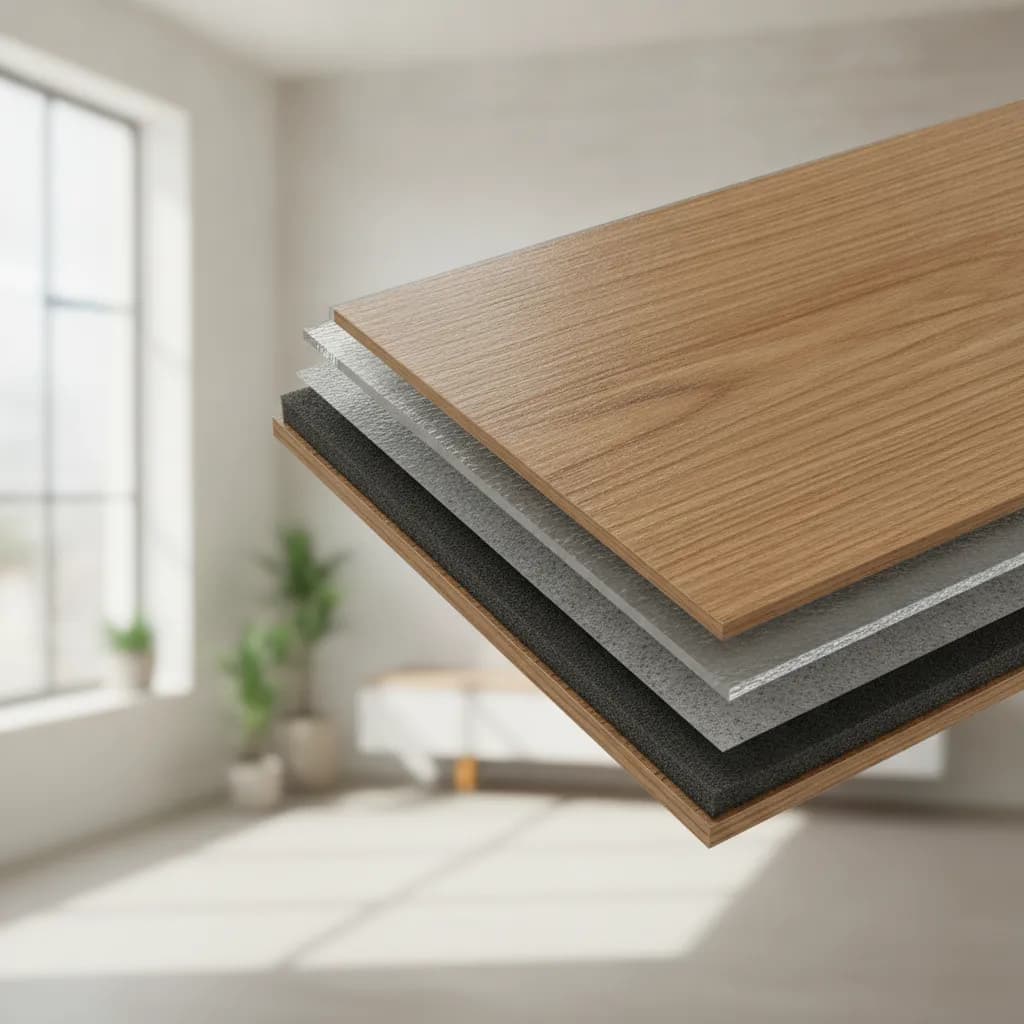
Builder-grade isn't a defined tier — it just describes whatever product hit the builder's price target. In practice, that usually means LVP toward the thinner end of the market: a thinner overall plank, a thinner wear layer (the clear coating that takes all the abrasion), simpler click mechanisms, and minimal or no attached pad. None of that is visible from above, which is why two floors that look identical in a listing photo can have very different lifespans under real traffic. The wear layer is the number that matters most, and it's the one no one mentions at the design center.
To be fair, tract-home LVP has one real advantage: it's usually a sane choice for the setting. Slab-on-grade construction, water-resistant core, floating install — the material category is right for these houses. The question is almost never "was LVP the wrong idea," it's "was this specific LVP built to last as long as you need it to."
When Keeping It Is the Smart Move
Keep builder-grade LVP without guilt when it's performing: seams tight, no wear-through at the pivot points (in front of the sink, the hallway turn, the back door), no lifting edges or hollow spots. Keep it if your time horizon is short — if you may sell within a few years, a clean, neutral, functioning LVP floor is not a liability, and replacing it rarely makes financial sense on the way out. Keep it in low-punishment rooms: guest bedrooms and formal spaces can run thin wear layers for many years because nothing is grinding on them. And keep it if the honest problem is that you dislike the color — that's a legitimate reason to replace a floor eventually, but it's worth naming it as an aesthetic decision rather than dressing it up as a durability one.
The Signs It's Time
Builder-grade LVP announces its retirement in predictable ways. Wear-through or persistent dullness in traffic lanes means the wear layer is gone — and unlike hardwood, there is no refinishing a vinyl floor; once the wear layer is through, the plank is done. Opening seams and corner peaking usually mean the click joints or the plank's dimensional stability are giving up, and they get worse, not better. Widespread hollow-sounding or bouncy areas often trace to subfloor prep the production schedule skipped. And if planks are failing in a kitchen or laundry area from repeated water exposure, take the hint before the subfloor takes the damage.
There's also the deliberate upgrade: many families keep builder LVP through the toddler-and-puppy years precisely because it's disposable, then replace it once with the floor they actually want — a thicker-wear-layer LVP, engineered hardwood, or tile in the wet rooms. Using the builder floor as a sacrificial first act is a completely rational strategy, and we'll never talk you out of it.
If You Do Upgrade, Upgrade the Right Things
Moving from builder-grade to better LVP is mostly about three invisible specs: a meaningfully thicker wear layer, a rigid core with a quality locking system, and proper subfloor prep this time. If you're stepping up to engineered hardwood instead, remember you're changing categories — real wood brings real refinishing potential and real resale warmth, and also real sensitivity to Idaho's dry winters and to slab moisture, both of which are manageable and worth understanding first. Either way, the upgrade you'll feel daily is as much in the installation quality as the product.
For Anyone Flooring at the Design-Center Stage
If you're earlier in the process — still choosing options on a build — flooring is one of the places where knowing what the allowance actually buys pays off. We work with homeowners and builders across the valley on exactly these decisions, and we're building out a dedicated resource hub for new-construction flooring at /builders that goes deeper on allowances, upgrade timing, and what to ask your builder before drywall.
Quick Answers
Can builder-grade LVP be refinished? No — vinyl has no sacrificial wood to sand. When the wear layer is gone, replacement is the only fix, which is why the wear layer spec is the whole ballgame. Can a single damaged plank be replaced? Often yes, especially with floating click-lock floors, if you can source matching planks — worth asking your builder for the product name and buying a spare box while it's still made. Will new flooring match the height of the old? Not always: thicker LVP, engineered wood, or tile can change transition heights at doorways and appliances, which a good installer plans for rather than discovers. And is it worth testing the slab before upgrading? If the home is only a year or two old, or you're moving to glue-down wood, yes — newer slabs can still be releasing construction moisture, and testing is cheap insurance.
If you're staring at your builder floor wondering which category it falls into, Alderwood Flooring will give you an honest read — sometimes the answer really is "keep it, it's fine." Free estimates throughout the Treasure Valley.
Sources
National Wood Flooring Association — technical standards (for engineered hardwood upgrades): https://nwfa.org/technical-standards/
Wagner Meters — concrete slab moisture testing before flooring replacement: https://www.wagnermeters.com/concrete-moisture-test/
Explore related
Ready for Floors You'll Love?
Ready to talk through your project? Free estimates throughout The Treasure Valley & Boise Metro.