Flooring
Engineered Hardwood in the Treasure Valley
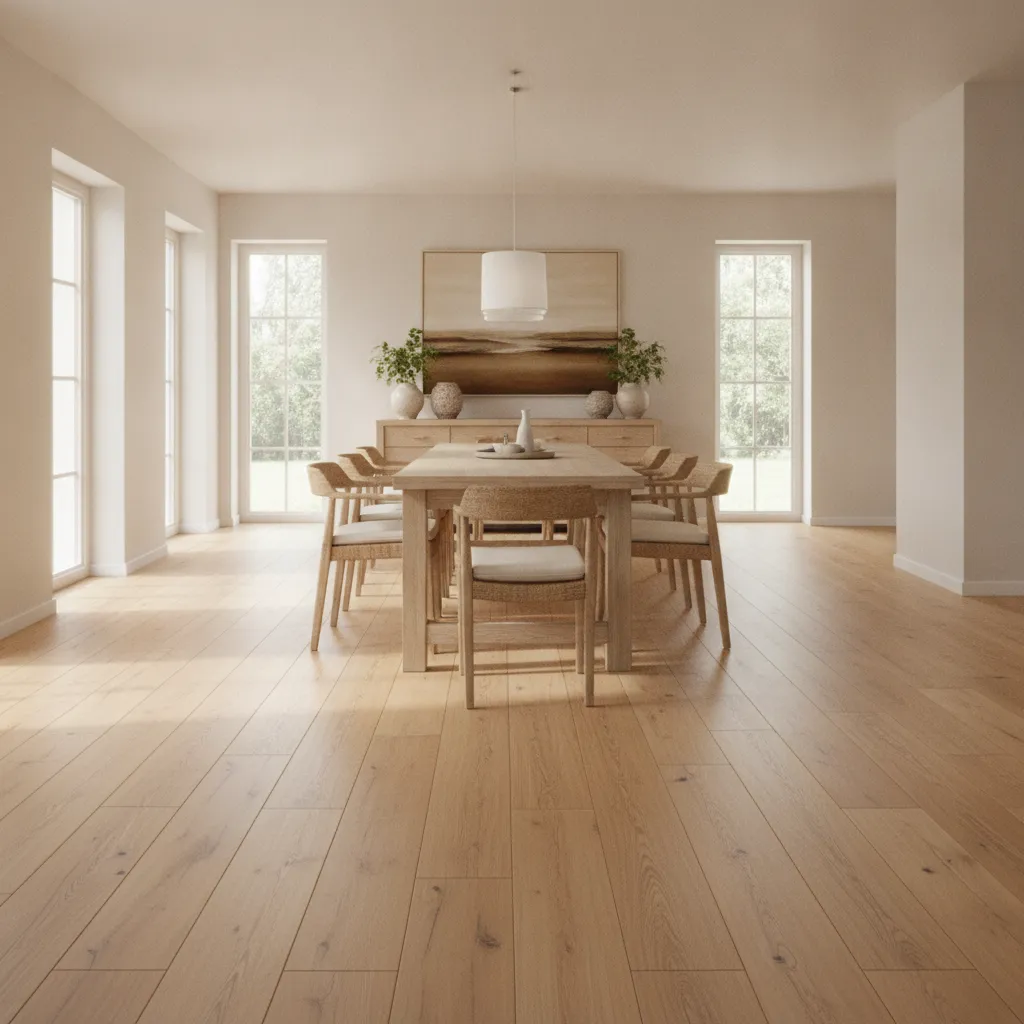
Engineered hardwood pairs a genuine wood surface with a dimensionally stable core, so it rides out Treasure Valley heating-season dryness — and it's the wood we trust over radiant systems and concrete slabs.
Overview
Beautiful, Lasting Engineered Hardwood
Engineered hardwood gives you a genuine wood surface riding on a cross-laminated core that barely flinches at humidity swings — which makes it arguably the best-matched wood floor for the Treasure Valley's dry winters, concrete basements, and the slab-on-grade construction spreading through the newer growth corridors. It's also the wood category we reach for over radiant heat, where a stable core matters more than tradition.
Get a Free EstimateWhy It Works
Why Homeowners Choose Our Engineered Hardwood
Built for Dry-Climate Stability
The layered core resists the shrink-and-swell cycle that our heating season imposes on solid planks, so wide, modern boards stay tight through winter even in homes without a humidifier running around the clock.
Concrete-Friendly
Basement family rooms in Boise, slab-built houses in Kuna and Star, garage conversions — engineered wood can be glued or floated over concrete that solid hardwood should never touch, once our moisture readings clear the slab for it.
The Wood We Trust on Radiant Heat
Where a home runs hydronic radiant — more common in custom builds and McCall-area cabins — engineered hardwood is the wood-floor answer, installed within the manufacturer's surface-temperature limits and paired with sensible controls.
Wide Plank Without the Worry
Today's 7-to-9-inch European-oak looks are engineered products for a reason: the core carries the width so the face doesn't have to fight the climate. You get the big-plank visual without wide-solid movement.
Options & Styles
Engineered Hardwood Options We Install
We help you choose the right product for your rooms, your budget, and how you live.
Wear Layer Thickness
Faces run from about 1 mm veneer up to 4 mm and beyond. Thicker wear layers can be professionally resanded down the road; thinner ones trade refinishability for price. We'll show you where each tier makes sense for the room and how long you plan to own the home.
Plywood vs. HDF Cores
Multi-ply plywood cores handle fasteners and moisture variation gracefully; high-density fiberboard cores are ultra-flat and economical but less tolerant of water. Substrate and room decide which we recommend.
European White Oak Styles
The dominant look in Eagle and Meridian new builds — long, wide planks with wire-brushed texture and matte finishes from pale natural to smoked and fumed tones.
Hickory & Domestic Species
Engineered hickory, maple, and American oak bring familiar Northwest character with the dimensional stability our winters demand — a strong choice for active households that still want real wood underfoot.
Finish Technology
Aluminum-oxide urethanes for maximum scratch resistance, or hardwax-oil surfaces that repair invisibly spot-by-spot but ask for periodic re-oiling. Both are legitimate; they just suit different owners.
Install Methods
Nail-down over wood subfloors, full-spread glue-down over concrete, or floating click systems where the substrate calls for it — the product line and your home's structure pick the method, not habit.
Good to Know
Before You Choose
- Engineered doesn't mean waterproof. The face is real wood and reacts to standing water like real wood; for laundry rooms and kids' baths we'll still point you toward tile or vinyl plank.
- Refinishing depends entirely on the wear layer you buy today. A 3 mm-plus face can be sanded like solid wood at least once; a thin veneer cannot — so the cheapest engineered board is sometimes the most expensive over twenty years.
- Every concrete pour gets tested before wood goes over it. New slabs in fast-growing subdivisions can hold construction moisture for months after closing, and skipping the test is how cupped floors happen.
- Radiant systems need the floor and the heat to be designed together — surface temperature caps, outdoor reset controls, and an approved product. We confirm compatibility in writing rather than assuming.
- Acclimation still applies. The core is stable, not immune; cartons rest in the conditioned space and we verify moisture numbers before the first row locks in.
Our Services
Everything We Install
A full range of flooring installation and finishing services.
Hardwood Flooring
Solid white oak, hickory, and maple — acclimated on site for Idaho's dry climate.
Engineered Hardwood
Real-wood wear layers on a stable core — built for dry winters and radiant heat.
Luxury Vinyl Plank
Waterproof, wood-look LVP that shrugs off snow boots, pets, and busy households.
Laminate Flooring
Tough, realistic laminate that stretches a flooring budget without looking like it.
Sheet Vinyl
Seamless, water-resistant sheet vinyl for laundry rooms and utility spaces.
Tile Flooring
Porcelain and ceramic tile set flat and level — snow-country entries included.
Natural Stone
Travertine, slate, and marble installed and sealed with a craftsman's care.
Carpet Installation
Power-stretched carpet with proper pad for bedrooms, basements, and stairs.
Floor Installation
Complete installs — demo, moisture testing, subfloor prep, and finish trim.
Floor Refinishing
Sand, stain, and refinish tired hardwood instead of tearing it out.
Floor Repair
Board swaps, gap and squeak fixes, and water-damage repairs that disappear.
Stairs & Treads
Hardwood treads, risers, and runners with tight, precise detailing.
Epoxy Garage Floors
Hard-wearing epoxy and polyaspartic coatings for garages and shops.
Where We Work
Engineered Hardwood Across the Treasure Valley
Compare
Engineered Hardwood vs. Other Floors
Where It Works
Rooms Where Engineered Hardwood Shines
Good to Know
Frequently Asked Questions
Is engineered hardwood real wood?
Yes — the surface you see and walk on is a solid sawn or sliced layer of genuine hardwood. What differs is underneath: instead of one thick plank, the face is bonded to a layered core built to stay flat. From above, a quality engineered floor is indistinguishable from solid.
Why do you recommend engineered over solid for so many Treasure Valley homes?
Two local realities: bone-dry heated winters that make solid planks shrink, and a growing share of homes on concrete slabs where nail-down solid isn't an option at all. Engineered handles both. Where a crawlspace home with a wood subfloor wants traditional solid oak, we'll happily install that instead — the house decides.
Can engineered wood be refinished?
If the wear layer is thick enough, yes. Roughly 2 mm gives you a light resand; 3–4 mm behaves much like solid wood for one or two full refinishes. We put the wear-layer spec in your quote so you know exactly what you're buying.
Does engineered hardwood work over in-floor radiant heat?
It's the wood floor made for it. We match an approved product to your system, keep surface temperatures inside the manufacturer's ceiling, and coordinate a gradual warm-up schedule after installation so the floor settles in without stress.
Floating, glue-down, or nail-down — which is better?
Each has a right home. Nail-down feels most traditional over wood subfloors; glue-down is quietest and most solid over concrete; floating installs fast and suits certain click-lock products and substrates. We'll explain which your structure supports and why, in plain terms.
How do I get a price for my project?
Send the basics through our contact form and we'll set up a free in-home visit — measuring the rooms, checking subfloor or slab condition, and pricing the exact product tier you're considering. The number you receive is itemized and firm.
Ready for Floors You'll Love?
Free estimates on engineered hardwood throughout The Treasure Valley & Boise Metro.