Flooring
Natural Stone in the Treasure Valley
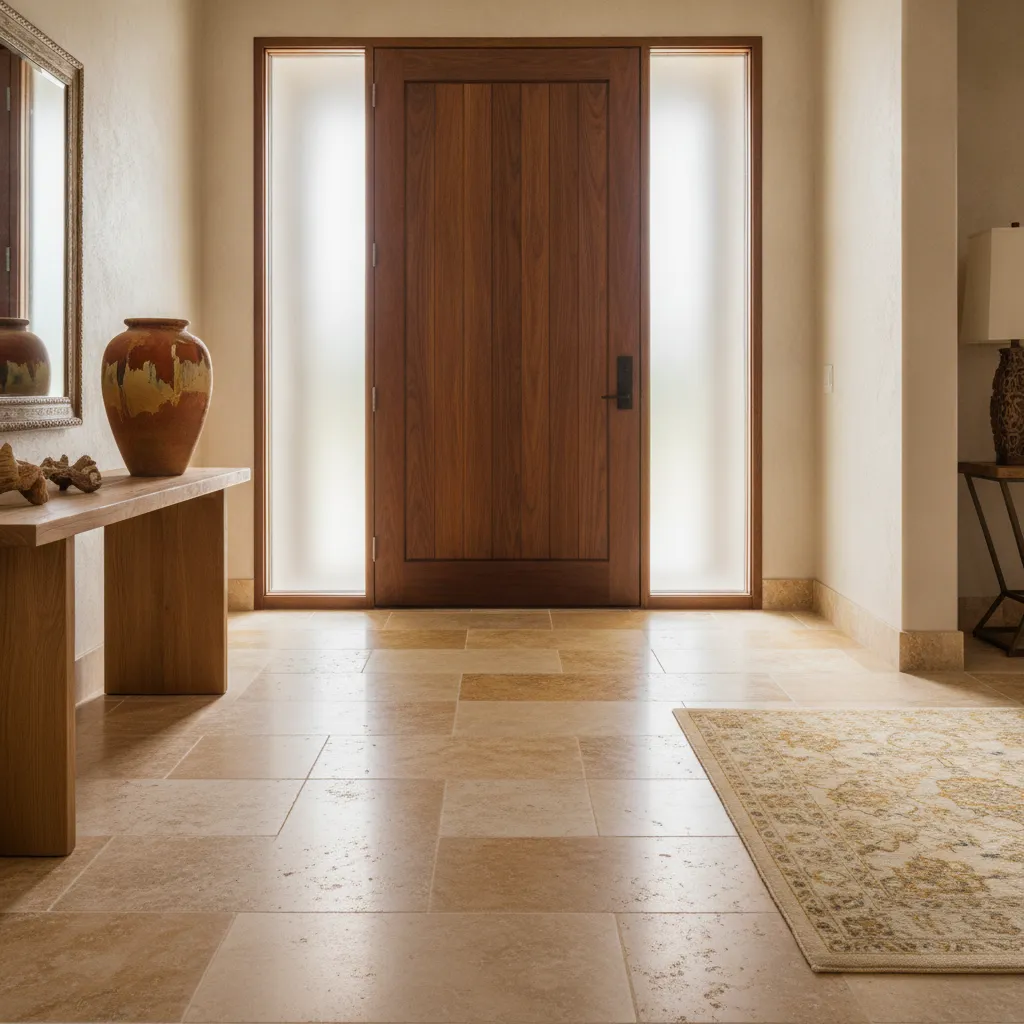
Natural stone flooring — travertine, slate, limestone, and marble — installed, grouted, and sealed to bring permanent character to entries, baths, and mountain-home great rooms.
Overview
Beautiful, Lasting Natural Stone
Natural stone is flooring with a geologic memory — no two travertine fields or slate entries are ever alike, and a stone floor done right becomes the permanent character of a home. We install, grout, and seal travertine, slate, limestone, and marble with the respect the material demands: honest guidance about which stones suit which rooms, and sealing schedules explained before you commit, not after the first stain.
Get a Free EstimateWhy It Works
Why Homeowners Choose Our Natural Stone
Character No Factory Can Print
Veining, fossils, tonal drift across a floor — stone's variation is the point. We lay out from multiple crates and blend the range deliberately so the finished field reads as one natural surface.
At Home in Foothills Architecture
Slate entries and travertine great rooms suit the mountain-modern and lodge sensibilities of Boise foothills and Payette Lakes homes — materials that look like they belong to the landscape outside the windows.
Mass That Loves Radiant Heat
Stone's thermal mass holds and radiates warmth evenly, making it a superb partner over hydronic systems in high-end builds where the floor is part of the heating design.
Set by Careful Hands
Stone tiles vary in thickness and squareness far more than porcelain; setting them flat takes back-buttering, lippage discipline, and patience. That craft difference is visible the moment light rakes across the room.
Options & Styles
Natural Stone Options We Install
We help you choose the right product for your rooms, your budget, and how you live.
Travertine
Warm, pitted limestone character in honed or tumbled finishes — filled for smooth interiors or unfilled for rustic texture. A natural fit for great rooms and sunrooms.
Slate
Cleft-textured, slip-resistant, and nearly indifferent to water — the traditional pick for entries and mudrooms that earn their keep through Idaho winters.
Limestone
Soft, even tones from cream to gray with subtle fossil detail; elegant in baths and formal spaces, with a porosity that makes conscientious sealing part of the deal.
Marble
The formal classic — dramatic veining for baths and foyers. We're upfront that marble etches under acids and prefers households that will treat it as the finish material it is.
Finishes & Formats
Polished, honed, tumbled, and brushed surfaces; standard tiles, French/Versailles patterns, and mosaic accents — each finish shifting both the look and the slip and maintenance profile.
Good to Know
Before You Choose
- Every natural stone is porous to some degree and needs penetrating sealer on a recurring schedule — entries and kitchens more often than bedrooms. We hand you the actual schedule for your stone at completion instead of leaving you to guess.
- Acid sensitivity is real for calcite stones: vinegar, citrus, and some cleaners will etch marble, limestone, and travertine. If the room's users won't live carefully, slate or a stone-look porcelain is the kinder recommendation and we'll make it.
- Stone's weight and thickness variation demand a stiffer, flatter substrate than ceramic tile — wood-framed floors sometimes need reinforcement, which we assess and price honestly during the estimate rather than discovering later.
- Expect and embrace variation: your floor will not match the sample board exactly. We encourage clients to view and approve their actual crates before setting begins.
- Ice-melt chemicals tracked in over winter are hard on some stones and sealers; a sacrificial walk-off zone or slate selection at exterior doors saves the field beyond it.
Our Services
Everything We Install
A full range of flooring installation and finishing services.
Hardwood Flooring
Solid white oak, hickory, and maple — acclimated on site for Idaho's dry climate.
Engineered Hardwood
Real-wood wear layers on a stable core — built for dry winters and radiant heat.
Luxury Vinyl Plank
Waterproof, wood-look LVP that shrugs off snow boots, pets, and busy households.
Laminate Flooring
Tough, realistic laminate that stretches a flooring budget without looking like it.
Sheet Vinyl
Seamless, water-resistant sheet vinyl for laundry rooms and utility spaces.
Tile Flooring
Porcelain and ceramic tile set flat and level — snow-country entries included.
Natural Stone
Travertine, slate, and marble installed and sealed with a craftsman's care.
Carpet Installation
Power-stretched carpet with proper pad for bedrooms, basements, and stairs.
Floor Installation
Complete installs — demo, moisture testing, subfloor prep, and finish trim.
Floor Refinishing
Sand, stain, and refinish tired hardwood instead of tearing it out.
Floor Repair
Board swaps, gap and squeak fixes, and water-damage repairs that disappear.
Stairs & Treads
Hardwood treads, risers, and runners with tight, precise detailing.
Epoxy Garage Floors
Hard-wearing epoxy and polyaspartic coatings for garages and shops.
Where We Work
Natural Stone Across the Treasure Valley
Compare
Natural Stone vs. Other Floors
Where It Works
Rooms Where Natural Stone Shines
Good to Know
Frequently Asked Questions
Which natural stone holds up best in a busy household?
Slate and denser granites take daily abuse with the most grace — slip-resistant, stain-tolerant, and forgiving of grit. Travertine and limestone do fine in living spaces with mats at the doors and current sealer. Marble is the one we reserve for lower-traffic, higher-care rooms and say so plainly.
How often does stone flooring need sealing?
It varies by stone and room: a slate mudroom might want fresh penetrating sealer roughly yearly, while a limestone bedroom floor can often go several years. A simple water-drop test tells you when — if water darkens the stone instead of beading, it's time. We show you the test before we leave.
Is natural stone colder than tile in winter?
They feel similar — both are masonry and take on room temperature. The difference-maker is radiant heat, where stone's mass excels; over hydronic tubing a travertine floor becomes the warmest surface in the house rather than the coolest.
Can stone flooring work in a McCall cabin that sits empty in winter?
With the right choices, yes — freeze-tolerant stones like slate and granite, appropriate setting systems, and attention to what happens if the building goes unheated. It's a specific design conversation we'd want to have looking at the actual structure and its winterization plan.
Why does stone installation cost more than porcelain?
Three drivers: the material itself, the heavier substrate requirements, and the slower, more exacting setting work stone's natural irregularity demands — plus sealing as a finish step. When budget matters more than authenticity, we'll show you porcelain interpretations of the same looks without any judgment.
How do we start a stone project?
Through the contact form — tell us the room and the look you're drawn to. We'll evaluate your subfloor's suitability, walk you through stone options with their honest maintenance profiles, and deliver a complete itemized proposal.
Ready for Floors You'll Love?
Free estimates on natural stone throughout The Treasure Valley & Boise Metro.