Services
Epoxy Garage Floors in the Treasure Valley
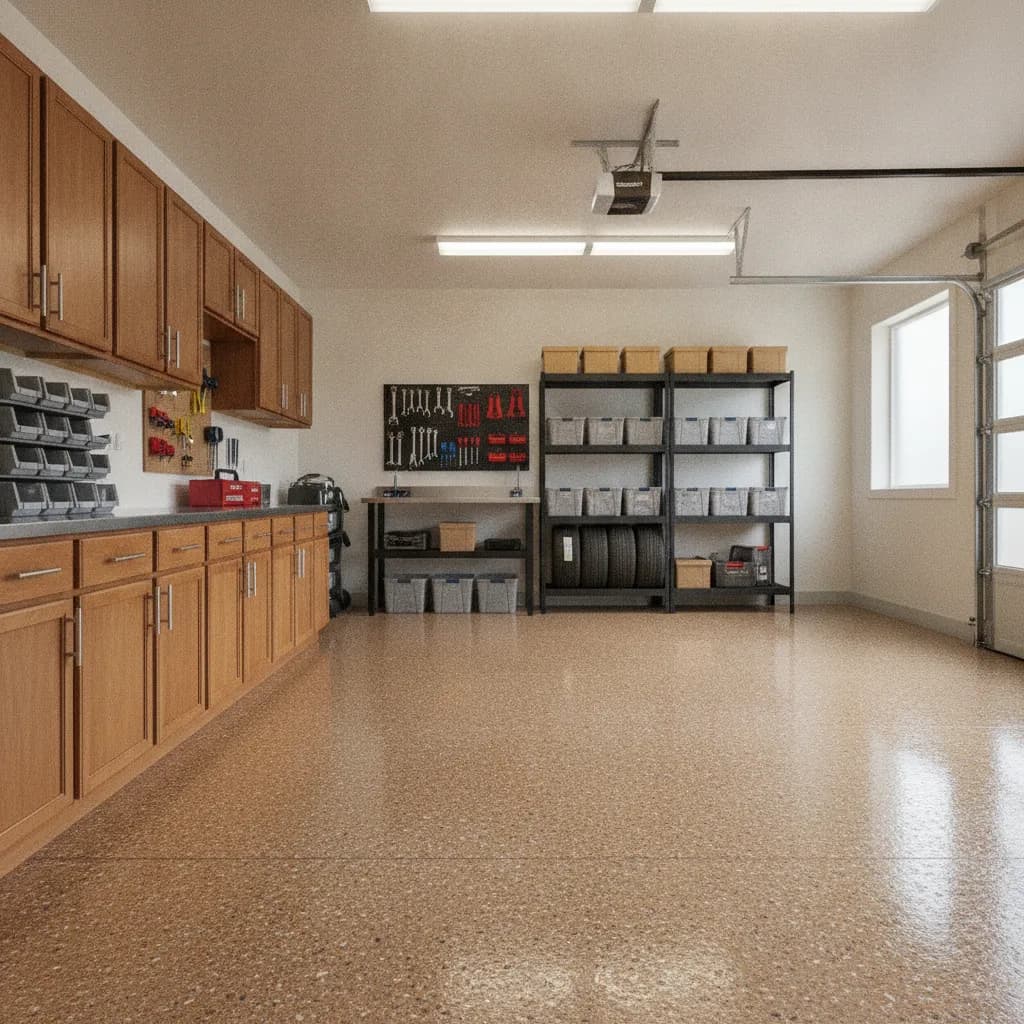
Epoxy and polyaspartic garage coatings over properly ground and prepped concrete — a tough, easy-clean surface that handles road salt, snowmelt drip, and shop life.
Overview
Careful, Reliable Epoxy Garage Floors
An Idaho garage floor lives a hard life: snowmelt and ice-melt brine dripping off vehicles all winter, hot tires in August, dropped tools, bikes, and the sled gear staging area every weekend from December through March. We build coating systems that survive all of it — starting with diamond-grinding the concrete, because a garage coating is only ever as good as its bond.
Get a Free EstimateWhy It Works
Why Homeowners Choose Our Epoxy Garage Floors
Ground, Never Acid-Etched
Mechanical diamond grinding opens the concrete's pores uniformly and removes laitance and old sealers — the profile a coating needs to bond permanently. Acid etching, the shortcut behind most peeling DIY floors, doesn't come on our trucks.
Winter Brine Doesn't Win
The magnesium- and calcium-chloride film that Treasure Valley and McCall roads wear all winter destroys bare concrete over time and stains it permanently. A coated floor turns that corrosive slush into something you squeegee out the door.
Hot-Tire Proof Chemistry
Tire plasticizers soften cheap coatings until the tread peels them up — the classic failure of hardware-store kits. The commercial-grade systems we install are formulated specifically to hold under hot rubber, summer after summer.
Bright, Cleanable Workspace
A light flake or solid-color floor bounces lumens around a shop dramatically, and oil, sawdust, and mud wipe off a sealed surface instead of soaking in. Garages become rooms people actually use.
Options & Styles
Epoxy Garage Floors Options We Install
We help you choose the right product for your rooms, your budget, and how you live.
Full-Flake Polyaspartic Systems
The flagship: vinyl flake broadcast to refusal in a polyaspartic topcoat — UV-stable so sun through the open door never yellows it, textured for grip, and often installed in a single day with next-day drive-on.
Epoxy Base Systems
High-build epoxy bases deliver excellent thickness and chemical resistance at a friendlier price point; paired with a UV-stable topcoat they're a proven workhorse for shops and outbuildings.
Solid-Color Coatings
Clean single-tone floors in grays and tans for a commercial-workshop aesthetic — with added traction media where slope or water exposure calls for it.
Shop, Basement & Utility Concrete
The same systems extend to detached shops, mechanical rooms, and unfinished basement floors — anywhere bare concrete is dusting, staining, or just dark.
Crack & Spall Repair
Joints honored, random cracks routed and filled with flexible-rigid repair materials, spalls and pitting rebuilt — so the finished surface is smooth and the flaws don't telegraph back through.
Containment & Cove Details
Stem-wall coating returns and cove details that let you hose toward the door without wicking water into drywall — small touches that make winter cleanup genuinely easy.
Good to Know
Before You Choose
- Concrete moisture decides the system. Slabs without vapor barriers — common in older garages and some shops — can push moisture that blisters standard coatings; we test first and use vapor-tolerant primers when the readings call for them.
- Temperature drives scheduling more than the calendar does: products have application windows, and an unheated garage in January may need temporary heat or a better week. We'd rather move a date than own a cure failure.
- New concrete needs to finish curing — figure roughly a month old minimum before coating, which matters if you're coordinating with a new build or a fresh slab pour.
- No coating makes concrete structural: active cracks from settling or heaving will eventually shadow through any floor. We repair and honor movement joints honestly and tell you which cracks are cosmetic history versus ongoing motion.
- Plan the garage's downtime: contents out, roughly a day of grinding and coating, then typically overnight before foot traffic and a day or so before parking, system depending. We put exact re-entry times in writing.
Our Services
Everything We Install
A full range of flooring installation and finishing services.
Hardwood Flooring
Solid white oak, hickory, and maple — acclimated on site for Idaho's dry climate.
Engineered Hardwood
Real-wood wear layers on a stable core — built for dry winters and radiant heat.
Luxury Vinyl Plank
Waterproof, wood-look LVP that shrugs off snow boots, pets, and busy households.
Laminate Flooring
Tough, realistic laminate that stretches a flooring budget without looking like it.
Sheet Vinyl
Seamless, water-resistant sheet vinyl for laundry rooms and utility spaces.
Tile Flooring
Porcelain and ceramic tile set flat and level — snow-country entries included.
Natural Stone
Travertine, slate, and marble installed and sealed with a craftsman's care.
Carpet Installation
Power-stretched carpet with proper pad for bedrooms, basements, and stairs.
Floor Installation
Complete installs — demo, moisture testing, subfloor prep, and finish trim.
Floor Refinishing
Sand, stain, and refinish tired hardwood instead of tearing it out.
Floor Repair
Board swaps, gap and squeak fixes, and water-damage repairs that disappear.
Stairs & Treads
Hardwood treads, risers, and runners with tight, precise detailing.
Epoxy Garage Floors
Hard-wearing epoxy and polyaspartic coatings for garages and shops.
Where We Work
Epoxy Garage Floors Across the Treasure Valley
Good to Know
Frequently Asked Questions
Polyaspartic or epoxy — what's the honest difference?
Epoxy builds thickness economically and resists chemicals well but chalks under UV and cures slowly; polyaspartic is UV-stable, more flexible, and cures fast enough for one-day installs, at a higher material cost. Many of our best floors are hybrids — epoxy or specialized primer for the base, polyaspartic for the topcoat — using each chemistry where it's strongest.
Why do so many DIY epoxy floors peel?
Almost always preparation: paint-roller kits over acid-etched or merely cleaned concrete can't anchor, and hot tires find that weakness the first summer. Diamond grinding, moisture awareness, and commercial-thickness products are the whole difference — it's a prep trade wearing a coating trade's name.
Will the floor be slippery when my car drips snowmelt?
Flake systems carry natural texture, and we can add traction media to any topcoat for steeper drivecuts or wetter use. Wet coated concrete with texture generally grips comparably to wet bare concrete — while being enormously easier to get dry and clean again.
How long does a garage coating actually last?
A professionally ground and installed system in residential service routinely runs 10 to 20 years; flake floors also hide wear gracefully as they age. The failure stories you hear are almost universally prep failures in year one or two, not honest wear-out.
Can you coat my garage in winter?
Often yes — attached Treasure Valley garages usually hold workable temperatures, and temporary heat covers the rest. Deep-cold snaps and unheated mountain outbuildings may wait for a warmer window; we check the forecast against the product's cure requirements and schedule honestly.
What affects the price of a garage floor?
Square footage, concrete condition (repairs and moisture findings), and the system tier you choose. Send your garage size and a couple photos through the contact form and we'll follow up with a free on-site check of the slab and a firm, no-surprises quote.
Ready for Floors You'll Love?
Free estimates on epoxy garage floors throughout The Treasure Valley & Boise Metro.