
Flooring Reference
Flooring Care & Maintenance Guide
How to keep every kind of floor looking its best — the universal habits, the material-by-material specifics, and the Idaho-climate details most guides skip.
A good floor, cared for reasonably, lasts a long time — and most of the care that matters is simple and cheap. The mistakes that shorten a floor’s life are usually the avoidable ones: standing water, the wrong cleaner, grit left to grind in, or dry winter air ignored until the boards gap.
Below are the habits that apply to every floor, then the specifics for each material we install. When in doubt, gentler is safer — and you can always ask us.
The Basics
Habits That Protect Any Floor
- Put walk-off mats at every exterior door — most wear is grit tracked in from outside
- Sweep or dust-mop regularly; grit is abrasive and scratches finishes over time
- Wipe spills promptly, even on waterproof floors, so nothing sits at seams
- Use felt pads under furniture legs and replace them as they wear
- Keep pet nails trimmed and avoid dragging heavy furniture
- Run a whole-home humidifier in winter for wood floors — Idaho's dry air is the real enemy
Material by Material
How to Care for Each Floor Type
Hardwood
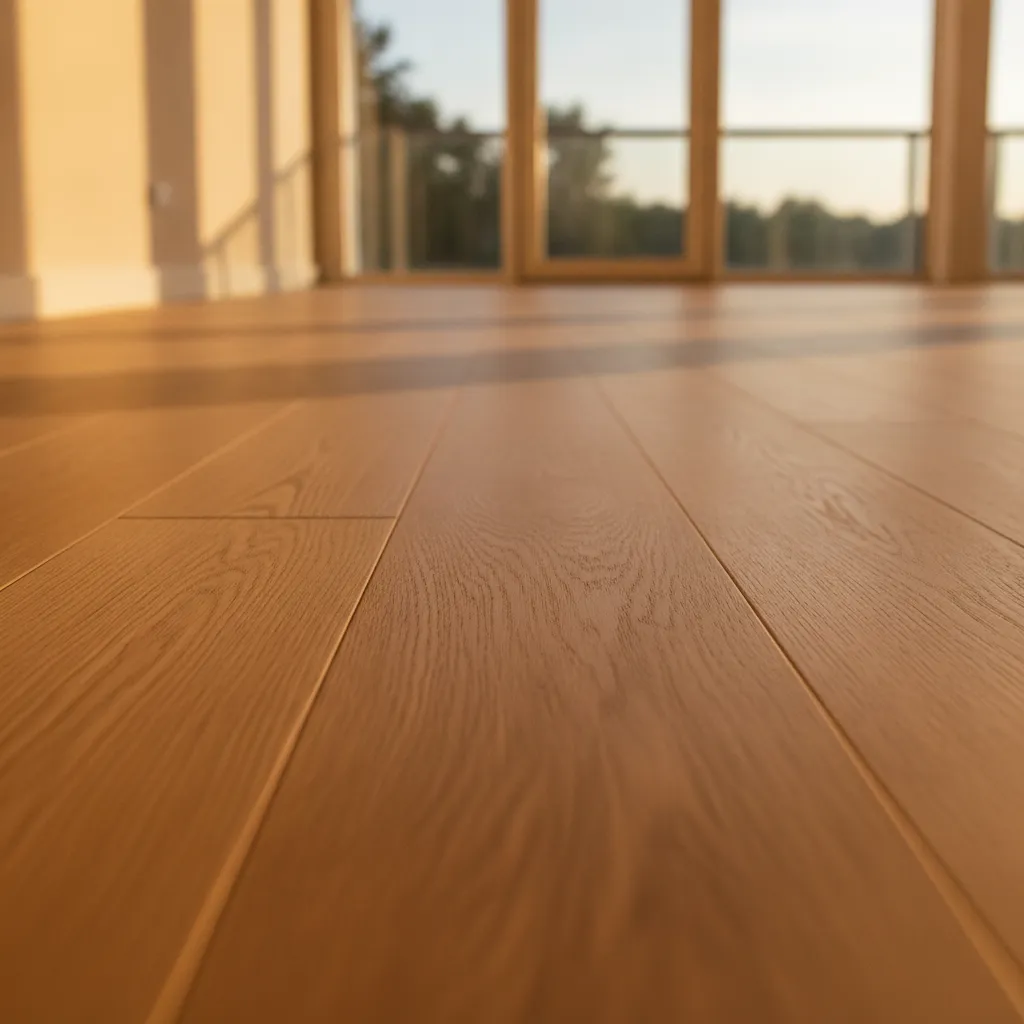
Explore →Dust-mop or vacuum (bare-floor setting), then clean with a barely-damp mop and a cleaner made for wood finishes — never a wet mop, vinegar, or steam, which dull or damage the finish. Address winter gapping with humidity, not water. When the finish wears, a screen-and-recoat or full refinish brings it back for a fraction of replacement.
Engineered Hardwood
Explore →Care is the same as solid wood: dry dust-mop, barely-damp cleaning with a wood-safe product, no standing water. The real-wood wear layer can be recoated and, on thicker veneers, sometimes lightly sanded — check the wear-layer thickness before assuming a full refinish is possible.
Luxury Vinyl Plank
Explore →The low-maintenance workhorse: sweep and damp-mop with a pH-neutral cleaner. It's waterproof, so spills are a non-issue, but skip abrasive pads and harsh solvents that can dull the wear layer. Felt pads still matter — LVP resists scratches but isn't scratch-proof under dragged furniture.
Laminate
Explore →Dust-mop and clean with a barely-damp microfiber — laminate's fiberboard core hates standing water, so wring the mop well and never let puddles sit at seams. Use a laminate-specific cleaner; avoid wax, polish, and steam mops, which can cloud or swell the surface.
Tile
Explore →Sweep and mop with a mild cleaner; tile itself is nearly bulletproof. The grout is what needs attention — seal it, clean it with a grout-safe cleaner, and reseal periodically to keep it from staining. Avoid acidic cleaners on natural-stone tile.
Natural Stone
Explore →Use only pH-neutral, stone-safe cleaners — acids (vinegar, citrus) etch marble, travertine, and limestone. Seal stone on a schedule (more often in wet areas) so it resists staining, and wipe spills quickly, especially wine, coffee, and oil.
Carpet
Explore →Vacuum high-traffic areas often to lift grit before it grinds into the fibers, and blot (don't rub) spills immediately. Schedule professional hot-water extraction every 12–18 months — it pulls out embedded soil a vacuum can't and extends the carpet's life.
Choosing a new floor? See our material comparison, the best pick by room, and how installation works.
Good to Know
Frequently Asked Questions
What's the worst thing I can do to my floors?
Let water sit on them. Even 'waterproof' floors have seams and subfloors; standing water is the leading cause of failure across almost every material. After that: steam mops on wood and laminate, harsh or acidic cleaners on wood and stone, and skipping walk-off mats so grit scratches the finish.
How often should hardwood floors be refinished?
Only when the finish is worn, not on a fixed schedule — often every 7–15 years depending on traffic, with a light screen-and-recoat extending that. In Idaho, managing winter humidity does more for a wood floor's long-term look than any cleaning routine.
Do waterproof floors like LVP still need maintenance?
Yes, just less. Sweep and damp-mop with a pH-neutral cleaner, use felt pads, and clean spills so nothing sits at seams. Waterproof means the core won't swell from water — it doesn't mean scratch-proof or maintenance-free.
Why do my floors matter more in Idaho's climate?
Our dry, forced-air winters pull moisture out of wood, and slab-on-grade construction can push moisture up from below. A whole-home humidifier in winter and prompt spill cleanup do more here than anywhere else. It's the single habit we recommend most to Treasure Valley homeowners with wood floors.
Floors Beyond a Cleaning? We Can Help
Whether it's a refinish, a repair, or a fresh install, call (208) 779-4248 or request a free estimate.