Buying Guide
Tile for Idaho Bathrooms: Why Heated Floors Matter
Tile's only real flaw in Idaho is that it's cold seven months a year. Electric floor heat fixes that — here's how to get tile right in the state's two wettest rooms.
Buying Guide · 6 min read
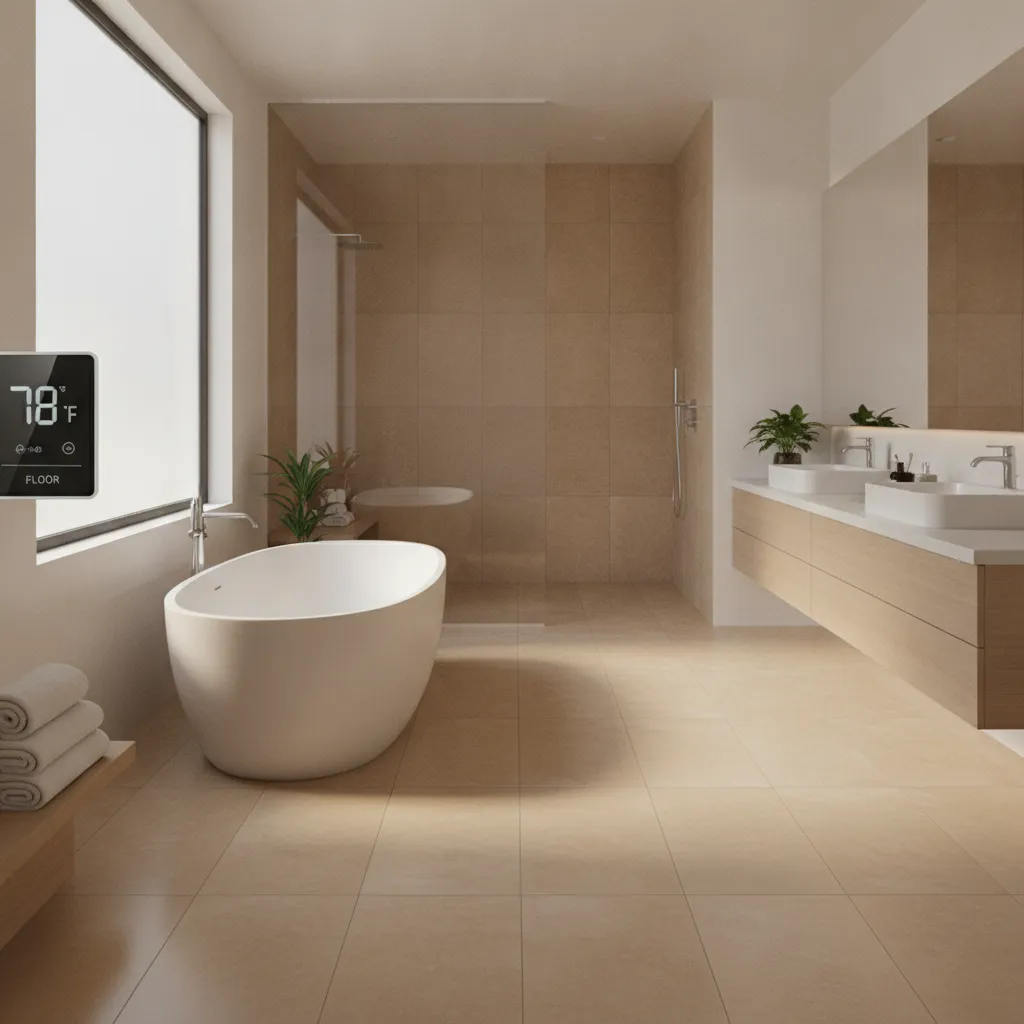
Tile has held the bathroom job for a century because nothing else is as indifferent to water, and it owns the Idaho mudroom conversation for the same reason. But in this climate, tile carries one honest complaint that keeps coming up in every conversation: from October to April, it's cold. A bare foot on unheated tile on a single-digit Boise morning is a genuinely persuasive argument for vinyl — until you learn that the complaint has a complete, well-proven fix. Electric floor heating under tile doesn't just neutralize tile's one weakness; it flips it into the best-feeling floor in the house. Here's how to think about tile in Idaho's two wettest rooms, and when the heat is worth it.
Why Tile Still Owns the Wet Rooms
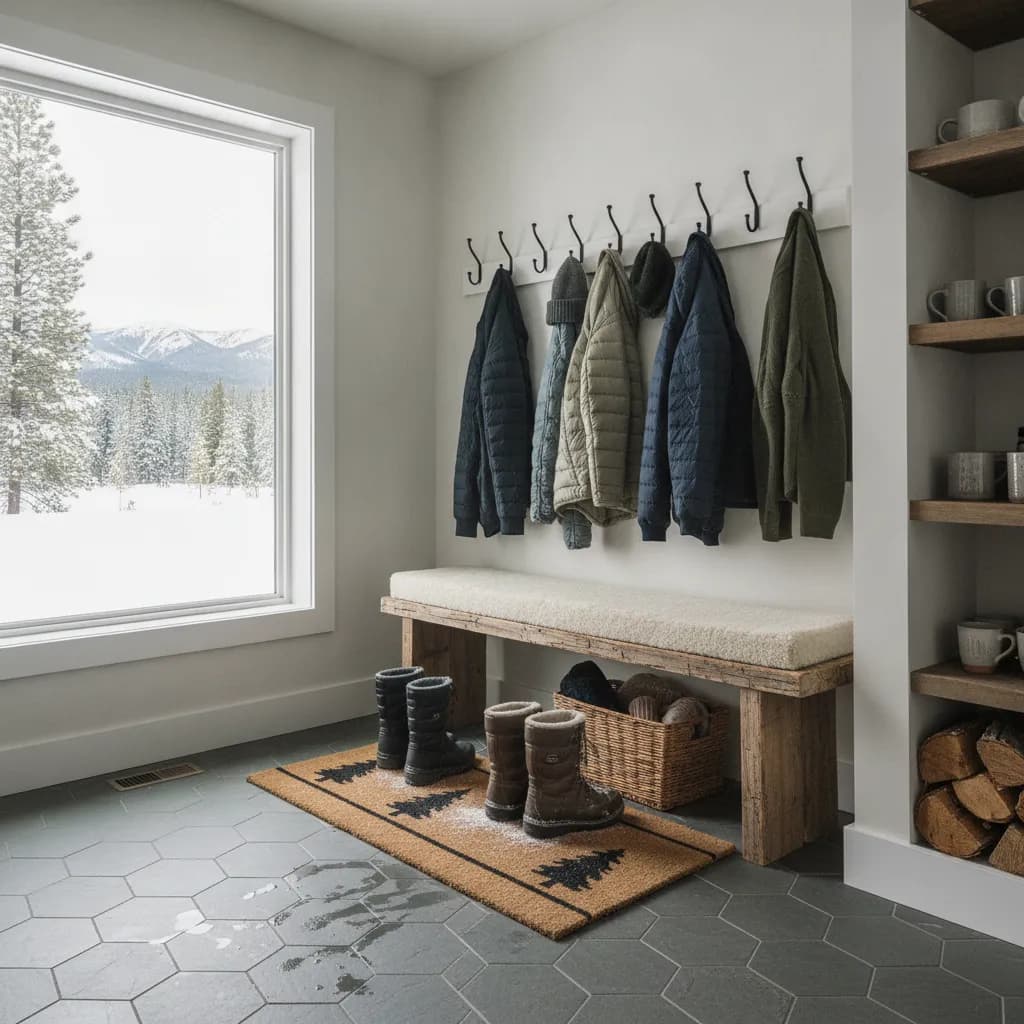
Bathrooms produce moisture on a schedule — shower steam, splash zones, the toilet supply line that fails at year twelve. Mudrooms produce it seasonally and with grit and de-icer mixed in. Porcelain tile is unbothered by all of it: it doesn't absorb meaningful water, doesn't swell, can't be wear-layered to death, and cleans up chemically strong. Done to the industry's installation standards — the Tile Council of North America publishes the handbook the trade builds these rooms to, including the waterproofing details behind showers and wet areas — a tiled wet room is the closest thing flooring offers to a permanent solution. LVP is a legitimate budget-friendly bathroom floor and we install plenty of it; tile is simply the higher ceiling, especially anywhere a shower is involved.
Two selection notes matter more here than anywhere else. Choose porcelain over softer ceramic for floors — it's denser, less absorbent, and tougher. And take slip resistance seriously: matte and textured finishes grip a wet foot far better than polished surfaces, which is a safety decision, not a style one, in a room that's wet by design.
The Cold-Floor Problem, Honestly Stated
Tile feels cold because it conducts heat away from skin quickly — the same conductivity that makes it wonderful over a heat source makes it merciless without one. In mild climates that's a shrug. In a Treasure Valley winter, with tile over a slab or a crawlspace, it's a daily quality-of-life tax on the two rooms where bare feet are mandatory. Bath mats and rugs are the traditional patch; they're also exactly what you don't want living permanently on a floor chosen for water resistance.
Electric Floor Heat: The Fix That Fits Idaho
In-floor heating under tile comes in two families. Whole-home hydronic radiant — warm water circulating through the floor structure, the systems built by manufacturers like Warmboard and Uponor — is a heating-system decision, best made at construction or major-remodel scale. For a single bathroom or mudroom, the practical answer is an electric heating mat or cable, embedded in the tile assembly during installation and controlled by its own programmable floor-sensing thermostat.
What it changes: the floor goes from the coldest surface in the house to gently, evenly warm underfoot, on your schedule — warm for the 6 a.m. shower, off while you're at work. In a mudroom it adds a quietly practical bonus, helping meltwater and boot slush evaporate rather than sit. What it honestly costs: it's a per-square-foot addition to the tile job that only makes sense during installation (retrofitting means retiling), it warms the floor and takes the edge off the room rather than replacing the room's heat source in most cases, and it adds modestly to the electric bill in proportion to how many hours you run it. Programmed sensibly, most owners describe the operating cost as coffee money and the comfort as the best line item in the remodel.
The Timing Rule
If there is any chance you'll want warm tile, the moment to decide is before the tile goes down. The heating layer lives inside the assembly; the thermostat needs a wire run to the wall. Adding it during a planned bathroom or mudroom project is straightforward and comparatively inexpensive. Deciding two winters later means living with it or starting over. We raise it on every Idaho bath and mudroom quote for exactly this reason — not to pad the job, but because "I wish we'd added the heat" is the single most common piece of remodel hindsight we hear, and the window only opens once.
Getting the Assembly Right
Warm or not, a wet-room tile job succeeds in its unglamorous layers: a stable, properly prepared substrate; real waterproofing where the room demands it; movement joints where the standards call for them; and quality setting materials — the checklist codified in the TCNA Handbook. Heated floors add one more layer to sequence correctly, which is a reason to use an installer who does them routinely rather than occasionally.
Quick Answers
Does floor heat work under LVP too? Many electric systems are rated for use under vinyl and other floating floors within the product's temperature limits — but tile transmits the warmth noticeably better, which is part of why the pairing is classic. Can it heat the whole bathroom? In a small, well-insulated bath it often carries most of the load; in larger rooms treat it as comfort heat that lets the main system work less. How long do the heating elements last? Quality mats and cables have no moving parts and are warrantied long-term; the programmable thermostat is the component you'll eventually replace. Is it worth it in a rental or a house you'll sell? Warm tile shows beautifully — but the honest math is that you add it for the years you'll feel it underfoot, not for the appraisal.
Planning a bathroom or mudroom in the Treasure Valley? Alderwood Flooring will quote it both ways — with and without floor heat — so you can make the call with real numbers in front of you. Free estimates, no pressure either direction.
Sources
Tile Council of North America — TCNA Handbook and tile installation standards: https://www.tcnatile.com/
Warmboard — hydronic radiant floor heating systems: https://www.warmboard.com/
Uponor — radiant heating and cooling (North America): https://www.uponor.com/en-us
Explore related
Ready for Floors You'll Love?
Ready to talk through your project? Free estimates throughout The Treasure Valley & Boise Metro.