Idaho Climate
Winter Flooring Installs in Idaho: Yes, With Conditions
Can floors go in during an Idaho winter? Absolutely — if the heat is on, the humidity is managed, and the material gets its time. The conditions that make cold-season installs succeed.
Idaho Climate · 6 min read
Somewhere around the first hard frost, the calls start carrying the same hesitation: we're ready to do the floors, but should we wait until spring? It's a reasonable instinct — wood and weather have a famous relationship, and an Idaho January seems like a hostile month for a moisture-sensitive trade. The actual answer is more useful than the instinct: winter installation works fine, and in one respect works in your favor, provided a short list of conditions is met. Every one of those conditions is controllable. Here's the list, and the honest reasoning behind each item.
The Governing Rule: Install at Living Conditions
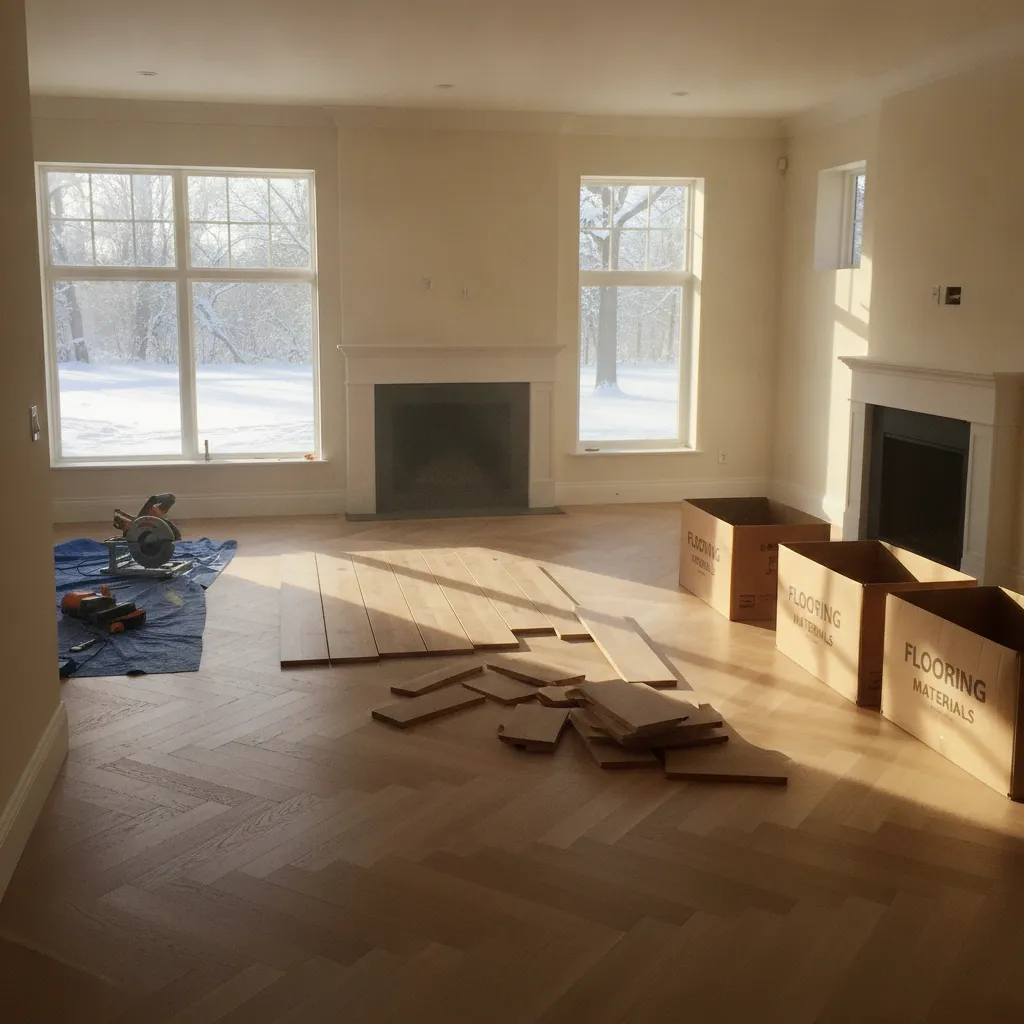
Flooring doesn't care what month it is; it cares what environment it's in. The National Wood Flooring Association's guidance points installations at the conditions the home will actually maintain — and a Treasure Valley house in winter, furnace running, family living normally, is exactly the environment the floor will spend a third of every year in. A heated, occupied home in January is a perfectly legitimate install environment. What isn't: a vacant listing with the thermostat at fifty-five, a new build running temporary construction heat, or any space where the heat gets turned on for the installers and off behind them. The requirement isn't warmth for the crew's comfort — it's that the building be at its honest operating baseline, because that's the world the flooring is equalizing to. If the permanent heat can run at normal settings for the days before, during, and after the install, winter is open for business.
Cold Trucks, Cold Cartons
Winter's most underrated flooring hazard isn't in the house at all — it's the delivery. Material that spends a subfreezing morning in a box truck arrives with real problems to shed: vinyl planks go stiff and brittle when cold and can be damaged by handling or cut poorly until they warm; cold wood pulled into a warm room can grow condensation on its surfaces the way a cold drink does in summer; and every product's adhesives, if any, have minimum temperature requirements printed right on the pail. The fix costs nothing but patience — cartons come inside, stand in the conditioned space, and reach room temperature before anyone opens them. For vinyl that's a matter of a day or two; for wood it folds into the acclimation period it needed anyway, with the meter confirming readiness the same way it does in any season.
The Humidity Half of the Job
A winter install meets the house at its driest — furnace season pulls Treasure Valley indoor humidity to its annual low. That reality cuts two ways, and honesty requires presenting both. The demanding side: if a whole-home humidifier is part of your hardwood plan, it should be running before installation, not promised for later, so the wood acclimates to the humidity the house will actually keep. Finishes cure differently in very dry air, and site-finish schedules adjust accordingly. The favorable side is the part almost nobody mentions: wood installed and acclimated near its annual moisture minimum has its movement year mapped out gently — boards will pick up moisture and snug tighter through summer, then return toward their install dimensions the next winter, rather than being installed plump in July and spending their first January opening gaps. A competent installer plans for that summer expansion with appropriate fastening and perimeter room; it's a normal calculation, not a trick. Neither season is wrong to install in — but the idea that winter is the risky one has it roughly backwards for wood, provided the acclimation was real.
The Materials That Barely Notice
Tile mostly wants its setting materials kept within temperature range while they cure — routine in any heated house — and cares nothing for humidity. Vinyl's requirements are the thermal ones above plus its usual expansion-gap discipline, and rigid-core products in a conditioned space are unbothered by the season. Carpet installs happily in any month, though stretching benefits from a warm room. The winter-sensitive work concentrates in wood and in site-applied finishes; everything else treats January like April with worse parking.
When We'd Honestly Say Wait
A few situations do earn a postponement. An unheated or setback vacation place in McCall or Cascade can't host a winter install until the heat runs steadily — the building has to be brought to real conditions first, and holding a cabin at temperature just for flooring week only to set it back after creates exactly the whiplash floors hate. New construction without permanent HVAC online is a wait, whatever the month. And a full-house site-finish job for a chemically sensitive household might reasonably prefer a season when windows open freely — though modern water-based finishes have shrunk that concern dramatically. None of these is really about winter; they're about buildings that aren't at baseline yet.
Quick Answers
Is the install schedule easier to book in winter? Often, honestly, yes — the trade's busy season follows real estate and remodel cycles, and the cold months usually offer more calendar flexibility. Can hardwood be refinished in winter? Yes, and it's common — water-based finishes made closed-window refinishing reasonable, and dry winter air is factored into the coating schedule. Will snow and mud at the door wreck the job? It adds floor-protection logistics the crew handles daily all winter — a solved problem. Does the flooring warranty change by season? No — but every warranty leans on the manufacturer's temperature, humidity, and acclimation requirements being met, which is the whole checklist above by another name.
Thinking about floors this winter anywhere in the Treasure Valley? Alderwood Flooring installs all season, and if your specific situation is one of the honest wait-until-spring cases, we'll say so to your face. Free estimates.
Sources
National Wood Flooring Association — installation and acclimation standards: https://nwfa.org/technical-standards/
USDA Forest Products Laboratory, Wood Handbook — wood-moisture relations across seasons: https://research.fs.usda.gov/treesearch/37440
U.S. EPA — indoor humidity guidance: https://www.epa.gov/mold/mold-course-chapter-2
Explore related

Ready for Floors You'll Love?
Ready to talk through your project? Free estimates throughout The Treasure Valley & Boise Metro.