Materials
Radiant Floor Heat and Flooring: What Works and Why
Radiant heat is a natural fit for Idaho winters — but the floor over it has to be chosen for heat, not just looks. Engineered wood, LVP, and tile compared honestly.
Materials · 7 min read
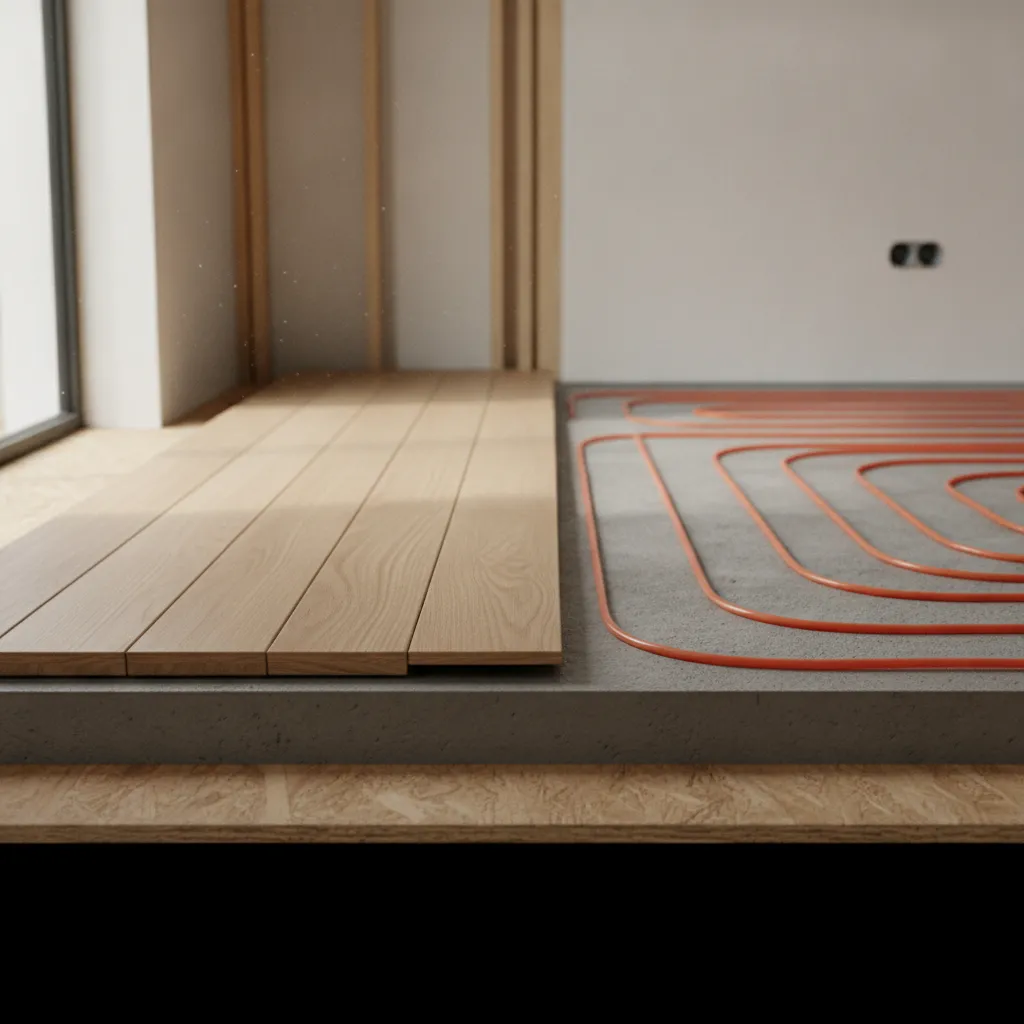
In-floor radiant heat has a devoted following in Idaho, and it's easy to see why: silent, even warmth underfoot through a long Boise or McCall winter, no ducts blowing dust around, and rooms that feel warm at lower air temperatures. But radiant systems change the job description for whatever flooring goes over them. The floor becomes part of the heating system — a layer heat must pass through — and it lives its whole life warmer and drier than a floor over a normal subfloor. Some materials handle that beautifully. Others need careful selection. A few are honest mistakes waiting to happen.
The Two Things Radiant Changes
First, heat transmission. Every layer between the heat source and the room resists heat flow a little; the floor covering is the last and often thickest of those layers. Dense, conductive materials like tile and stone pass heat readily. Wood is a middling insulator. Thick carpet and pad can blunt a radiant system badly. This is why radiant manufacturers publish guidance on floor coverings — Warmboard and Uponor, two of the major North American radiant system makers, both maintain technical resources on what their systems pair well with — and why the flooring choice should be made alongside the heating design, not after it.
Second, heat plus dryness at the board itself. A floor over radiant runs warmer than room temperature and is continually driven toward the dry end of its moisture range — an effect layered on top of Idaho's already-dry winters. For wood, that means more shrinkage stress than the same product would see across the hall over an unheated subfloor.
Tile and Stone: The Natural Partners
Ceramic tile, porcelain, and stone are the no-asterisk answer over radiant. They conduct heat well, they don't care about being warm and dry, and they transform from the coldest flooring underfoot into the most luxurious. For Idaho bathrooms and mudrooms — where tile was likely the right call anyway — radiant underneath removes tile's only real livability drawback. If maximum system efficiency and zero movement worries top your list, this is the pairing.
Engineered Hardwood: The Right Way to Get Wood Over Radiant
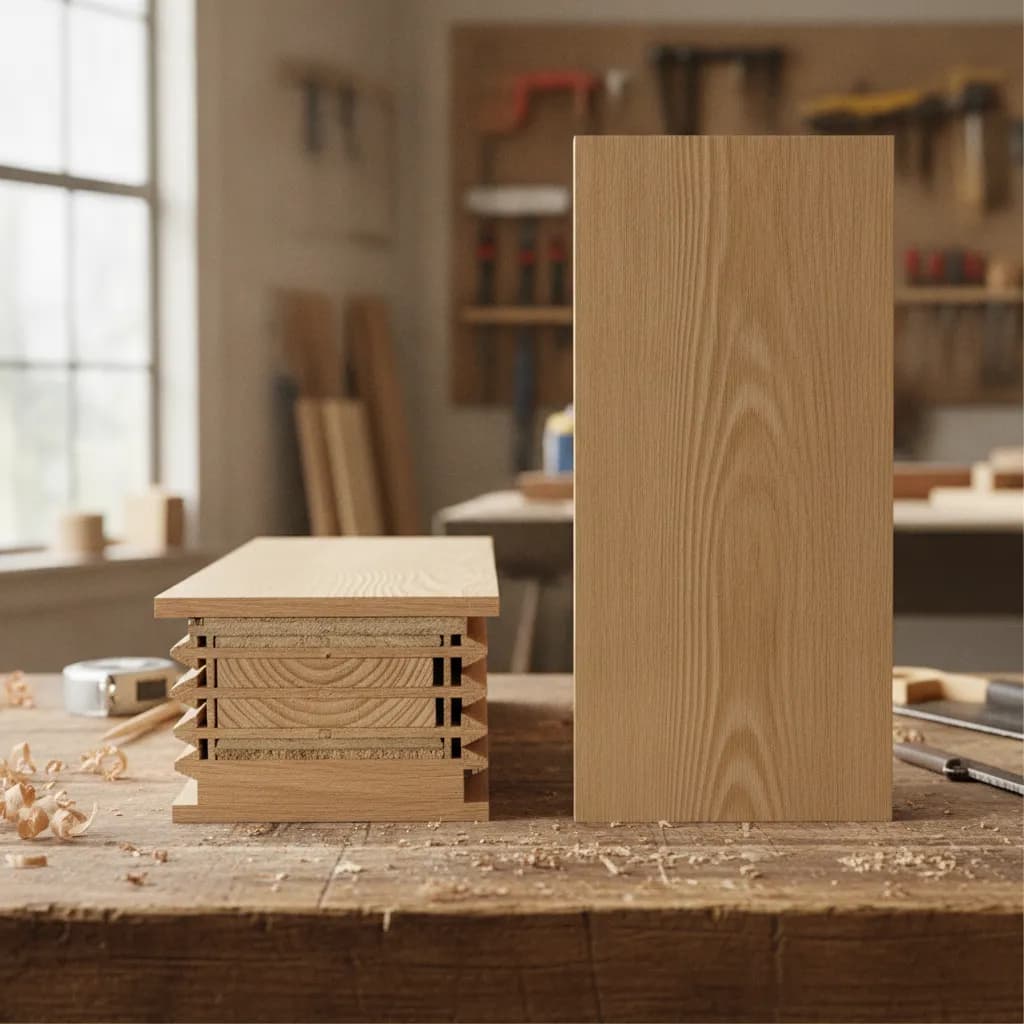
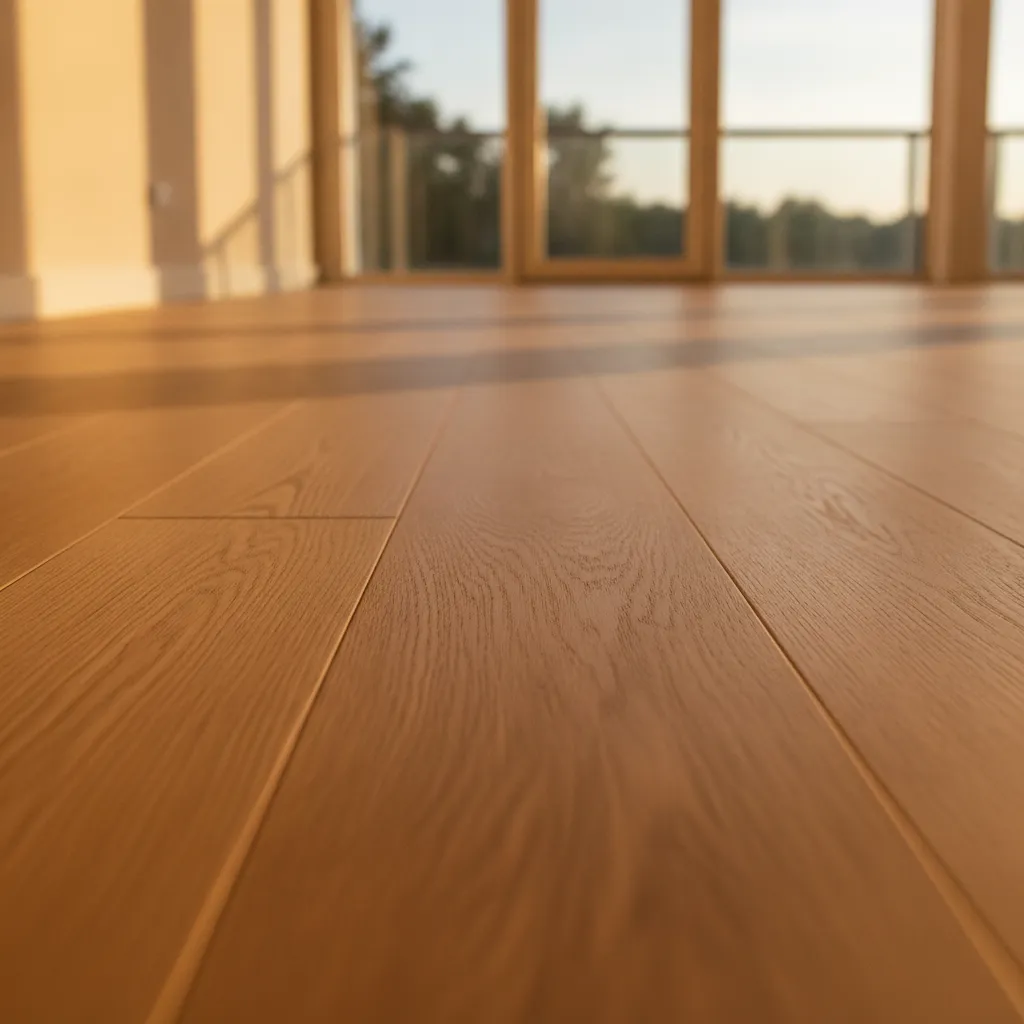
Real wood over radiant is absolutely achievable — but this is engineered hardwood's territory, not solid's. The cross-laminated core of an engineered plank resists the shrinking and swelling that heat-plus-dryness encourages, which is why manufacturers that approve their wood products for radiant use overwhelmingly mean their engineered lines. The critical homework: the specific product must be rated by its manufacturer for radiant applications, and the system must respect the manufacturer's maximum surface temperature — a published number, not a guess — because wood asked to run too hot will check, gap, and delaminate no matter whose name is on the box. Moderate plank widths and quartersawn or rift-sawn faces move less and are safer choices over heat.
Solid hardwood over radiant is a much narrower path. Some experienced installers do it successfully with narrow, quartersawn boards and disciplined humidity control, but the margin for error is thin in a climate as dry as ours, and many solid products carry no radiant approval at all — which means no warranty if things go wrong. Our honest position: if you want wood over radiant in the Treasure Valley, choose a radiant-rated engineered product and enjoy the result.
Luxury Vinyl Plank: Fine, With a Temperature Ceiling
Most quality LVP is compatible with radiant heat, with one non-negotiable: vinyl products publish a maximum floor surface temperature, and the radiant system must be controlled to stay under it. Run past that ceiling and vinyl can soften, discolor, or grow at the seams. Rigid-core (SPC) products tend to be the more dimensionally stable vinyl choice over heat. LVP also transmits heat reasonably well — better than carpet, not as well as tile — so it's a practical radiant partner for mudrooms, basements, and whole-house installs where vinyl was already the right material. Check the spec sheet, confirm radiant approval in writing, and make sure whoever programs the system knows the limit.
Laminate and Carpet: Read the Fine Print
Many laminates are radiant-approved with temperature limits similar to vinyl's, though their wood-based cores make them more sensitive to the dryness side of the equation. Carpet over radiant is allowed by most system manufacturers but works against the system — the thicker the pad, the more heat it traps below — so if a radiant room must have carpet, the guidance is thin, dense pad and low-profile carpet, chosen with the heating designer in the loop.
The Questions That Settle It
Is this exact product rated by its manufacturer for radiant heat? What is its maximum surface temperature, and can the system be controlled to honor it? Does the radiant manufacturer's guidance bless this covering type? And who is coordinating between the flooring installer and the heating contractor? When those four questions have written answers, radiant projects go smoothly. When they're hand-waved, that's when we get the sad phone calls.
Alderwood Flooring installs over radiant systems across the Treasure Valley and the McCall area, and we're glad to coordinate directly with your heating contractor — free estimates, and we'll tell you plainly if a product you love isn't rated for the heat under it.
Sources
Warmboard — radiant heat system technical resources and installation guides: https://www.warmboard.com/
Uponor — radiant heating and cooling resources (North America): https://www.uponor.com/en-us
National Wood Flooring Association — technical standards and installation guidance: https://nwfa.org/technical-standards/

Ready for Floors You'll Love?
Ready to talk through your project? Free estimates throughout The Treasure Valley & Boise Metro.