Materials
Wide-Plank Floors in a Dry Climate: Movement Honesty
Wide planks are the look everyone wants — and width multiplies wood movement in Idaho's dry winters. How to get the look without the regret.
Materials · 6 min read
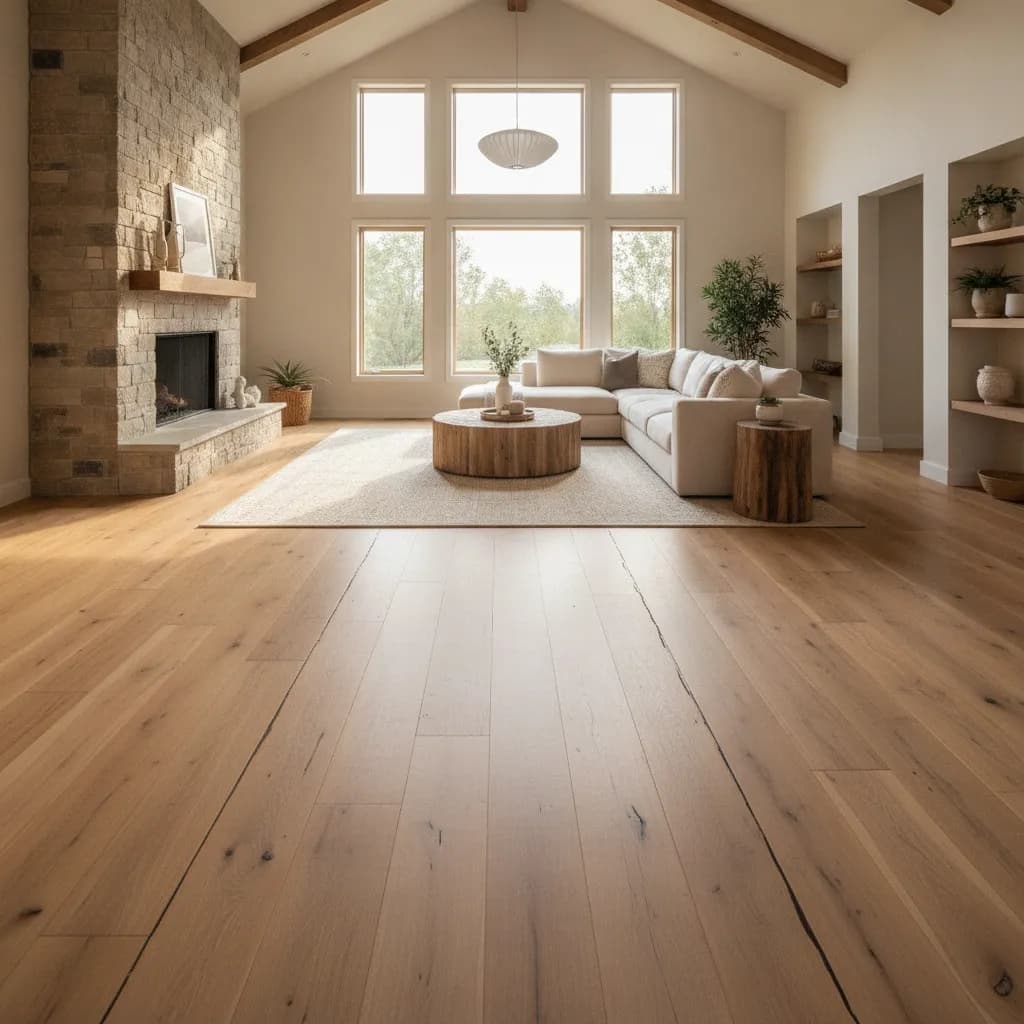
Wide-plank flooring has gone from farmhouse specialty to the default request — fewer seams, calmer floors, boards that show off real grain. We love installing it. But there's a physics conversation that should happen before any wide plank is ordered for an Idaho home, and it often doesn't: width multiplies wood movement, and we live in a climate that maximizes the movement there is. Skipping that conversation is how a beautiful spring installation becomes a gappy, disappointing January. Having it is how you get the wide-plank look that still makes you happy in year ten.
Why Width Changes the Math
Wood shrinks and swells across the grain as its moisture content follows indoor humidity — the mechanism is laid out in the USDA Forest Products Laboratory's Wood Handbook, the standard reference on wood-moisture behavior. The percentage change is a property of the species and cut, but the visible result scales with board width: the same seasonal humidity swing that moves a narrow strip board a hair moves a plank three times as wide three times as far. Multiply that across every seam in a room and the difference between a two-inch and an eight-inch floor in a dry February is not subtle. Wide boards also carry more internal stress when their two faces sit in different conditions, which is why cupping and checking show up sooner in wide solid stock that wasn't chosen and handled carefully.
Idaho supplies the swing. High-desert summers, then months of forced-air heating that pulls indoor humidity to genuinely arid levels — this valley asks more of a wide board than most of the country does.
Engineered Construction: How Wide Planks Are Done Here
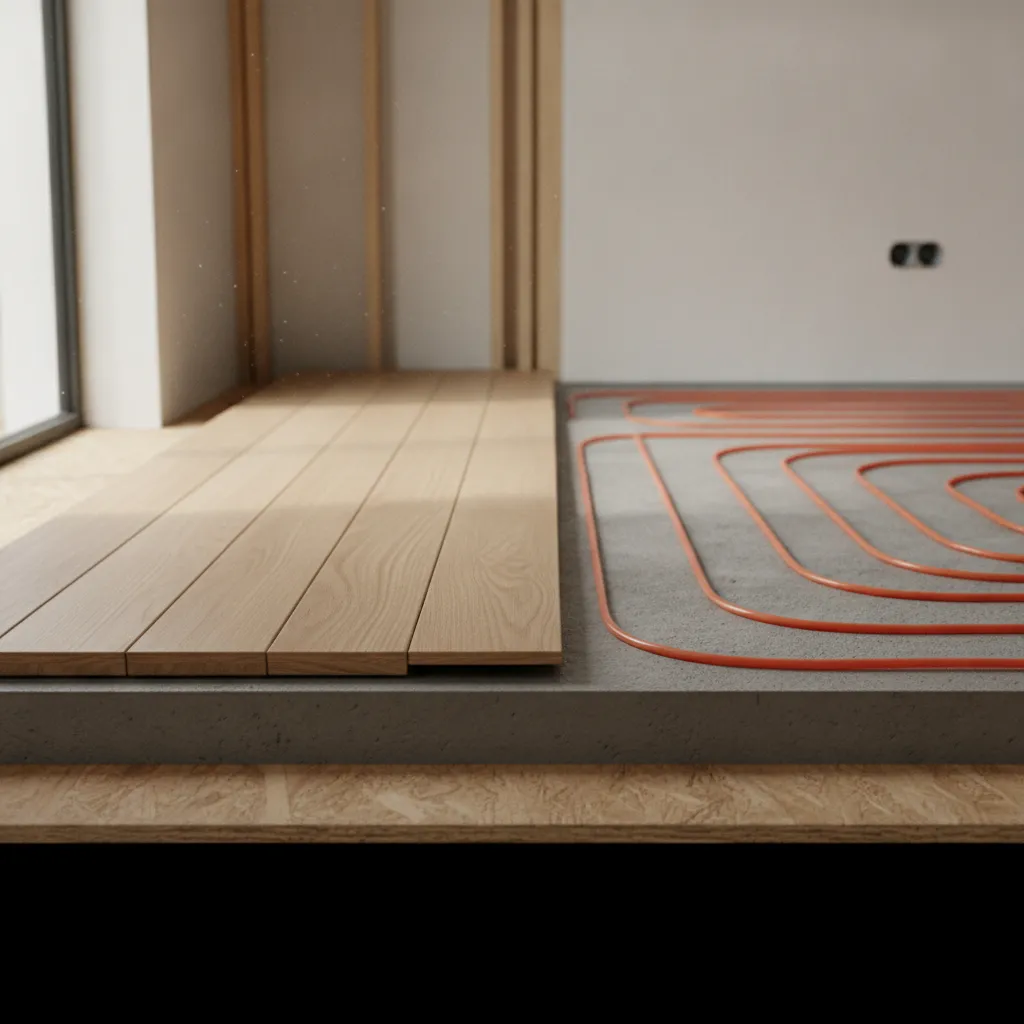
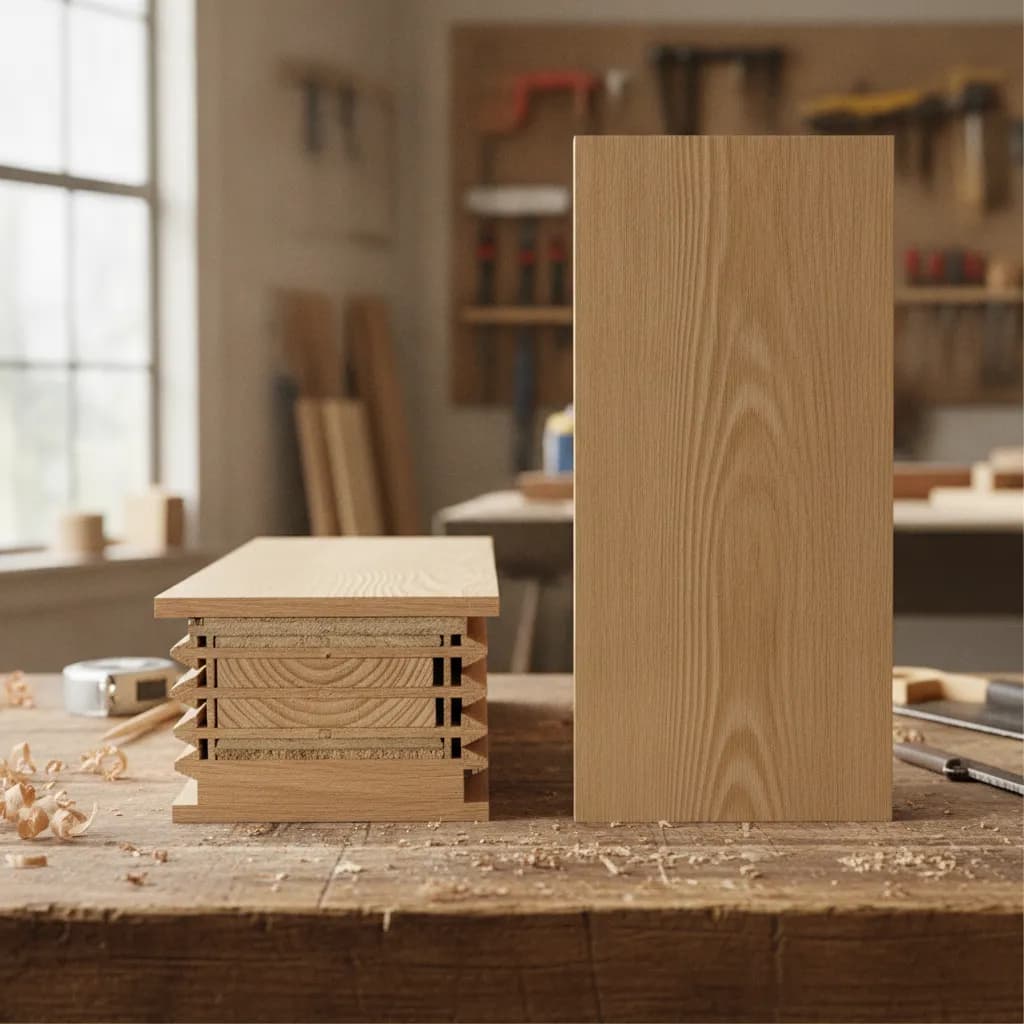
The reason wide-plank engineered flooring exists is precisely this problem. A real oak or hickory wear layer bonded over a cross-laminated core keeps the wide-plank face while the core's alternating grain directions fight the width-wise movement — the construction was designed to make wide formats behave in unstable environments. For most Treasure Valley homes, and for nearly all wide-plank projects over slabs or radiant heat, a quality engineered product is the difference between owning the look and fighting it. Two spec-sheet items earn the attention: a wear layer thick enough to sand at least once down the road, and a core built of genuine cross-laminated plies rather than a bargain substrate.
Wide solid planks are not off the table — they're the traditional article, and with the right cut, disciplined humidity control, and an owner who accepts seasonal character, they can be glorious. But in this climate they are an eyes-open choice, and we'd rather lose the sale than sell them as carefree.
The Details That Quietly Decide the Outcome
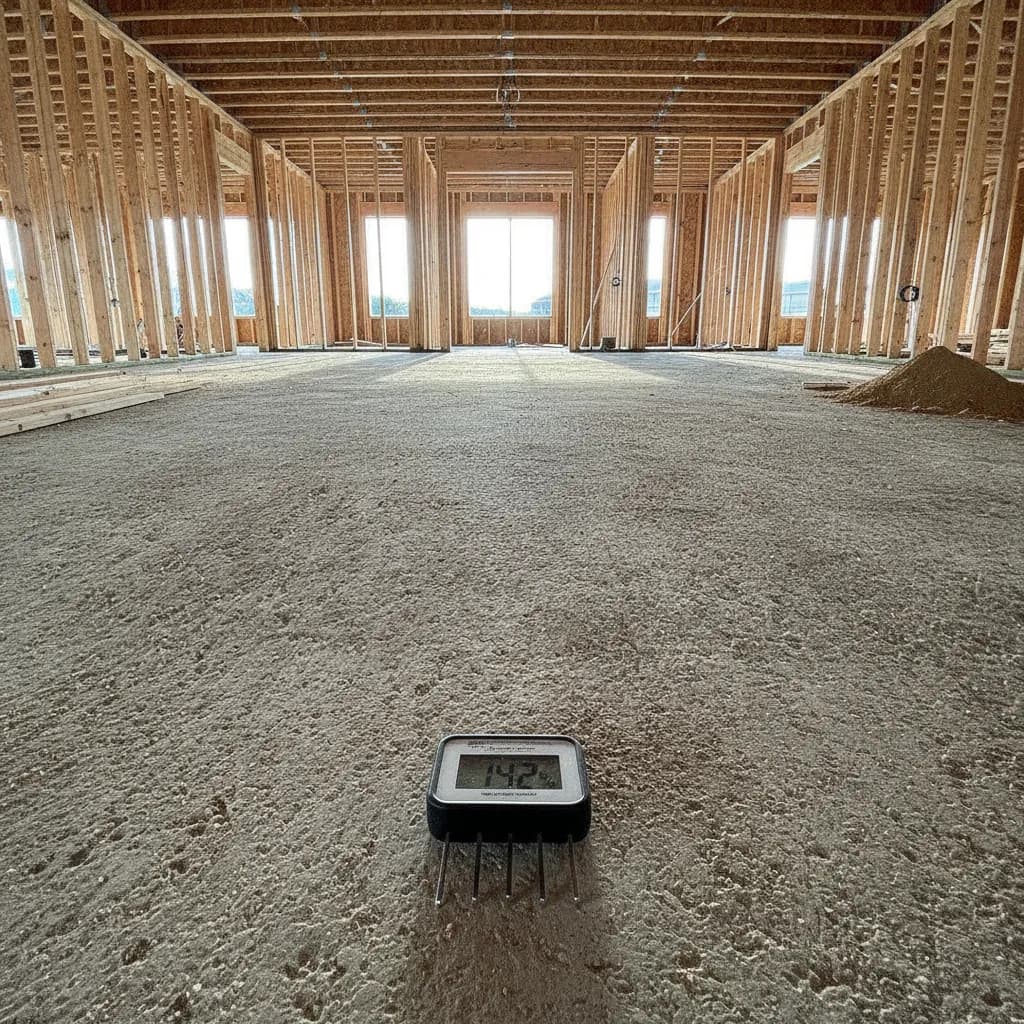
Cut matters: quartersawn and rift-sawn boards move roughly half as much across their width as flatsawn boards of the same species, which is why they're the traditional answer for wide solid stock. Species matters: stable, well-dried oak is the workhorse; hickory is beautiful and busier and moves more; reclaimed and character woods need case-by-case honesty. Acclimation matters more than ever — the National Wood Flooring Association's guidance treats acclimation as conditioning wood to the home's actual living environment, verified by moisture meter, and wide stock punishes shortcuts hardest. Installation method matters: wide boards are commonly glued or glue-assisted rather than nailed alone, because more width per fastener means more board with an opinion. None of these details show in the showroom; all of them show in February.
Humidity: The Standing Appointment
A wide-plank floor in Idaho deserves winter humidification — a whole-home humidifier holding a steady moderate band shrinks the seasonal swing the boards experience, and the EPA's general indoor guidance of roughly 30 to 50 percent relative humidity overlaps neatly with what the wood wants. The honest caveats: in deep cold you'll cap humidity lower to keep windows from weeping, and no humidifier eliminates seasonal movement — it narrows it. Expect hairline seasonal seams in any wide floor with solid character, and regard them as the material being real.
The Honest Summary
You can absolutely have wide-plank floors in the Treasure Valley. The reliable route is engineered construction, real acclimation, the right installation method, and winter humidity habits — and a conversation up front about what seasonal movement will look like, so nothing about January surprises you. If a salesperson waves the movement question away, that's the tell to keep shopping.
Quick Answers
How wide is "wide" before the rules change? There's no official line, but the movement math starts demanding respect as boards pass roughly the five-inch mark, and it compounds from there — the wider the board, the stronger the case for engineered construction and glue-assist. Do longer boards move more too? Length-wise movement in wood is a small fraction of width-wise movement, which is why long planks are an aesthetic decision and wide ones are an engineering one. Will gaps damage the floor? Seasonal hairline gaps are cosmetic — the damage scenarios are cupping and checking from real moisture imbalance, which is what acclimation, slab testing, and humidity habits exist to prevent. Can I add a humidifier after the floor is installed? Yes, and it will help from the day it's running — but it can't undo a floor that acclimated to the wrong conditions before installation.
Alderwood Flooring installs wide-plank floors across the valley and will walk you through exactly how a given product will behave in your house — free estimates, physics included.
Sources
USDA Forest Products Laboratory, Wood Handbook — wood-moisture relations and dimensional change: https://research.fs.usda.gov/treesearch/37440
National Wood Flooring Association — acclimation and installation standards: https://nwfa.org/technical-standards/
U.S. EPA — indoor relative humidity guidance: https://www.epa.gov/mold/mold-course-chapter-2

Ready for Floors You'll Love?
Ready to talk through your project? Free estimates throughout The Treasure Valley & Boise Metro.