Idaho Climate
Slab Moisture Testing in Treasure Valley New Builds
New concrete holds construction moisture long after move-in — even in the high desert. What calcium chloride and RH-probe testing actually measure, and why we test before we install.
Idaho Climate · 6 min read
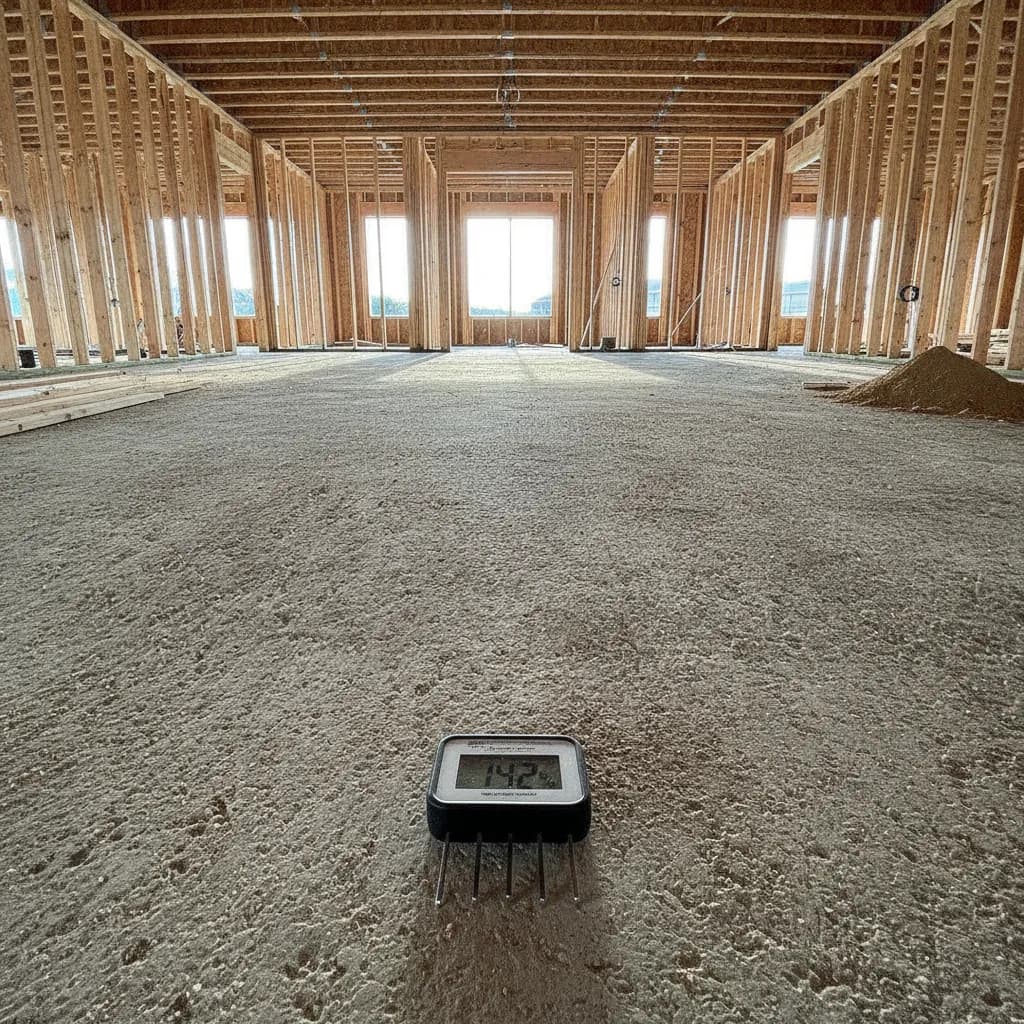
Slab-on-grade construction dominates new neighborhoods across Nampa, Kuna, Caldwell, Meridian, and Star, which means most new-build flooring in the Treasure Valley goes down over concrete. And here's the assumption that causes trouble: because Idaho's air is dry, people assume the slab under a new house must be dry too. It usually isn't — at least not on the timeline builders and homeowners want it to be.
Where Slab Moisture Actually Comes From
Concrete is mixed with far more water than the chemical curing reaction consumes; the excess has to leave the slab slowly, by evaporating through the surface, over months. A slab poured in fall and floored in spring may still be releasing meaningful construction moisture, regardless of how dry the air above it feels. Beyond that initial dry-down, slabs can also pass ground moisture upward for the life of the house if the vapor retarder beneath them was compromised, thin, or poorly lapped. Neither mechanism cares that Boise is high desert — the first is chemistry and physics on a schedule, the second is what's under the slab, not above it.
Moisture-sensitive flooring installed over a slab that isn't ready shows it eventually: adhesives release, wood flooring absorbs moisture from below and cups, and even some floating floors develop problems at the underlayment level. By the time symptoms appear, the flooring is already the casualty.
The Two Tests You'll Hear About
Two test methods dominate the conversation, and they measure genuinely different things.
The calcium chloride test — standardized as ASTM F1869 — places a dish of moisture-absorbing salt under a sealed dome on the slab surface for about three days, then weighs the moisture it captured. The result is a moisture vapor emission rate: how much water vapor the slab surface is giving off right now. It's the older method, and its recognized limitation is right there in the description — as moisture-measurement specialists like Wagner Meters explain in their concrete testing guidance, a surface emission test tells you little about the moisture condition deeper in the slab, which is the moisture that will reach your flooring later.
The in-situ relative humidity test — standardized as ASTM F2170 — drills small holes to a prescribed depth in the slab and places calibrated probes inside them, reading the humidity within the concrete itself. Because it measures the slab's interior rather than just its surface, it gives a much better picture of what the slab will do after it's sealed under flooring. It's the method most modern flooring and adhesive manufacturers reference in their installation requirements.
Neither test is exotic, and this isn't guesswork territory: the acceptable readings are published by the manufacturer of the specific flooring, adhesive, or underlayment being installed. The installer's job is to test, compare against those published limits, and only proceed when the numbers pass.
"The Builder Already Floored It" Isn't Evidence
Production schedules are the quiet enemy here. A builder working to a closing date doesn't always have the luxury of waiting for a slab to reach ideal readings, and some floor coverings tolerate moisture better than others — carpet and pad forgive what glue-down hardwood never will. So the fact that a tract home came with flooring installed tells you the slab was ready for that flooring on that schedule, at best. When you replace builder-grade flooring with something more moisture-sensitive a few years later, the slab is usually fine by then — but "usually" is exactly the word testing exists to remove.
What This Means When You're Replacing Floors
For homeowners swapping out builder flooring in a home that's a few years old, slab moisture is typically a checkpoint rather than a crisis — the construction moisture has mostly left. The cases that deserve real caution: homes under about two years old, any slab with a history of efflorescence (white mineral deposits) or musty smells at floor level, additions poured at a different time than the main slab, and any project involving glue-down wood over concrete. In those situations, testing isn't an upsell; it's the difference between knowing and hoping.
Our Practice
Before moisture-sensitive flooring goes over concrete, we test and we document the readings against the manufacturer's published requirements. If a slab isn't ready, the fix is usually patience or a moisture mitigation layer — both far cheaper than replacing a failed floor. It's an unglamorous step that no one sees in the finished photos, which is exactly why we think it's worth telling you it happens.
Quick Answers
Can I just tape down a plastic sheet and check for condensation? The plastic-sheet trick can catch a badly wet slab, but a dry sheet proves very little — it's a screening habit, not a test, and no flooring manufacturer accepts it in place of the standardized methods. Does a dry Idaho summer speed things up? Somewhat, for the surface — but the deeper slab moisture that RH probes measure leaves on its own schedule, and a sealed, air-conditioned new home doesn't dry its slab as fast as people imagine. What about homes with crawlspaces? Different problem, same principle: wood subfloors over a crawlspace get checked with a moisture meter, and the crawlspace's ventilation and ground cover matter more than the weather outside. And if the readings fail? You wait and retest, or install a moisture mitigation coating rated for the numbers you measured — an established fix, not an exotic one.
If you're planning floors for a new build or a newer tract home anywhere in the Treasure Valley, Alderwood Flooring is happy to walk you through what your specific slab and flooring choice require — free estimates, straight answers.
Sources
Wagner Meters — concrete moisture testing guide (ASTM F2170 RH testing vs. F1869 calcium chloride): https://www.wagnermeters.com/concrete-moisture-test/
National Wood Flooring Association — technical standards and installation guidance: https://nwfa.org/technical-standards/
USDA Forest Products Laboratory, Wood Handbook (moisture relations in wood): https://research.fs.usda.gov/treesearch/37440
Explore related

Ready for Floors You'll Love?
Ready to talk through your project? Free estimates throughout The Treasure Valley & Boise Metro.