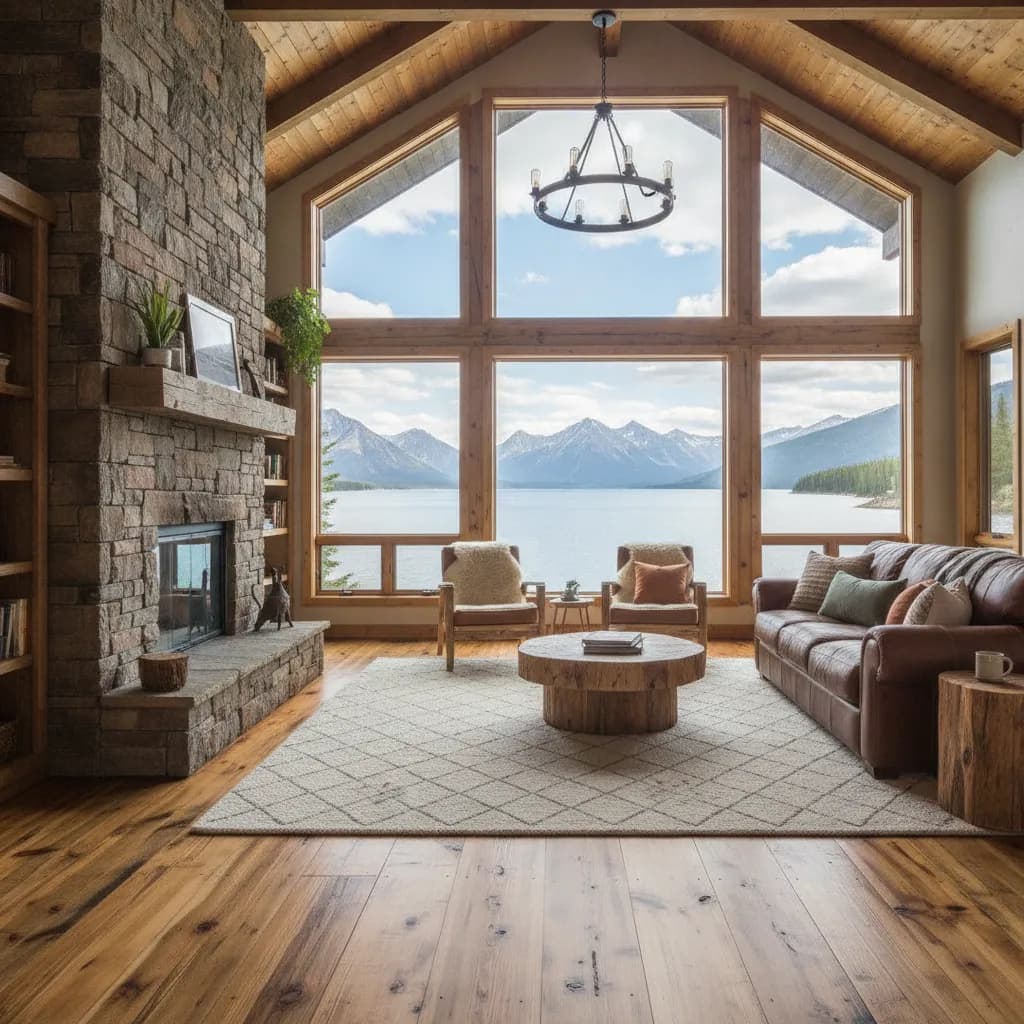
Mountain Homes
McCall Cabin Flooring: Why Elevation Changes the Rules
A second home at 5,000 feet that sits empty half the winter is the hardest environment a floor can live in. What holds up in cabin country — and what to skip.
Mountain Homes · 7 min read
Flooring advice written for a Boise subdivision quietly assumes a house that's lived in: heated all winter, humidified or at least occupied, problems noticed the day they start. A cabin in McCall, Donnelly, or Cascade breaks every one of those assumptions. It sits a few thousand feet higher, in a longer and colder winter, and — if it's a second home — it spends weeks at a time empty, with the thermostat set back and nobody there to notice the water heater's slow drip. That combination, not the altitude itself, is what makes mountain flooring a different problem. Here's how elevation and part-time occupancy change the rules, and what actually holds up in cabin country.
The Real Enemy: Swing, Not Cold
Wood and most floor coverings don't mind being cold; they mind change. A full-time Treasure Valley home cycles through one broad seasonal humidity swing a year, softened by continuous heating and daily life. A setback cabin cycles hard and often: the building runs cold and dry for two empty weeks, then the owners arrive, heat the place from fifty degrees to seventy in an afternoon, run showers and cook for a weekend, and leave again. Every arrival and departure is a small climate event for the floors. Materials that tolerate a slow annual swing can be genuinely stressed by dozens of fast ones — this is why the flooring conversation for a second home starts with "how will the building be run?" rather than "what species do you like?"
The physics is the same wood-moisture relationship documented in the USDA Forest Products Laboratory's Wood Handbook — wood continually chasing equilibrium with the air around it. The cabin schedule just makes the chase relentless.
What This Means for Wood
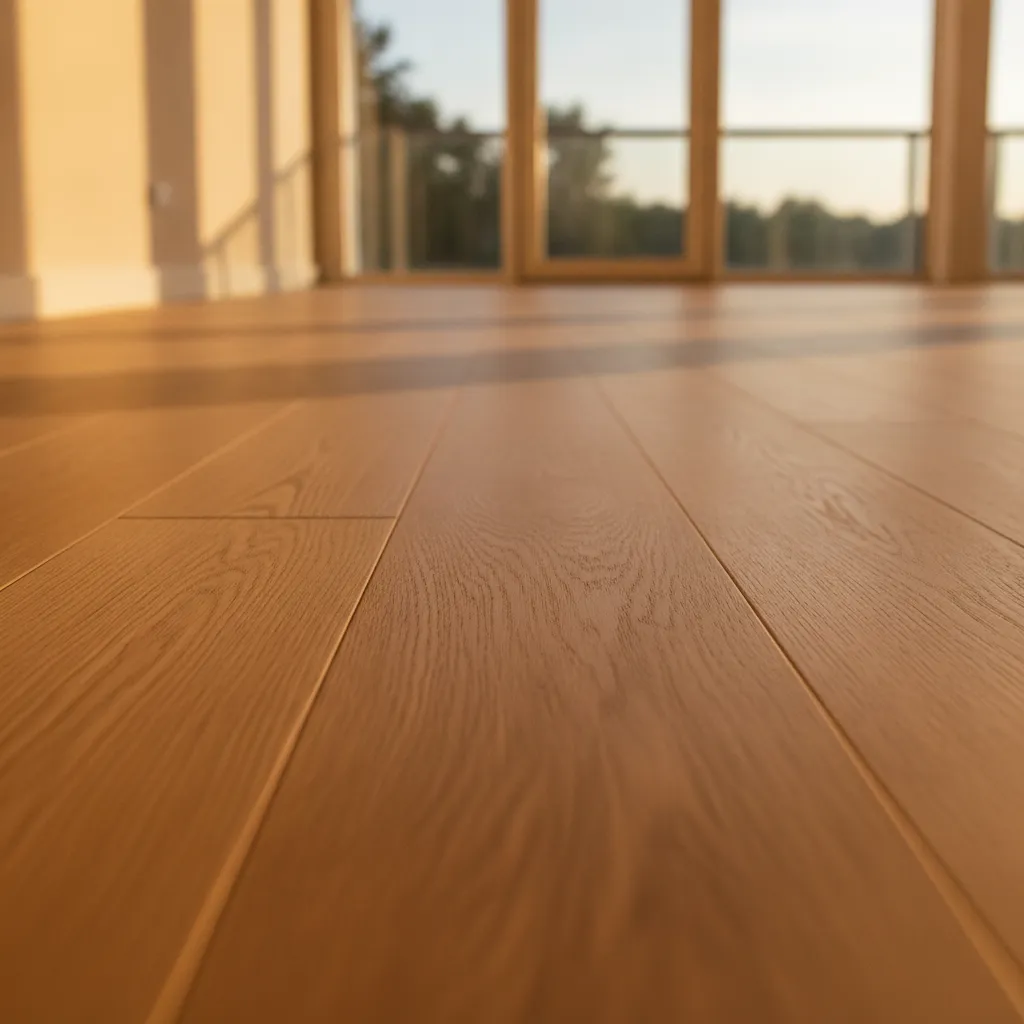
Solid hardwood in a part-time, setback cabin is the honest caution of this article. It can work in a mountain home that's kept continuously conditioned — full-time residences in McCall with steady heat and humidification play by nearly normal rules — but in a weekender that swings, solid wood (and especially wide solid plank) will move, gap, and potentially cup or check in ways no installer can prevent after the fact. If the mountain-home look you want is wood, the reliable answer is a quality engineered product: the cross-laminated core is built for unstable environments, and the real-wood wear layer delivers the cabin aesthetic — including wide, character-grade planks — without asking a solid board to endure a schedule it was never designed for. The National Wood Flooring Association's acclimation guidance matters double at elevation: flooring must be conditioned to the environment the cabin will actually maintain, which requires deciding what that environment is before installation, not after.
LVP in the Mountains: Good, With a Cold-Building Asterisk
Rigid-core LVP's water resistance and toughness make it a natural for cabin mudrooms, lower levels, and rental-ready properties — snowmelt, ski boots, and dogs are its home turf. The asterisk is temperature: vinyl products publish operating ranges, and both deep cold in an unheated building and strong solar gain through big south-facing glass can push floating vinyl floors outside their comfort zone, showing up as gapping or peaking at the seams. The practical guidance: keep at least minimal heat on in an empty cabin (which the plumbing wanted anyway), choose a quality rigid-core product rather than a bargain flexible one, respect the manufacturer's temperature range and expansion-gap requirements, and be thoughtful about floating floors in walls of winter sun.
Tile: The Mountain Workhorse Nobody Photographs
For entries, mudrooms, baths, and laundry in snow country, porcelain tile is the least romantic and most correct answer on the list — indifferent to meltwater, grit, de-icer, and temperature swings alike. Pair it with electric floor heat in the bathrooms of a full-time home and it's a luxury; in any mountain home, a generous tiled landing zone at every exterior door is the single highest-value flooring decision in the building. Ski boots will find whatever floor you put there. Make it tile.
Second-Home Logistics Worth Deciding Early
A few unglamorous choices protect a mountain floor better than any product spec. Keep the building above freezing and reasonably stable when empty — the floor benefits from the same baseline the pipes require. If the home is heated by wood stove, expect the ultra-dry stove-season air to be the hardest test wood floors face there. Plan entries and traffic routes for snow country the way you'd plan a mudroom, times two. And if the property will be a rental, weight durability and repairability — tile, quality LVP, engineered wood in that spirit — because renters are enthusiastic product testers.
Quick Answers
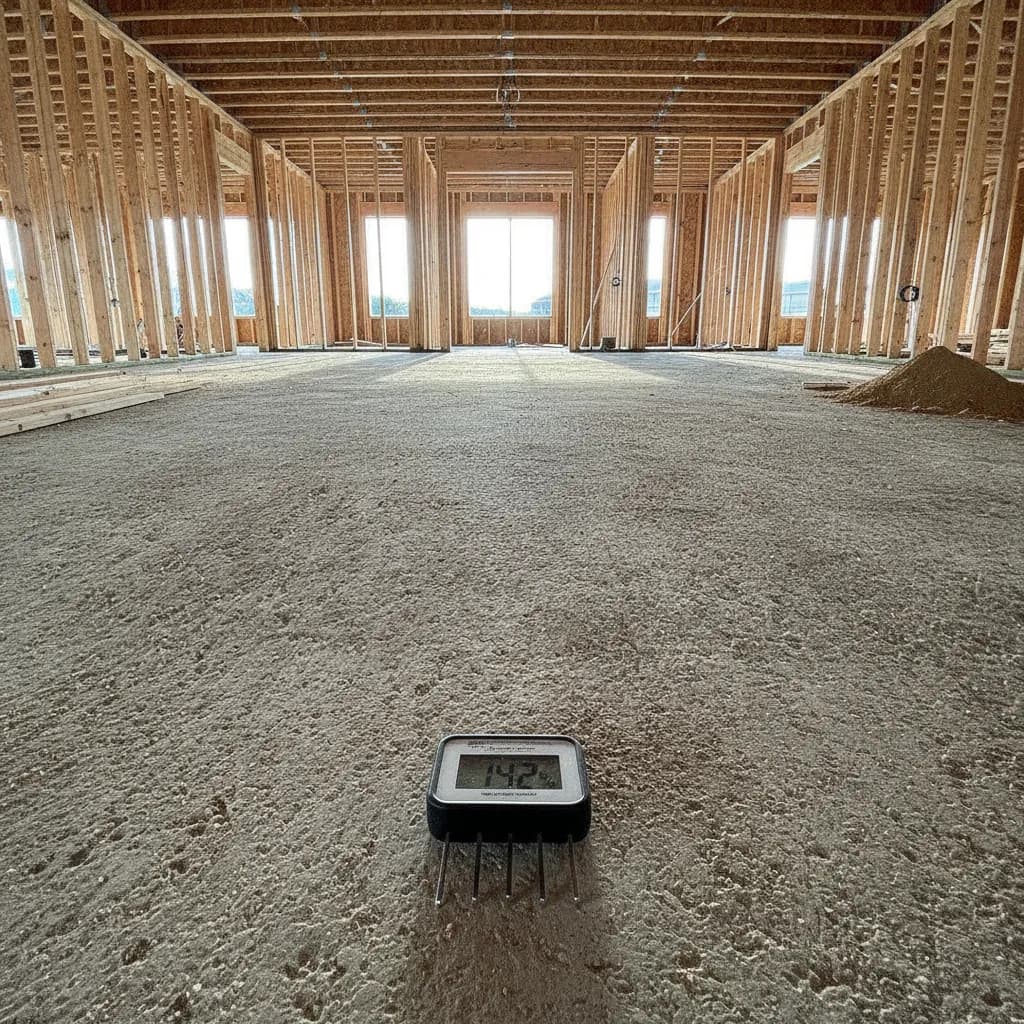
Does elevation itself hurt floors? Not directly — flooring doesn't care about air pressure. Elevation matters through what it brings: longer heating seasons, drier heated air, bigger snow loads at the door, and the second-home occupancy patterns this article is really about. Should I acclimate flooring differently for a cabin? Same principle, stricter execution: condition the material to the environment the cabin will actually maintain, verified with a moisture meter — which means the heating plan has to exist before the flooring does. Is reclaimed or rustic solid wood a bad idea in a cabin? It's a character-rich, eyes-open choice for a full-time mountain home and a risky one for a setback weekender; the schedule, not the wood, is usually the deciding factor.
A Note on Where We're Headed
Mountain work is a growing part of what we do, and we're building out a dedicated McCall-and-mountain-homes resource hub with deeper guides — cabin species choices, wood-stove humidity, rental-grade specs — to go with our existing mountain flooring pages. If you're planning floors for a place in Valley County, Alderwood Flooring will talk through how the building will actually be used before recommending anything. Free estimates, mountain honesty included.
Sources
USDA Forest Products Laboratory, Wood Handbook — wood-moisture relations and equilibrium moisture content: https://research.fs.usda.gov/treesearch/37440
National Wood Flooring Association — acclimation and installation guidance: https://nwfa.org/technical-standards/
Tile Council of North America — tile standards for wet and high-abuse areas: https://www.tcnatile.com/

Ready for Floors You'll Love?
Ready to talk through your project? Free estimates throughout The Treasure Valley & Boise Metro.