
Process & Trust
How to Read a Flooring Quote: Red Flags to Watch
Two quotes for the 'same' job can describe completely different projects. A line-by-line guide to what a real flooring quote includes — and the omissions that cost you later.
Process & Trust · 7 min read
Collect three flooring quotes in the Treasure Valley and you'll usually get three documents that barely resemble each other — a detailed multi-line proposal, a one-line total on a text message, and something in between. Homeowners understandably compare the bottom numbers, but the bottom number is the least informative line on the page. The real information is in what each quote includes, what it quietly excludes, and what it doesn't mention at all — because the cheapest quote is often just the least complete description of the same job, with the difference arriving later as change orders. Here's how to read a flooring quote like someone who's seen a few hundred of them.
The Anatomy of a Complete Quote
A quote worth signing describes the project specifically enough that a stranger could tell what's being bought. Scope: which rooms, closets, and stairs, with measured areas. Product: not "LVP" or "engineered hardwood," but the manufacturer, line, color, and the specs that drive both price and lifespan — wear layer thickness for vinyl, veneer thickness and construction for engineered wood, species and grade for solid. Two quotes can both say "engineered oak" and describe products years apart in service life; if the product line isn't named, you can't compare quotes at all, and you also can't verify later that what arrived is what was bid.
Then the work around the product, which is where the money quietly lives: removal and disposal of existing flooring (tile demo in particular is real labor); subfloor preparation and how unknowns will be handled; moisture testing over concrete; underlayment by name; transitions, reducers, and stair nosings; baseboard or quarter-round handling — removed and reinstalled, replaced, or untouched; and furniture and appliance moving, with its limits spelled out. Finally the logistics: who acquires the material, roughly when work starts and how long it runs, payment schedule, and the warranty split — the manufacturer covers the product, the installer should stand behind the workmanship in writing, and those are different promises from different parties.
Subfloor Prep: The Line That Predicts the Change Order
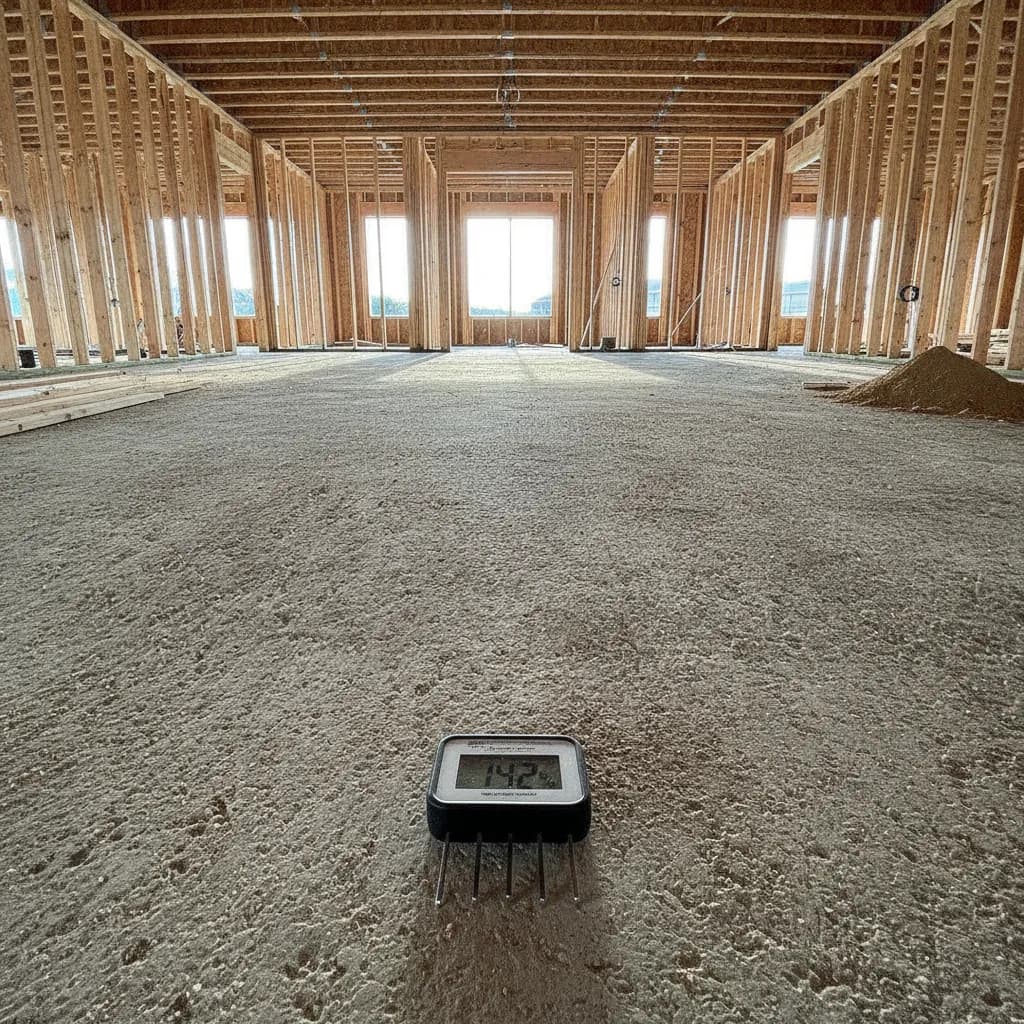
If one line on a quote forecasts whether your project ends at the quoted price, it's subfloor preparation. Every floor's performance depends on what's under it, and what's under it is partly unknowable until the old floor comes up. Honest quotes handle that honestly: they state what prep is included, and they define how surprises — soft spots, out-of-flat slabs, old adhesive — will be priced if found. A quote that never mentions the subfloor hasn't eliminated that risk; it's just left the number off the page. The same applies to moisture testing over slabs: for glue-down and wood floors over concrete, testing against the manufacturer's published limits should be in the process, and its absence from a quote is a small tell about the installer's habits.
Allowances, Exclusions, and Other Soft Spots
Watch for allowance language — "flooring allowance of X per square foot" is a placeholder, not a price, and it converts to a real number only when a real product is chosen. Watch for excluded quantities: a quote measured generously low reads cheaper today and reconciles expensively later. And read the exclusions list with respect — a quote that plainly states what it doesn't include is being more honest than one with no exclusions listed, because every job has them whether they're written down or not.
Red Flags Worth Taking Seriously
A price given sight-unseen, without anyone measuring or looking at the existing floor, is a guess wearing a quote's clothing. A total with no product names is unpriceable and uncomparable. Pressure tactics — a price that expires today, a discount for deciding on the spot — are sales mechanics, not measurements of the work. A large majority of the money demanded up front deserves caution (a reasonable deposit is normal; most of the total before work starts is not). No written workmanship warranty, no license or insurance answer, and no paperwork at all each speak for themselves. None of these makes a contractor a villain — but each one moves risk from their side of the table to yours, and you should price that in.
Comparing Quotes Fairly
Put the quotes side by side and normalize them before judging: same product specs or honestly noted differences, same scope, same prep assumptions, same handling of baseboards and transitions. It's routine for the "expensive" quote to turn out to be the complete one and the "cheap" quote to be the same project with pages missing. When a number is dramatically lower, the polite and productive question is "what does this include?" — the answer teaches you more than the number did. And weigh the conversation itself: the estimator who measured carefully, asked how you live, and volunteered the boring details about moisture and prep is showing you how the crew will work.
Three Questions That Sort Any Bidder
If you only have time for three questions, make them these. "What could change this price once work starts?" — an honest estimator has a ready, specific answer about subfloor unknowns; a hedger says nothing will. "Who exactly will be in my house?" — employees, a regular crew, or whoever's available matters for consistency and accountability. "What does your workmanship warranty cover, in writing?" — the answer separates companies that plan to be reachable next year from ones that don't. None of these questions is rude; contractors worth hiring answer all three without flinching.
We hold Alderwood Flooring quotes to the standard in this article — named products, written scope, prep and testing spelled out — because we'd rather lose a bid than win one on a missing page. If you're gathering quotes anywhere in the Treasure Valley, we're glad to be one of them, and we'll happily explain any line on ours. Free estimates, every line legible.
Sources
National Wood Flooring Association — installation standards a professional quote should reflect: https://nwfa.org/technical-standards/
Wagner Meters — why slab moisture testing belongs in a flooring proposal: https://www.wagnermeters.com/concrete-moisture-test/
Explore related


Ready for Floors You'll Love?
Ready to talk through your project? Free estimates throughout The Treasure Valley & Boise Metro.