Process & Trust
New-Construction Flooring in Idaho: Timing and Teamwork
Flooring is one of the last trades in a new build — and the decisions behind it happen months earlier. Where floors fit in the schedule, and how to work with your builder instead of around them.
Process & Trust · 7 min read
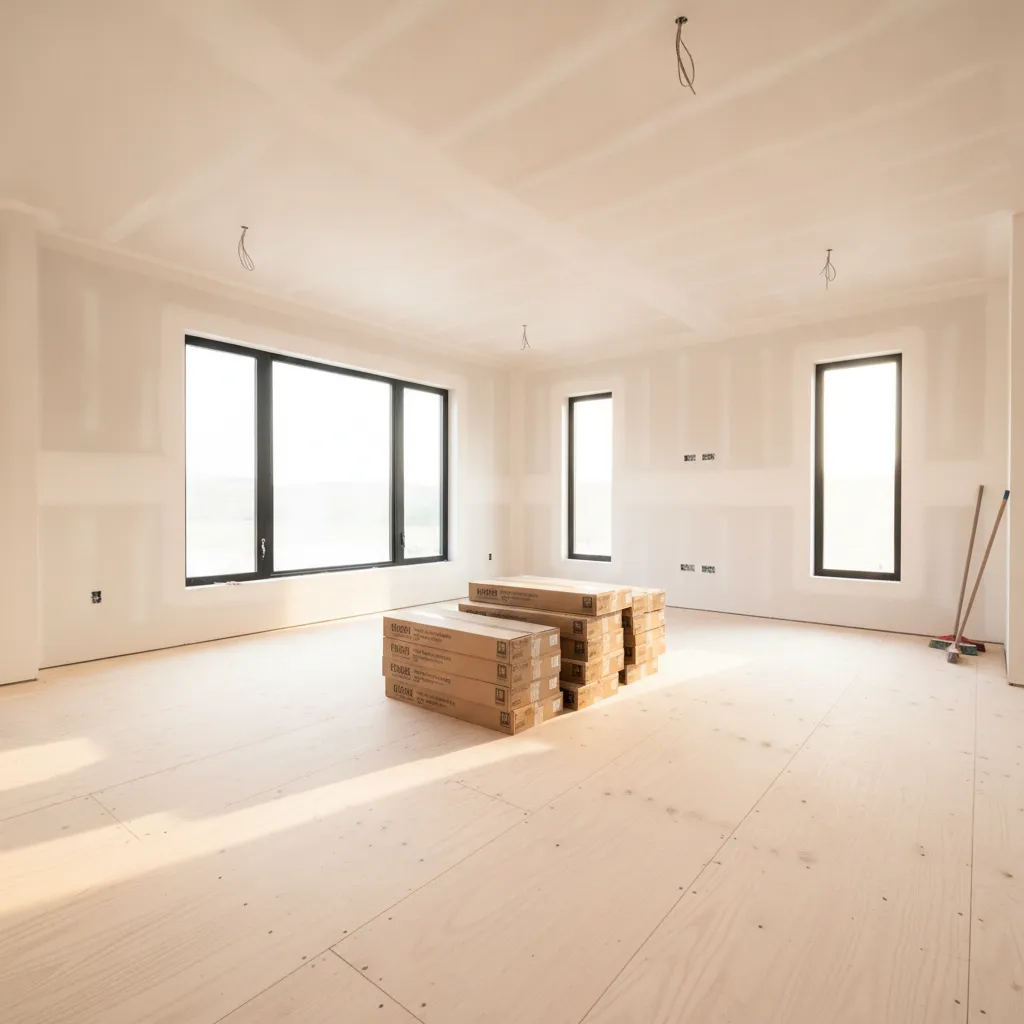
Drive through any growing corner of the Treasure Valley — Kuna, Star, the west edges of Meridian and Caldwell — and you can watch the same sequence repeat lot by lot: foundation, framing, roof, and then months of interior work that ends, almost always, with flooring. That last-trade position is no accident, and it shapes everything about how new-construction flooring goes right or wrong. The floor arrives when the house is nearly done, but the decisions that determine whether it succeeds were made months earlier — at a design center, in a schedule meeting, or by default when nobody asked the right question. Here's how the timeline actually works, whether you're building custom, buying a production home, or a builder yourself.
Where Flooring Sits in the Build Sequence
Flooring is deliberately late in the parade of trades. The building has to be dried in — roof, windows, exterior doors — before anything moisture-sensitive comes inside. Then mechanical, electrical, and plumbing rough-ins, insulation, drywall, texture, and paint all happen first, because every one of those trades would rather work over a subfloor than over a finished surface, and because several of them are messy in ways no floor should meet. The usual order in our market puts hard-surface flooring after paint and before (or alongside) finish trim, with carpet dead last, days before the final clean. Custom builds sometimes flip details — wood flooring before cabinets so the boxes sit on top of continuous flooring, or after, so the flooring dodges cabinet-installation traffic — and both sequences are defensible when they're chosen on purpose rather than by whoever showed up first.
The Wettest House Meets the Fussiest Trade
Here's the tension at the heart of new-construction flooring, and it's sharper in Idaho than the schedule ever acknowledges: the weeks right before flooring installation are the wettest weeks of the building's entire life. Drywall mud, texture, primer, and paint release a remarkable amount of water into the air as they dry, and a just-painted house can sit at humidity levels it will never see again once people live in it. Wood flooring conditioned to that temporary swamp will equalize to a moisture content that's flat-out wrong for a Treasure Valley home in service — and then shrink toward reality during the first heating season, opening gaps that get blamed on the product. The National Wood Flooring Association's guidance is built around a simple principle that solves this: acclimate and install at the conditions the home will actually operate at, which in practice means the permanent HVAC system running at normal living settings before wood flooring enters the building. Temporary construction heaters deserve special mention, because the unvented propane types add water vapor to the air as they burn — they warm the schedule along while quietly working against the wood.
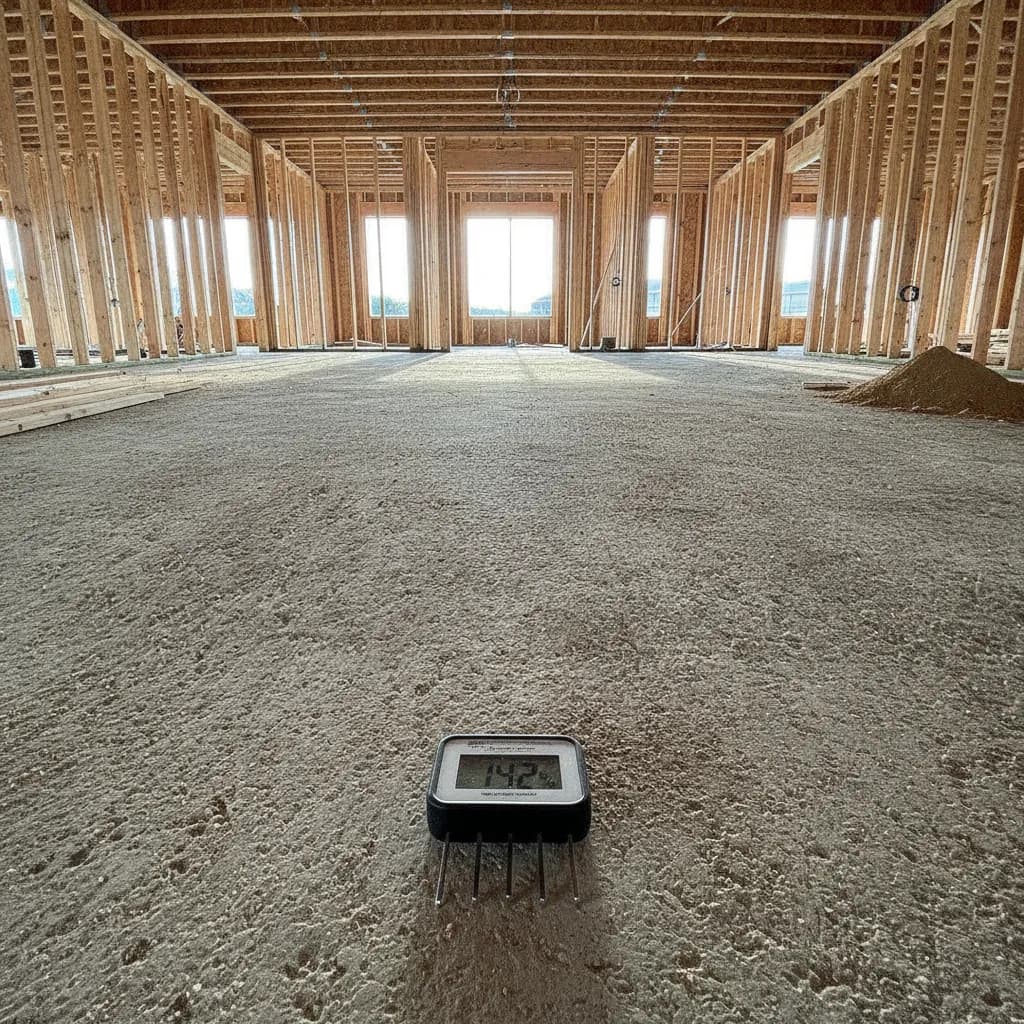
Slabs have their own version of the same problem: concrete poured months earlier is often still releasing construction moisture on flooring day, which is why testing against the flooring manufacturer's published limits belongs in every new-build schedule with glue-down or wood floors over concrete. We've written separately about how that testing works; on a new build, the point is simply that it happens before the install date is set, not after.
The Decisions Happen Earlier Than the Install
On a production home, flooring choices close months before flooring day — usually at a design-center appointment early in the build, when the framing may not even be up. Two things are worth carrying into that meeting. First, ask for the actual product specifications, not the gallery names: the wear-layer thickness on the vinyl options, the veneer thickness and construction on any engineered wood, the species and grade on solid. Upgrade tiers are only comparable when you can see what changes between them, and the label on the sample board rarely says. Second, understand what the allowance or included spec really covers — underlayment, transitions, stairs, and prep have a way of living outside the headline number. We keep a deeper guide to exactly this conversation on our builder hub at /builders, including a walkthrough of spec-versus-upgrade decisions at /builders/spec-vs-custom-upgrades.
Builder's Installer or Your Own?
Most production buyers use the builder's flooring package, and often that's the sensible call — it's financed with the house, warranted through the builder, and installed by crews who know the product. The alternative worth knowing about: some buyers take the base flooring (or negotiate a credit), close, and then have the floors they actually want installed before move-in. It trades convenience for control, and it's most attractive when the design center's upgrade path doesn't include the product you're set on. On custom builds the question is more open, and the answer is mostly about coordination: a flooring contractor who communicates with the superintendent, hits the schedule window, and returns for punch items is worth more than any single product decision. That coordination rhythm — site readiness, schedule windows, protection after install — is its own craft, and we've detailed how we handle it at /builders/scheduling-site-coordination.
Protecting the Floor Through the Finish Line
A floor installed at ninety percent completion still has to survive the last ten percent: trim carpenters, punch-list painters, appliance deliveries, and the final clean all march across it. Good practice is boring and effective — breathable protection paper taped to itself rather than to the finish, appliance paths planned instead of improvised, and a real inspection at the blue-tape walk while fixes are still the schedule's problem rather than the homeowner's. Flooring damage found at walk-through is normally the builder's to resolve; flooring damage found after closing becomes a warranty conversation, which is why the walk-through deserves twenty unhurried minutes on hands and knees in raking light. How punch and warranty responsibilities typically divide between builder and flooring contractor is covered at /builders/punch-warranty-service.
Quick Answers
When should wood flooring acclimate in a new build? After the wet trades are finished and the permanent HVAC has been running at living conditions — acclimating earlier just calibrates the wood to a house that won't exist in a month. Does building through an Idaho winter change anything? The sequence holds, but the humidity swings are bigger: cold outside, wet trades inside, then furnace-dry — which makes the run-the-real-HVAC rule less optional, not more. Can flooring go in before cabinets? Either order can be right; what matters is that the flooring, cabinet, and countertop trades all know which order was chosen, because transitions and toe-kick heights depend on it. Who owns a flooring problem discovered at the walk-through? The builder — document it at the walk, in writing, and the accountability stays where it belongs.
Alderwood Flooring works new construction across the Treasure Valley, from single custom homes to subdivision schedules — our builder resource hub at /builders covers the tract side at /builders/tract-subdivision-flooring and beyond. Building your own home and want a second opinion on the flooring plan? Free estimates, and we're happy to talk sequence before we ever talk product.
Sources
National Wood Flooring Association — technical standards, acclimation and installation guidance: https://nwfa.org/technical-standards/
Wagner Meters — concrete slab moisture testing for new construction: https://www.wagnermeters.com/concrete-moisture-test/
USDA Forest Products Laboratory, Wood Handbook — wood-moisture relations: https://research.fs.usda.gov/treesearch/37440
Explore related

Ready for Floors You'll Love?
Ready to talk through your project? Free estimates throughout The Treasure Valley & Boise Metro.