Cost & Value
Hardwood vs. LVP for Boise-Area Resale: An Honest Comparison
Does real wood actually help a Treasure Valley home sell? A no-invented-statistics look at how each floor reads to buyers — and when the answer is 'it depends on the house.'
Cost & Value · 6 min read
Ask this question online and you'll drown in suspiciously precise claims — hardwood adds exactly this percent to your sale price, buyers will pay exactly that much more. We're not going to do that, because those numbers are unverifiable for your house, your street, and your buyer. What we can offer is an honest framework from watching a lot of Treasure Valley flooring decisions play out: how each material reads to buyers, where each one actually moves the needle, and where the money is better spent elsewhere.
What Buyers Are Really Reading
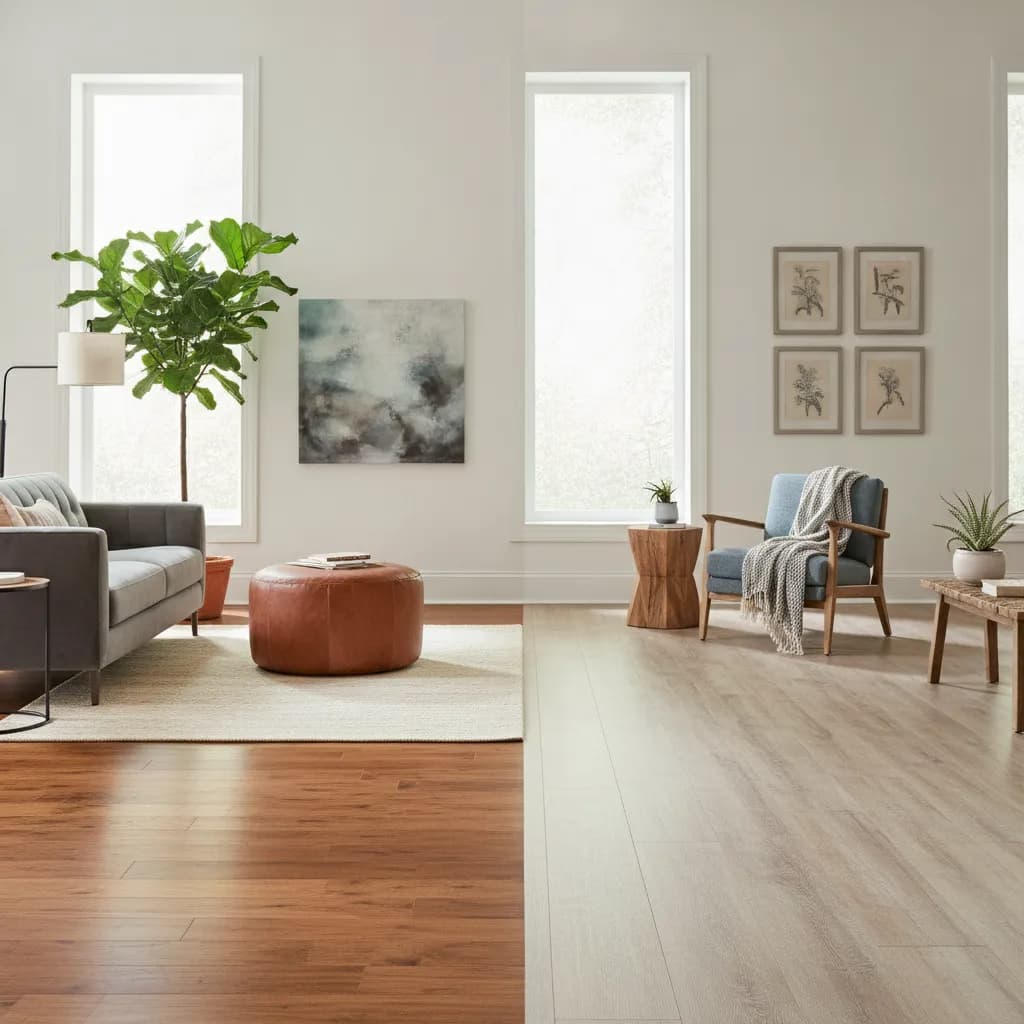
A floor tells a buyer two stories the moment they walk in. The first is aesthetic — does the house feel warm, current, cared for? The second is a maintenance forecast — is this floor something I'll need to deal with? Real hardwood tends to win the first story: it reads as permanent, premium, and renewable, and "real hardwood floors" remains a phrase that earns its place in a listing. LVP tends to win the second story: buyers increasingly recognize it and read it as durable and worry-free, especially where they expect water and wear.
Notice that neither story is about the material in the abstract. Both are about expectations — and expectations are set by the house itself.
Match the Floor to the House's Story
This is the part generic advice misses. A restored bungalow in the North End or a mid-century home on the Bench carries an expectation of real materials; refinished original oak in that setting is a selling feature that LVP genuinely cannot replicate, and swapping period wood for vinyl there can actively work against the home's appeal. Meanwhile, in a newer subdivision home in Nampa or Kuna, quality LVP is the neighborhood's native language — buyers expect it, judge it on condition and color rather than category, and rarely pay extra because one listing has hardwood where every comp has vinyl.
Price tier matters the same way. As homes move up-market — Eagle, parts of Meridian, the foothills — buyer expectations shift toward real wood in the main living spaces, and hardwood stops being an upgrade and starts being table stakes. In entry-level and rental-heavy segments, durable LVP in good condition is exactly what the buyer pool wants to see. The question is never "which floor is worth more," it's "which floor does this specific house promise."
Condition Beats Category — Every Time
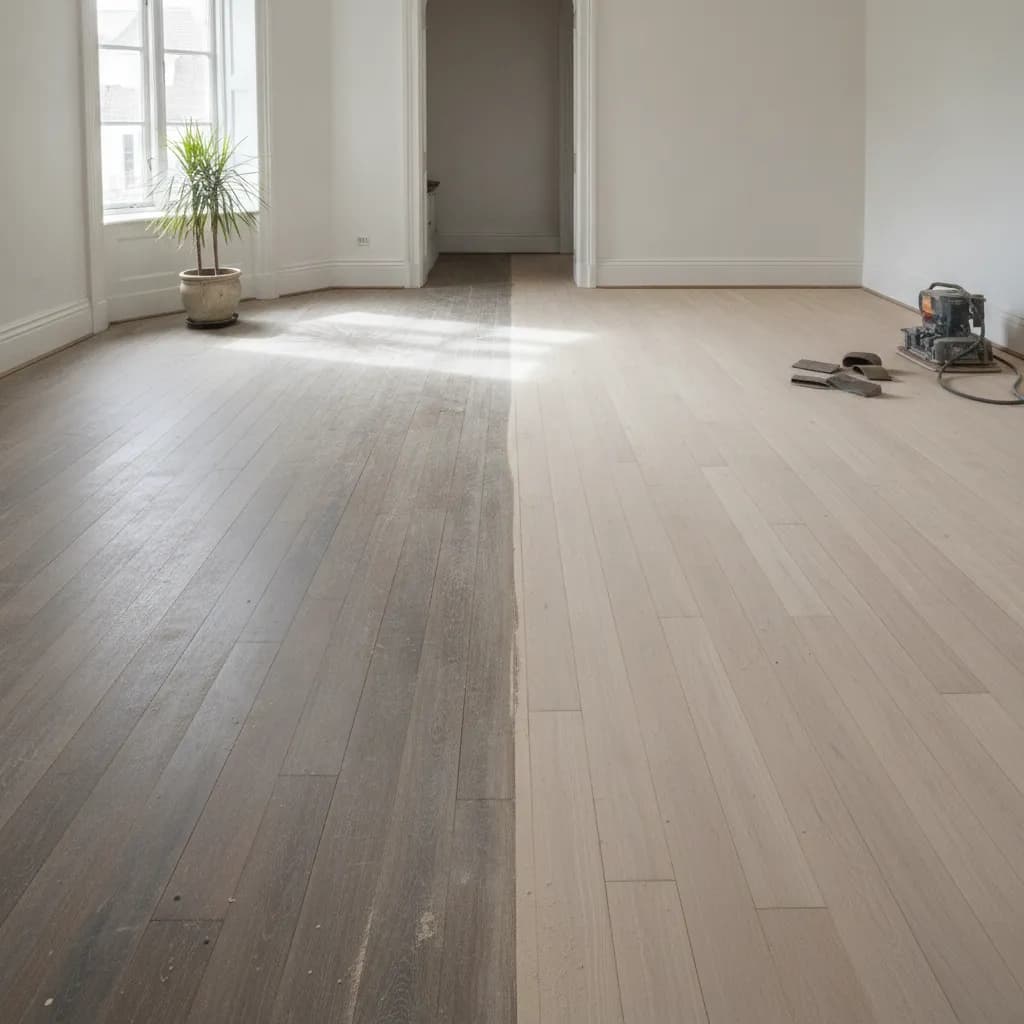
Here's the most reliable rule in the whole conversation: a floor in excellent condition outsells a nominally better floor in poor condition. Scratched, gapped, dated-orange hardwood does not out-show clean, current LVP just because it's real wood. Worn builder vinyl with open seams doesn't out-show well-kept anything. If you're preparing to sell, the highest-return flooring move is usually not a category upgrade at all — it's making what you have excellent: refinishing tired hardwood (often the single most transformative dollar in the house, since the wood is already paid for), or replacing genuinely worn LVP with clean, neutral, mid-spec LVP rather than reaching for a premium product the sale won't reward.
Where Each One Earns Its Keep
Hardwood's resale case is strongest in main living areas of mid-range-and-up homes, in character homes where it belongs, and anywhere it already exists and merely needs refinishing. Its case is weakest in wet rooms — buyers have learned to squint at wood in kitchens and baths — and in segments where no comp has it. LVP's case is strongest in kitchens, baths, laundries, basements, rentals, and newer tract homes; its ceiling shows up in upper-tier living spaces where buyers expected wood and can tell the difference underfoot. Plenty of Treasure Valley homes sensibly run both: wood where it warms the story, LVP where water lives.
Our Honest Bottom Line
Buy floors for the years you'll live on them, and let resale be the tiebreaker, not the driver. If you're selling soon, spend on condition, not category. If you're staying, choose the material that fits your rooms and household — a floor you love for a decade that also happens to show well is the actual win. And be skeptical of anyone quoting you an exact return percentage; they're quoting a national average at best, and your buyer hasn't read it.
Quick Answers
Do appraisers give hardwood a specific dollar credit? Appraisals lean on comparable sales, not a flooring line item — if nearby comps with wood sell stronger, wood helps; there's no fixed per-square-foot credit to bank on, whatever the internet says. Does mixing hardwood and LVP hurt at sale time? Not when the zoning is logical — wood in living spaces, LVP or tile in wet rooms reads as thoughtful, not cheap. What buyers notice is abrupt material changes mid-view or clashing wood tones between adjacent rooms, so plan transitions at doorways and keep the palette coherent. Should I replace carpet before listing? Worn, stained carpet is the one floor condition that reliably costs more than it saves to leave in place; clean neutral replacement — carpet upstairs, hard surface in living areas — is standard pre-listing advice from most agents for a reason. Does buyer taste here differ from national advice? Mostly in expectations by neighborhood, which is the whole point of this article: match the street, not the survey.
Weighing wood against LVP for a specific Treasure Valley house? Alderwood Flooring will walk it with you and tell you plainly where each one pays off — free estimates, no theatrics.
Sources
National Wood Flooring Association — consumer resources on real wood floors: https://woodfloors.org/
NWFA — technical standards and installation guidance: https://nwfa.org/technical-standards/

Ready for Floors You'll Love?
Ready to talk through your project? Free estimates throughout The Treasure Valley & Boise Metro.