Multifamily Technical
Fitness & Amenity Flooring for Communities
Community gyms, clubhouses, and pet spas each demand a different floor. Here's how to specify rubber, resilient, and wet-room systems for impact, acoustics, and Idaho moisture — so the amenity survives a decade and helps lease the building.
Multifamily Technical · 9 min read
A fitness room is the amenity a prospective renter walks into and quietly evaluates before they ever look at the model unit. It is also, from a flooring standpoint, the hardest room in the building. A community gym combines dropped weights, treadmills running eight hours a day, rolling cardio loads, spilled water and sweat, and — in almost every mid-rise and podium project in the Treasure Valley — an occupied apartment directly below. The corridor carpet tile and the luxury vinyl plank in the units are chosen for wear and looks. Amenity flooring is chosen for physics: how it absorbs a 45-pound dumbbell, how it keeps a 6 a.m. rowing machine from waking the tenant in the unit beneath, and how it survives moisture that would ruin a wood floor.
That is why fitness and amenity flooring deserves its own specification rather than being folded into the general flooring package. The clubhouse, the pet spa, the yoga studio, the game room, and the weight floor each ask something different from the material, and the right answer is rarely a single product. Getting it wrong is expensive and visible — cupped planks under a treadmill, a hollow drumming sound telegraphing through the ceiling below, a rubber floor that off-gasses for weeks after a summer install. Getting it right helps the building lease and keeps the amenity in service for a decade.
This guide walks through how to specify flooring for community fitness centers, clubhouses, pet areas, and amenity rooms in a Boise-metro building: the material families, the sound and impact standards that matter, the Idaho-specific moisture and climate realities, and how the pieces fit together into a package a developer can actually build.
Why Amenity Flooring Is a Different Specification
Corridor and unit flooring is a wear-and-appearance problem. Amenity flooring is a load, acoustics, and chemistry problem layered on top of wear and appearance. A weight area sees concentrated impact loads that would dent or fracture most resilient products. A cardio zone sees continuous rolling and vibration. A clubhouse sees heels, spilled coffee, and event traffic. A pet spa sees standing water, urine, and aggressive cleaning chemistry.
Because these rooms usually sit on structure above occupied space — the classic podium or wood-frame stack — they also carry an acoustic obligation the corridors do not. The International Building Code (IBC) sets minimum sound ratings for floor-ceiling assemblies separating dwelling units, and a fitness floor generating impact energy directly above a bedroom is exactly the condition those ratings were written for. Treat amenity flooring as its own line item in the spec, with its own assembly, and the rest of the decisions get easier.
Rubber and Specialty Resilient for Weight and Cardio
The weight floor is where rubber earns its place. Vulcanized rubber tile and rolled rubber, typically 8 mm to 3/8 inch for general fitness and thickening to 3/4 inch or built-up "platforms" under free-weight and Olympic-lifting stations, absorbs the point impact of a dropped dumbbell and protects both the slab and the equipment. Rolled goods give you fewer seams across a big open floor; interlocking tiles are easier to stage through a finished building and to replace in sections. For a mixed room, many communities zone it: heavier rubber under the racks and platforms, a thinner rubber or a specialty resilient in the cardio and stretching zones where comfort and a cleaner look matter more than impact absorption.
Two chemistry notes belong in the spec. First, rubber floors carry an odor when new; specifying low-VOC product and allowing ventilation and cure time before occupancy prevents complaint calls. Look for FloorScore certification, administered by SCS Global Services under the RFCI program, which sets an indoor-air-quality threshold for hard-surface flooring and adhesives. Second, EPDM-based and premium recycled-rubber products hold color and resist the graying that cheap SBR crumb develops under UV and cleaning. For cardio zones and studios, specialty resilient sheet — heterogeneous vinyl or polyurethane sport surfaces — can deliver a monolithic, seam-welded, water-resistant floor that reads more like a boutique studio than a garage gym.
Sound and Impact Control Above Occupied Units
This is the decision that protects your rent roll. Two ratings govern it. Sound Transmission Class (STC), tested under ASTM E90 and classified by ASTM E413, measures how well the assembly blocks airborne sound — music, voices, the whir of a treadmill motor. Impact Insulation Class (IIC), tested under ASTM E492, measures structure-borne impact — the far more punishing case of a weight hitting the floor. IBC prescribes minimums of STC 50 and IIC 50 for assemblies between dwelling units (field-tested values are allowed to be 45), and a fitness floor above a unit should be engineered well past the minimum.
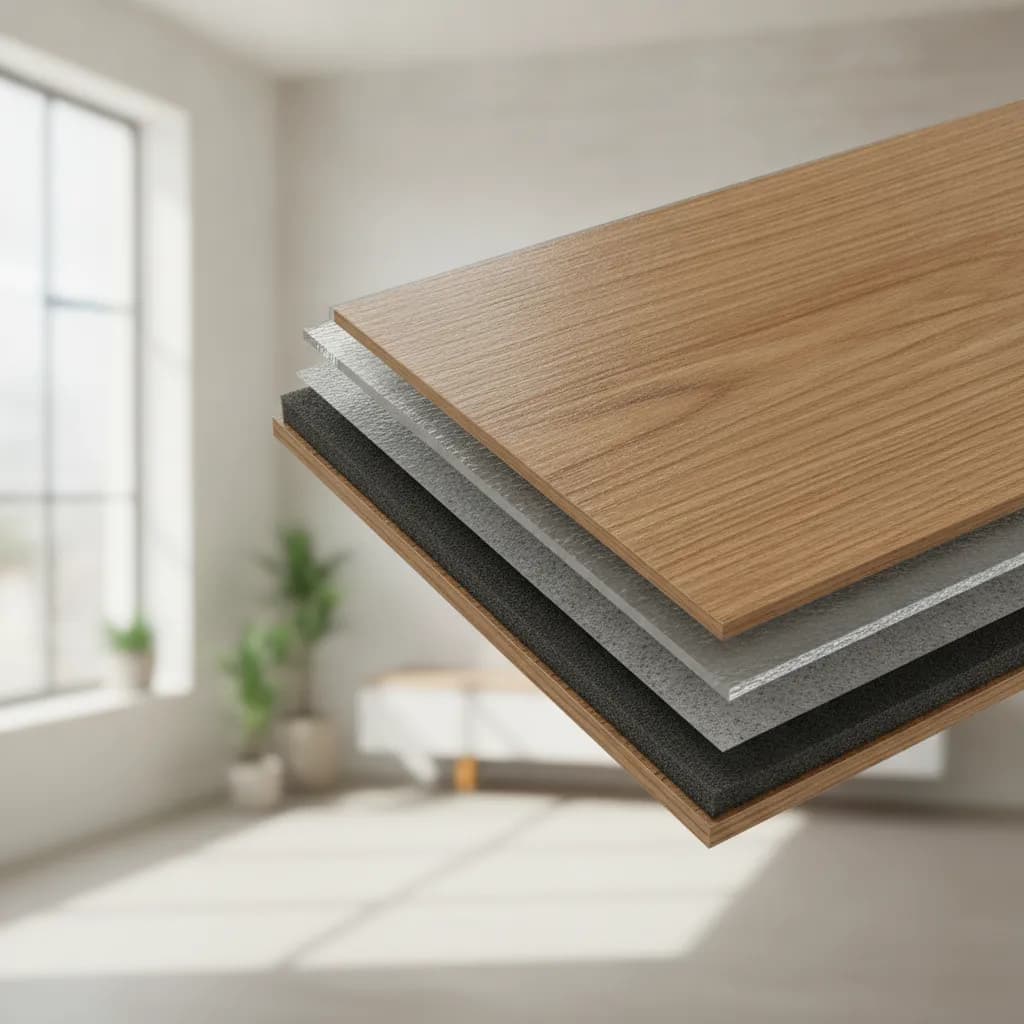
The floor covering is only one layer. Real impact control comes from the full assembly: an acoustic underlayment or mat under the rubber, sometimes a floated concrete or gypsum topping, and attention to the ceiling below. Rubber's own mass helps, but a resilient acoustic mat rated by the manufacturer with a tested IIC in a comparable assembly is what actually keeps a dropped dumbbell from being felt two floors down. Ask for the tested assembly, not a bare covering number — an IIC rating is a property of the whole floor-ceiling sandwich, not the tile alone. For the busiest weight rooms, isolated lifting platforms with their own rubber-and-plywood buildup localize the worst impacts away from the slab. The same acoustic discipline that governs a corridor and common-area refresh applies here with the volume turned up.
Pet Spas and Wet Amenity Rooms
Pet washing stations, dog runs, and grooming rooms are wet rooms that happen to be indoors. The floor sees standing water, urine's acidity, hair, and frequent disinfection. The right answers are impervious and seamless: a fluid-applied polyurethane or epoxy resinous floor with an integral cove base, or welded homogeneous sheet vinyl turned up the wall. Both eliminate the grout lines and seams where odor and bacteria colonize. Slope the substrate to a drain and the room cleans itself.
Slip resistance is not optional in a room that is wet by design. ANSI A326.3 defines the Dynamic Coefficient of Friction (DCOF) test and sets a 0.42 wet threshold as a baseline for level interior floors expected to be walked on wet; a pet spa or any washdown area should meet or exceed it, and a textured resinous system can be specified well above it. If porcelain tile is chosen for its looks in an adjacent grooming lounge, it must be a through-body or glazed tile with a documented wet DCOF, not a polished tile that becomes an ice rink the moment a dog shakes off. Chemical resistance matters too — confirm the finish tolerates the quaternary and enzymatic cleaners these rooms actually get.
Idaho Climate Realities: Dryness, Moisture, and Radiant Heat
Two Idaho conditions shape amenity flooring. The first is our extreme seasonal humidity swing. High-desert winters combined with forced-air heat drive indoor relative humidity into the teens, while summers and washdown rooms run damp. Any wood or wood-adjacent product in a clubhouse — a real hardwood lounge floor, an engineered plank in a co-working nook — will move with that swing, so acclimation and expansion detailing are non-negotiable, a discipline covered in the fundamentals of engineered versus solid wood and moisture. Rubber and resilient products are far more forgiving of humidity swings, which is one more reason they dominate the fitness spec.
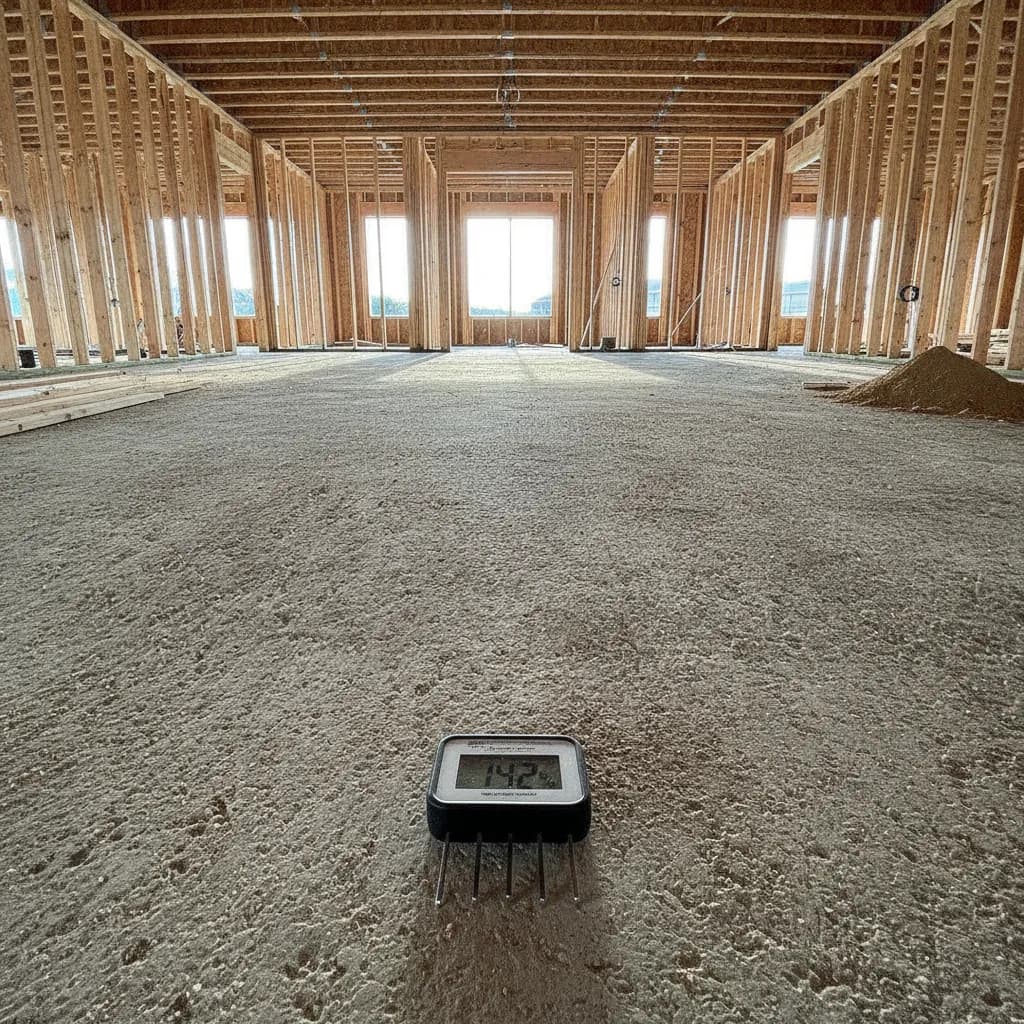
The second is slab moisture. Most Treasure Valley multifamily fitness rooms sit on slab-on-grade or a podium deck, and concrete gives up moisture for months. Before any adhered floor goes down, the slab should be tested: ASTM F2170 for in-situ relative humidity using embedded probes, and ASTM F1869 for moisture vapor emission rate with calcium chloride. Adhesives and resilient floors have published moisture limits; exceed them and you get bond failure, blisters, and pH-driven adhesive breakdown. Where slabs read high or the schedule can't wait, a topically applied moisture-mitigation membrane brings the surface within tolerance. If the amenity room uses radiant heat — increasingly common in premium Idaho builds — the flooring and adhesive must be rated for the operating temperature, and the system should be brought up to temperature gradually per NWFA and manufacturer guidance to avoid thermal shock and adhesive creep. The National Wood Flooring Association's moisture and radiant-heat guidelines are the reference standard for any wood component in these spaces.
Durability, Cleanability, and the Look That Leases
An amenity floor has to survive a decade and still photograph well for the leasing brochure. Durability lives in the details: seam-welded sheet goods instead of loose-lay in wet and high-traffic zones; commercial wear layers of 20 mil or greater on any luxury vinyl used in a clubhouse; rubber thickness matched to the actual load rather than the cheapest catalog number. Cleanability is a spec, not an afterthought — specify the maintenance chemistry with the floor so the property manager isn't stripping a finish that was never meant to be stripped.
The look matters because these rooms are marketing. A cohesive palette that carries from the amenity and common-area package into the fitness room reads as intentional and premium. Wood-look resilient in the yoga studio, a clean charcoal rubber with a color-fleck in the weight room, a bright welded sheet in the pet spa, and a warm porcelain or engineered floor in the clubhouse can share a tone even though each is a different material solving a different problem. That coherence is what a prospect registers as quality.
Sequencing, Transitions, and Detailing the Whole Package
The rooms don't exist in isolation; they connect. Where a rubber weight floor meets a clubhouse hardwood, or a wet pet spa meets a dry corridor, the transition has to manage a height difference, a moisture boundary, and a wear line all at once. Specify transition profiles and thresholds early, detail the waterproofing at wet-room thresholds, and coordinate finish floor heights across trades so you don't discover a 1/2-inch step at substantial completion. Adhesive and underlayment compatibility should be verified as a system — the mat, the adhesive, and the covering from manufacturers whose products are warranted to work together. Sequencing matters in a live building: staging interlocking rubber or tile through finished corridors, protecting cured resinous floors during equipment install, and allowing rubber to off-gas before the space is occupied all belong in the schedule, not the punch list.
Putting It Together for Your Community
Fitness and amenity flooring rewards a room-by-room specification and punishes a one-size package. Match rubber thickness to real impact loads, engineer the acoustic assembly to beat the IBC minimums where you sit above occupied units, make wet rooms genuinely impervious and slip-safe, and respect Idaho's moisture and humidity realities with slab testing and proper acclimation. Do that, and the amenities work as hard as they look.
Alderwood Flooring is an Idaho Registered Contractor (Idaho RCE-6681702), insured, with 20+ years of combined experience specifying and installing resilient, rubber, and specialty flooring for Treasure Valley communities, backed by a workmanship warranty. If you're planning a fitness center, clubhouse, pet spa, or full amenity package for a Boise-metro project, reach out through our contact form and we'll help you build a room-by-room spec that leases the building and holds up for the long run.
Sources & Further Reading
Ready for Floors You'll Love?
Ready to talk through your project? Free estimates throughout The Treasure Valley & Boise Metro.