Property Management
Student Housing Flooring
How to specify flooring that survives student housing — brutal wear, compressed academic-calendar turns, acoustics between stacked units, and repair-friendly systems built for high tenant turnover.
Property Management · 9 min read
Student housing lives a hard life. A unit that a market-rate renter treats gently gets four roommates, a semester of foot traffic, a mini-fridge dragged across the floor, and a move-out where everything leaves at once. Then the whole property turns over inside a few weeks in July or August, before the next lease cohort arrives. Flooring in this world is not a finish selection so much as an operating decision. It governs your turn cost, your downtime, your maintenance labor, and how many complaints you field about noise between stacked units.
For developers, apartment owners, and the property managers running purpose-built student housing across the Treasure Valley — near Boise State, and in the fast-growing rental stock feeding Boise's college and young-professional demand — the right specification pays for itself in avoided replacements and faster unit turns. The wrong one shows up as gouged planks, curling seams, and floors that fail long before the amortization schedule says they should. This guide walks through how to think about the material, the acoustics, the install sequencing, and the repair strategy that together make student housing flooring survivable at scale.
Alderwood Flooring approaches these projects as a capability question: what product and method will hold up under the real abuse, install fast across a whole building, and let your maintenance team fix a single unit without a specialty crew. We are an Idaho Registered Contractor (Idaho RCE-6681702), insured, with 20+ years of combined experience, and the framing below reflects how we would scope a student housing job here.
The Wear Reality: What Student Units Actually Do to a Floor
Design the floor for the worst tenant, not the average one. Student units see concentrated point loads from unpadded furniture, rolling desk chairs without mats, dropped weights, spilled drinks left overnight, and move-in and move-out days where every hard object in the unit gets dragged across the surface. The failure modes are predictable: surface scratches through the wear layer, dents at furniture feet, edge chipping at plank joints, and moisture damage where a spill sat in a seam.
The wear layer is the number that matters most, and it is measurable, not marketing. Luxury vinyl plank (LVP) and rigid-core SPC products are specified by wear-layer thickness in mils. For student housing, 20 mil is a reasonable floor and 22 to 28 mil buys real longevity in the highest-traffic units and common corridors. Rigid SPC (stone-polymer composite) cores resist the point-load denting that a softer WPC or flexible LVT will telegraph. For any resilient flooring, ask for the ASTM F1700 classification — it defines the grade and class of resilient plank and helps you compare products on the same axis instead of on a sample-board feel test. Durable, standardized product is the whole game here, and it connects directly to how you approach durable rental flooring across a portfolio.
Standardize One Product Across the Whole Property
The single most valuable decision in student housing is picking one primary floor and using it everywhere it makes sense — every bedroom, living area, and hallway, in one color and one SKU. Standardization is what makes the rest of the operation cheap. When every unit uses the same plank, your attic stock is fungible, a damaged board in unit 214 gets replaced from the same box that serves unit 411, and your turn crews stop guessing.
It also protects you against the discontinuation problem. Manufacturers rotate colors and retire lines on their own schedule, and a property running six different floors will eventually be unable to match any of them. Buy attic stock up front — plan for roughly 5 to 10 percent overage of the primary product, sealed and stored on site — so a mid-lifecycle repair does not force a whole-room replacement because the original SKU is gone. Standardizing also lets your maintenance staff master one installation method rather than five.
Acoustics Between Stacked Units
Noise is the complaint you cannot see on a walkthrough but hear about all year. In multi-story student housing, footfall from the unit above is the dominant grievance, and hard-surface floors make it worse than carpet did. Two ratings govern this. IIC (Impact Insulation Class), tested per ASTM E492, measures how well the floor-ceiling assembly blocks impact noise like footsteps. STC (Sound Transmission Class), from ASTM E90 and classified under ASTM E413, measures airborne noise like voices and TVs. The IBC sets a minimum of IIC 50 and STC 50 for assemblies between dwelling units (IIC 45 field-tested), but for student housing you want to clear that comfortably.
The practical lever is the underlayment. An acoustic underlayment rated for your assembly, or an SPC plank with a factory-attached pad, raises the delivered IIC. Insist on the manufacturer's tested assembly — the specific combination of subfloor, underlayment, and plank that produced the rating — because IIC is a property of the whole sandwich, not of the plank alone. Getting this right in the specification is far cheaper than retrofitting acoustic treatment into an occupied, complaint-generating building later.
Turning the Property on an Academic-Calendar Window
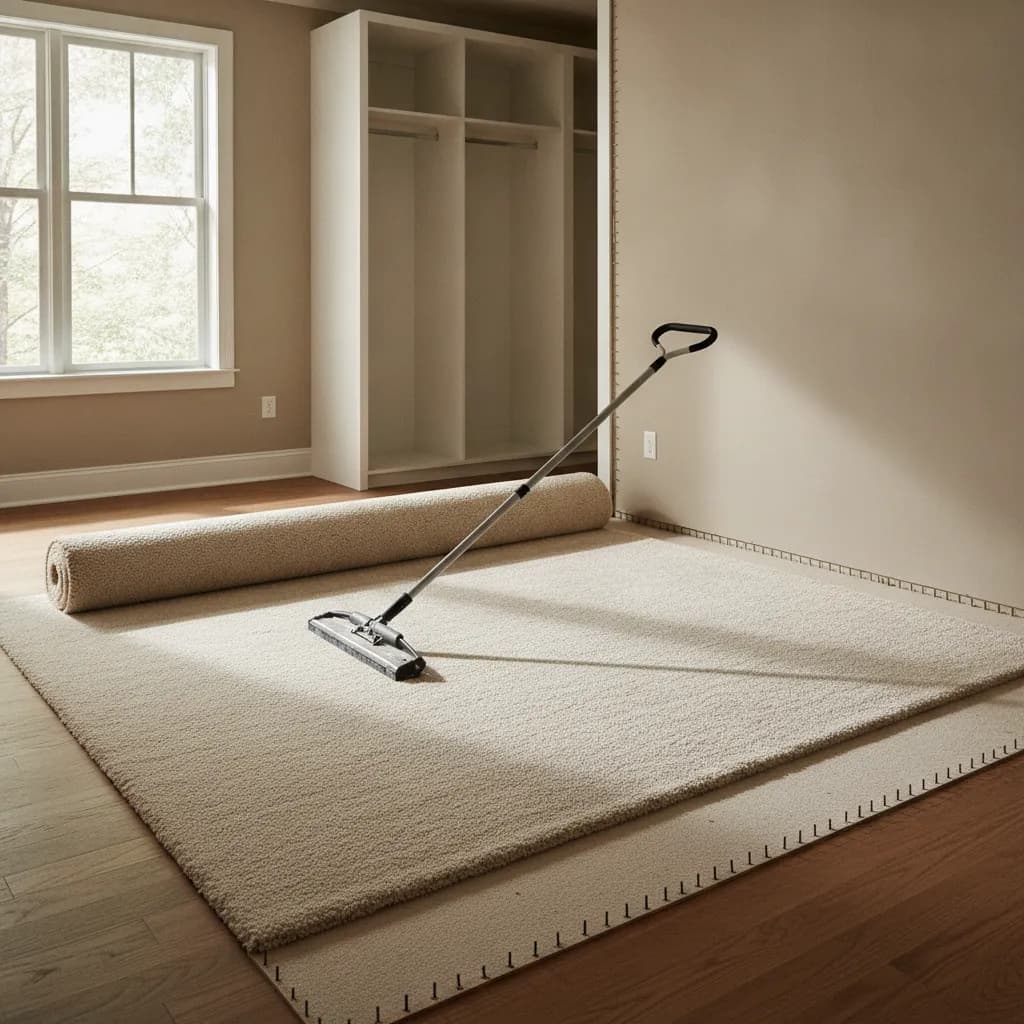
Student housing does not turn continuously. It turns almost all at once, in a compressed window between spring move-out and fall move-in, often just four to eight weeks to reset an entire property. That constraint should drive the flooring spec as much as durability does. A floating rigid-core SPC system installs fast, needs no adhesive cure or dry time, and is walkable immediately — which matters when painters, cleaners, and appliance crews are all sequencing through the same units on the same calendar.
The math is unforgiving at scale. If you are resetting 200 beds, a floor that takes one extra day per unit does not cost you one day — it cascades through the whole crew schedule and can push occupancy past the lease start date. Sequencing, staging attic stock on each floor, and choosing a product with no wet-cure dependency are how you protect the window. This is exactly the kind of throughput problem we plan around with turn scheduling and SLA, where the flooring method is chosen to fit the calendar rather than fight it.
Slab Moisture and the Idaho Climate Spine
Much of the Treasure Valley's newer multifamily is slab-on-grade, and concrete moisture is where floating floors quietly fail. Before any resilient flooring goes down over a slab, the concrete's moisture condition should be verified — not assumed. ASTM F2170 (in-situ relative humidity probes) and ASTM F1869 (calcium chloride moisture vapor emission rate) are the two standard tests, and they exist because a slab that looks dry at the surface can still drive vapor up through seams and adhesives. New construction slabs are the biggest offenders because they have not finished drying. Confirm the product's RH tolerance against the tested slab number, and use the specified moisture barrier where the readings call for it.
Idaho's high-desert climate adds a second consideration on top of the slab. Winters here are dry, and forced-air heat pulls indoor humidity down further, which makes any wood or wood-based product want to shrink and gap. This is a strong argument for dimensionally stable rigid-core SPC in student units — it moves far less with seasonal humidity swings than solid or engineered wood. Where a project does call for real wood in premium common areas or leasing offices, follow NWFA guidance on acclimation and jobsite conditioning, and expect to manage indoor humidity actively through the heating season. Entryways deserve their own attention: snow, gravel, and grit tracked in from parking lots and mudroom entries are abrasive, so specify walk-off matting and slip-resistant transitions. For entries and any wet-prone zones, check the floor's DCOF (dynamic coefficient of friction) against ANSI A326.3 to keep traction where water and snowmelt land.
Repair-Friendly Systems for High Turnover
High turnover means damage is not an exception — it is a monthly event. The flooring system should assume that and make single-plank replacement routine. Glue-down floors and sheet vinyl fail this test: a gouge means cutting out and patching, often with a visible seam or a whole-room redo. A click-lock floating floor, by contrast, lets a trained maintenance tech pull back to the damaged plank, swap it from attic stock, and re-lock the field — no adhesive, no specialty crew, no unit taken offline for days.
Design for that repairability deliberately. Keep the same-lot attic stock accessible, document the SKU and install date in your unit records, and train maintenance staff on the pull-and-replace method so a routine scratch does not become a work order to an outside contractor. The goal is a floor where the cost of any given repair is one plank and one hour, not one room and one weekend. Over a full lease cycle across many units, that difference is the whole maintenance line item.
Indoor Air Quality and Spec Compliance
Student housing packs a lot of new flooring into occupied space quickly, so what the product off-gasses matters. Resilient flooring and its adhesives can emit VOCs, and the meaningful signal is third-party certification rather than a vendor claim. FloorScore, administered through SCS Global under the RFCI, certifies that a hard-surface flooring product meets stringent indoor-air-quality VOC-emission criteria. For composite-wood components, CARB Phase 2 (now aligned with the federal TSCA Title VI formaldehyde limits) is the benchmark to require in the submittal. Writing these into the spec — FloorScore-certified plank, CARB Phase 2 / TSCA Title VI compliant cores — costs nothing extra on quality product and protects you on both air quality and institutional procurement requirements.
Scoping It for Your Property
There is no single right floor for student housing, but there is a right process: match wear layer and core to the real abuse, standardize one SKU with attic stock, choose the underlayment for a tested acoustic assembly, verify slab moisture before install, and pick a floating click-lock system so turns are fast and repairs are trivial. Get those five right and the floor stops being a recurring emergency and becomes a predictable, budgetable asset over the life of the building.
If you are planning a new student housing development, re-flooring an existing property, or standardizing a portfolio across the Treasure Valley, Alderwood Flooring can help you scope the product, the acoustics, and the turn sequencing to your calendar and your budget. Reach out through our apartment and multifamily flooring page or the contact form, and we will walk through the specification with you before a single box is ordered.
Sources & Further Reading
Explore related


Ready for Floors You'll Love?
Ready to talk through your project? Free estimates throughout The Treasure Valley & Boise Metro.