
Property Management
LVP vs. Carpet in Rentals: Total Cost of Ownership
A turn-by-turn cost model comparing luxury vinyl plank and carpet in Treasure Valley rentals — replacement frequency, per-turn labor, waterproofing, and the cases where carpet still pencils out.
Property Management · 11 min read
Most flooring decisions in rental portfolios get made on the wrong number. A buyer compares the installed price of carpet against the installed price of luxury vinyl plank, sees that carpet is cheaper per square foot on day one, and moves on. That comparison is real, but it answers a question almost no rental owner actually has. You are not buying a floor once. You are buying a stream of floors over the holding life of the asset, and the sticker price is only the first payment in that stream.
Total cost of ownership reframes the problem. It asks what a given flooring choice costs you across every lease cycle it lives through: the initial material and labor, yes, but also how many times you replace it, what each turn costs in cleaning versus tear-out, how tenants and pets wear it, how it behaves when a dishwasher line lets go, and what it does to the days a unit sits vacant. When you run the full model on Treasure Valley units — with our dry high-desert winters, forced-air heat, and the wave of new multifamily and tract product coming online across Ada and Canyon counties — the ranking usually flips. LVP costs more up front and less over time. But not always, and the exceptions matter as much as the rule.
This guide builds that model piece by piece, so you can run it on your own units instead of taking a blanket answer. The goal is not to sell you a product. It is to give you an honest framework, then show you where each material genuinely wins.
Start With the Right Cost Horizon, Not the Sticker Price
The single most important input in this analysis is your holding period, because it sets how many replacement cycles you are amortizing over. A builder-grade carpet in a rental typically survives two to four years of tenancy before it looks tired enough that it costs you showings — matted traffic lanes, filtration soiling along the baseboards, stains that no longer come out. Mid-grade LVP in the same unit is engineered for a service life measured in decades, and in practice you are far more likely to replace it because of a remodel or damage than because it simply wore out.
Put concrete cycles on it. Over a ten-year hold, a carpet floor might be replaced three times; the LVP is likely on its first and only installation. So the correct comparison is not carpet-per-foot versus LVP-per-foot. It is three carpet installations, plus the cleaning and disposal between them, versus one LVP installation. Once you frame the horizon honestly, the up-front premium on plank starts looking like what it is — a prepaid substitute for two future carpet jobs.
The Per-Turn Math Is Where LVP Quietly Wins
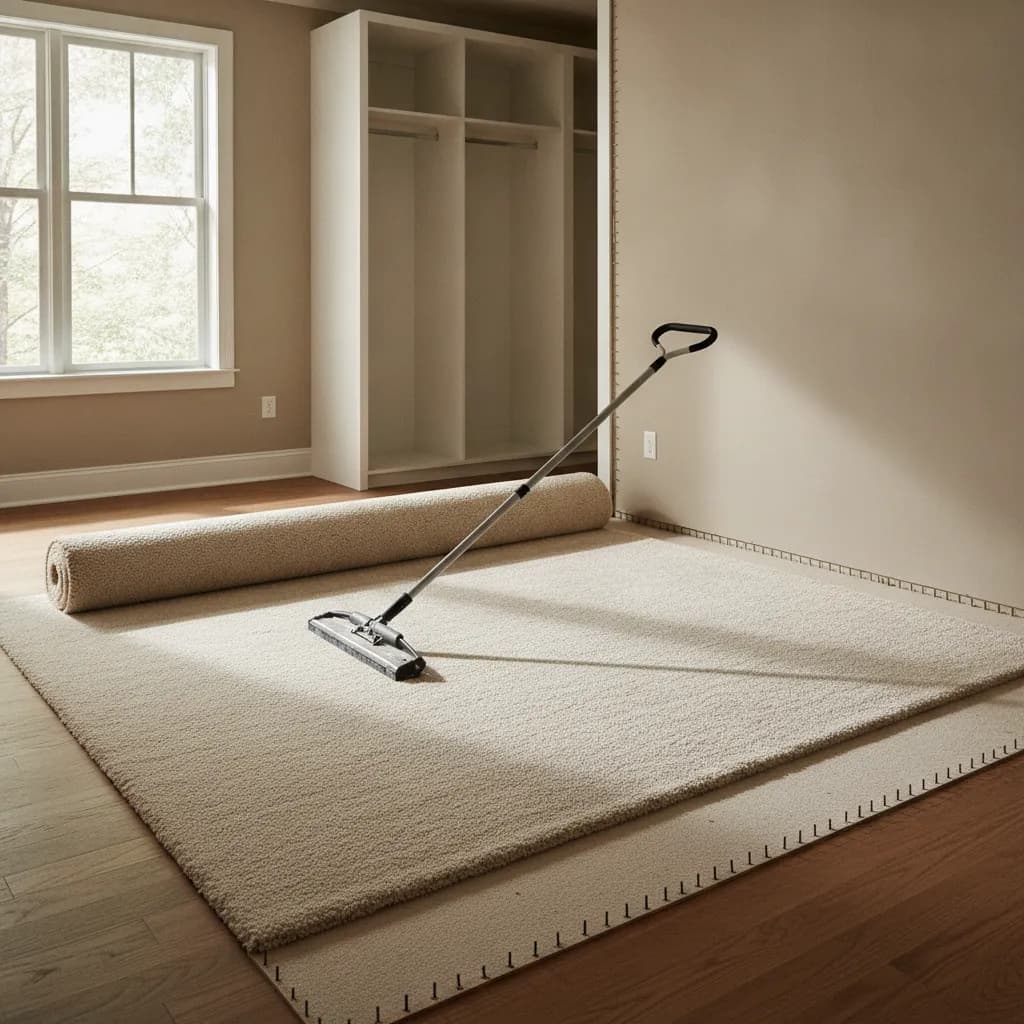
Turnover is where the two materials separate most, and it is the line item owners underweight because it is spread across years. Carpet has essentially two turn outcomes. If it is in good shape, you pay for professional hot-water extraction and hope the traffic lanes and pet odor release. If it is not, you pay for full tear-out, pad, tack strip, new material, and disposal — and disposal of old carpet and pad is neither free nor small.
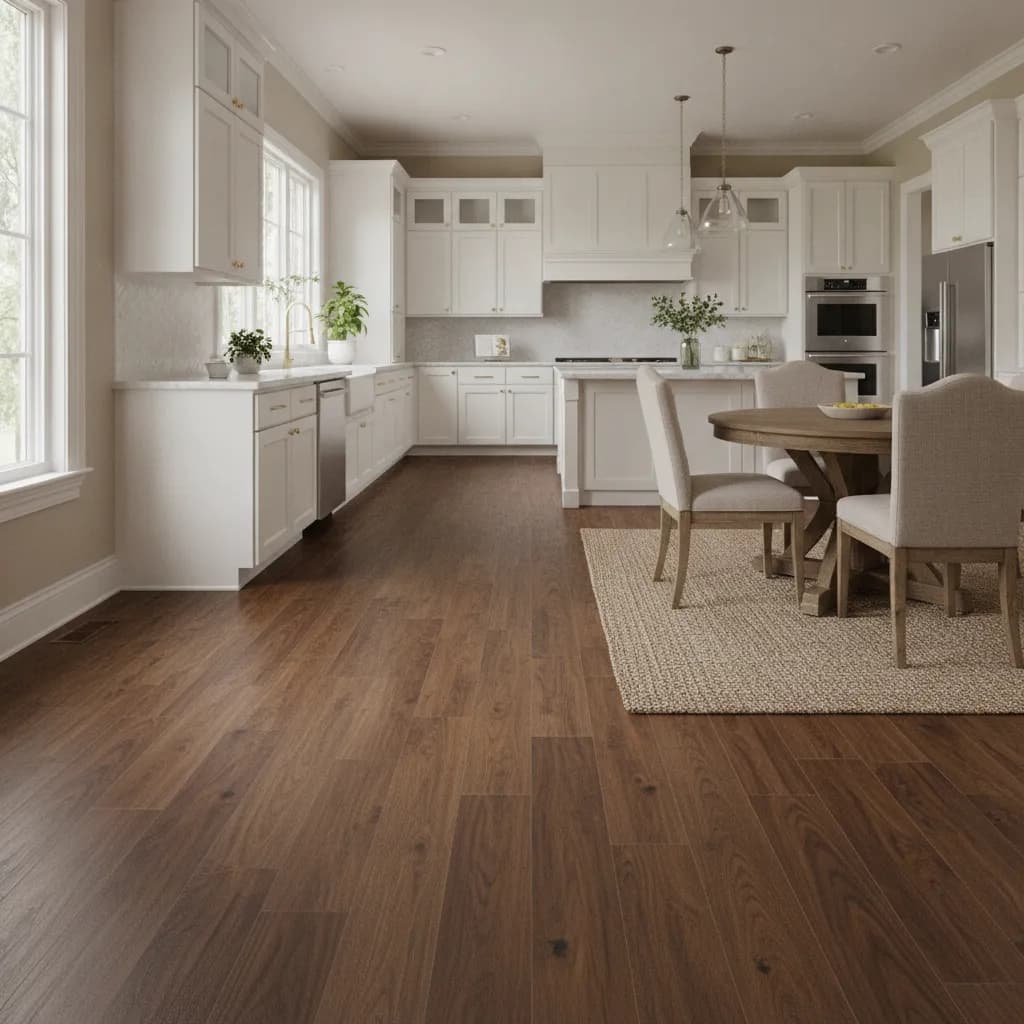
LVP has a fundamentally cheaper turn. A hard surface cleans with a mop and a neutral cleaner in the same visit your crew is already making. There is no pad to compress, no fibers to mat, no filtration lines to bleach out. When a plank does get gouged or a subfloor issue forces a repair, a well-planned floating or glue-down installation lets you swap individual boards rather than re-doing the room. Multiply a smaller, more predictable per-turn number across a portfolio that turns 30 to 50 percent of units a year, and the cash-flow difference compounds. It also shortens make-ready time, and vacant days are a cost that never shows up on a flooring invoice but always shows up in your operating statement.
Waterproofing Changes the Risk Math, Not Just the Feel
Carpet and pad are, functionally, a sponge sitting on your subfloor. A supply-line failure, an overflowed tub, or a slow appliance leak in a carpeted unit frequently means removing not just carpet but saturated pad, drying the substrate, and — if it sat long enough — remediating microbial growth before you can re-lay anything. In a stacked multifamily building, that same event can travel to the unit below.
Rigid-core LVP is not a substitute for plumbing insurance, and no honest installer will tell you a floor makes a unit leak-proof. Water can still reach the subfloor at seams and perimeter gaps, and standing water left long enough is a problem for any assembly. What waterproof-core plank buys you is time and a cheaper failure mode: the wear layer and core do not absorb water the way fiber and foam do, so a caught leak is often a mop-up and a fan rather than a tear-out and a claim. For owners underwriting risk across many doors, shifting the probability distribution of water events toward the cheap outcome is worth real money, even though it never appears as a line item until the day you need it.
Tenant and Pet Wear: Model the Tail, Not the Average
Averages lie in rental flooring because your cost is driven by the worst tenancies, not the median ones. A careful, pet-free household is easy on any floor. Your budget pain comes from the tail — the heavy-traffic unit, the household with two large dogs, the tenant who never took shoes off after crossing a gravel lot or a snow-and-sand entry. Treasure Valley winters put grit, salt, and moisture on every doormat, and that abrasive load is exactly what destroys carpet fiber and matting fastest.
Carpet records that wear permanently. Pet accidents wick into the pad and subfloor, and odor becomes a disclosure and a leasing problem you cannot mop away. LVP absorbs the same abuse and mostly shrugs. Pet claws, dropped pans, and dragged furniture can scratch a wear layer if it is thin, which is why specifying an adequate wear-layer thickness for the unit's expected traffic matters more than chasing the lowest bid. If you want the underlying decision framework for matching product to abuse level, we lay it out in more depth in our guide to durable rental flooring for apartment owners. The short version: spec for your worst 20 percent of tenancies, because that is where your replacement dollars actually go.
Indoor Air Quality and the Case Buyers Forget
There is a cost that never appears on a turn sheet but shapes tenant health complaints and unit desirability: what the floor does to the air. Carpet is a reservoir. It traps dust, allergens, dander, and moisture, and in a unit with pets or smokers it holds odor that survives cleaning. For tenants with asthma or allergies, that reservoir is a genuine problem, and it is one reason many operators have moved away from carpet in common areas and primary living spaces entirely.
Hard surfaces do not hold that load, but they carry their own question — off-gassing from the material and adhesives. This is where specification discipline pays off. Look for LVP carried under a recognized indoor-air-quality certification such as FloorScore, administered by SCS Global in partnership with the Resilient Floor Covering Institute, which tests for volatile organic compound emissions against established criteria. It pairs with CARB Phase 2 formaldehyde limits on any wood-based components. The U.S. Environmental Protection Agency's indoor air quality guidance frames why this matters in occupied spaces: people spend the overwhelming majority of their time indoors, and flooring is one of the largest continuous surfaces in a unit. Certified low-emitting plank lets you get the cleanability of hard surface without trading it for an air-quality complaint.
Don't Ignore Acoustics and Slip Safety in Multifamily
Two performance issues get lost in the cost debate and then resurface as complaints. The first is sound. Carpet is an excellent acoustic absorber; hard surface is not, and in stacked construction the impact noise of footsteps overhead is a real tenant-retention issue. If you go LVP in a multifamily building, the underlayment and the assembly's impact insulation class matter — the industry measures this with standards like ASTM E492 for impact sound and ASTM E90 and E413 for airborne sound transmission, and many buildings carry IIC requirements in their specs. Budget for a quality acoustic underlayment rather than pretending the problem away.
The second is slip resistance, which becomes a safety and liability question in wet entries and on the snow-and-mud tracked in during Idaho winters. Hard flooring should be specified with dynamic coefficient of friction in mind, the property standardized under ANSI A326.3. Matching product to location — more slip-resistant surfaces at entries and wet zones — is part of doing the job right, not an upsell. For the material-level tradeoffs behind these specs, our overview of luxury vinyl plank as a rental surface goes deeper on wear layers, core types, and acoustic options.
Idaho Conditions That Bend the Numbers
The high desert imposes its own physics on this decision. Our winters are dry, and forced-air heat drives interior relative humidity down hard, which makes any material that moves with moisture — real wood especially, but also some floating assemblies — expand and contract across the season. Rigid-core LVP is far more dimensionally stable than solid wood under that swing, which is one reason it has become a workhorse in local rentals, but it still needs correct expansion gaps at the perimeter and proper acclimation before installation. Skip that and you get buckling or gapping that reads as a defect and costs you a callback.
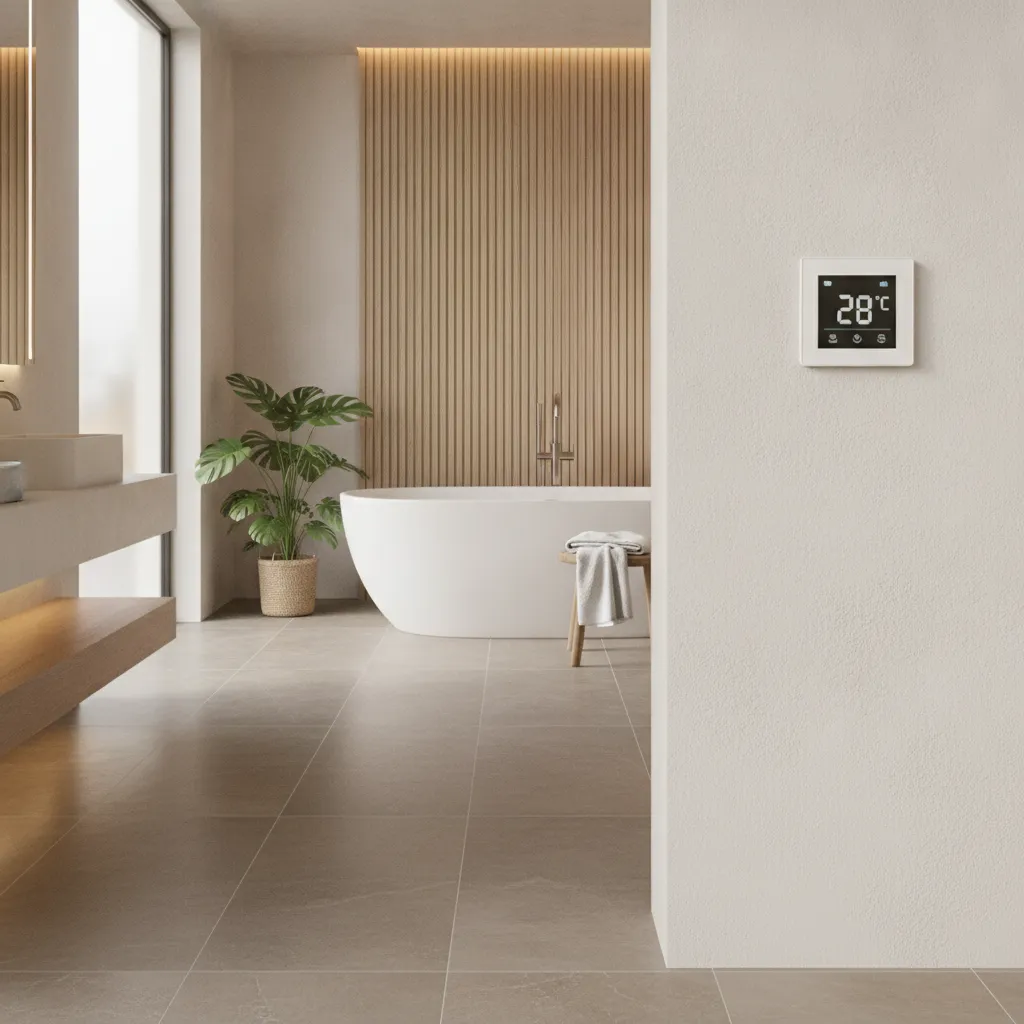
Slab-on-grade construction, common across newer Treasure Valley tract and multifamily product, adds a moisture variable underneath the floor. Concrete can drive vapor up into an assembly, and the responsible move is to test it — the industry uses ASTM F2170 for in-situ relative humidity and ASTM F1869 for moisture vapor emission rate — before committing to an adhesive or a moisture-sensitive product. Radiant-heated slabs raise the same acclimation and temperature-limit questions. None of this changes the TCO ranking, but it changes whether the LVP you paid a premium for actually delivers its long life or fails early because the substrate was never verified.
When Carpet Still Wins the TCO Argument
Honesty cuts both ways, and there are real scenarios where carpet is the correct financial answer. Bedrooms are the clearest: they see low traffic and no water, tenants often prefer softness underfoot there, and the acoustic and warmth benefits are genuine, so a mid-grade carpet in bedrooms can outlive its stereotype while keeping day-one costs down. Upper-floor units where impact noise is a chronic complaint sometimes pencil better with carpet in living areas than with LVP plus premium underlayment. Short-hold assets change the math too — if you are buying, lightly refreshing, and selling within a couple of years, you may never reach the replacement cycle where LVP's durability pays back, and the cheaper sticker price wins on a horizon that short. And in units targeting a tenant segment that specifically values carpet, leasing velocity can outweigh a modest per-turn premium.
The point of the model is not that LVP always wins. It is that you can only see which one wins when you count every cost across the real holding period, on the real unit, under real Treasure Valley conditions.
Running the Model on Your Portfolio
If you manage doors here, the most useful next step is to stop treating flooring as a per-square-foot line and start treating it as a multi-year operating decision tied to your turn rate, your hold period, and your tenant mix. That is exactly the analysis we do with owners and managers — matching product to each space's traffic, water exposure, acoustic needs, and substrate rather than defaulting one material across a whole building.
Alderwood Flooring is an Idaho Registered Contractor (Idaho RCE-6681702), insured, and backs its installations with a workmanship warranty, with 20+ years of combined experience across residential and multifamily work in the Boise metro and greater Treasure Valley. If you want a straight, unit-by-unit read on where LVP earns its premium and where carpet still makes sense, reach out through our apartment owners and property managers page or the contact form and we will help you build the numbers for your own portfolio.
Sources & Further Reading

Ready for Floors You'll Love?
Ready to talk through your project? Free estimates throughout The Treasure Valley & Boise Metro.