Flooring by Room
Living & Dining Room Flooring
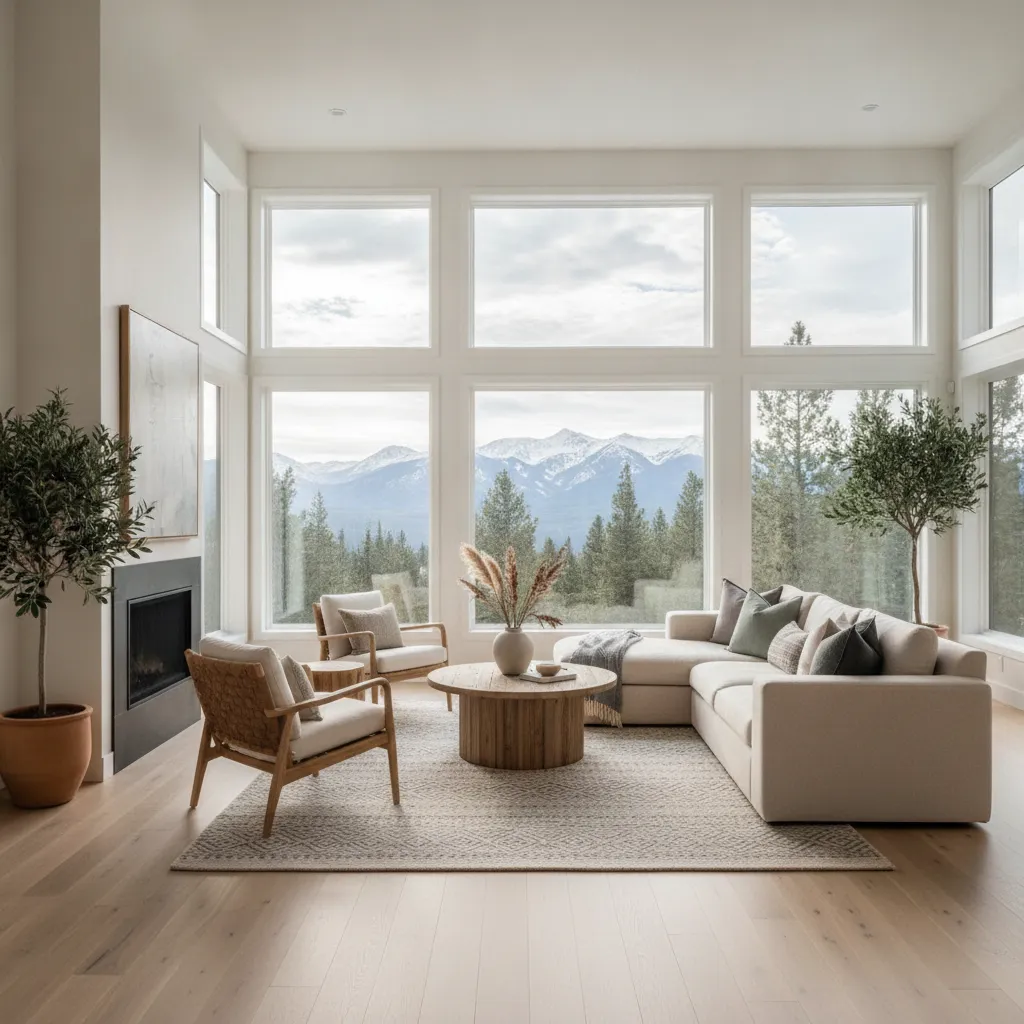
The living and dining room set the tone for the whole house. Here is how to choose a floor that looks the part, feels warm underfoot, and holds up to daily life in the Treasure Valley.
Your living and dining rooms are the spaces guests see first and the ones your family uses most. They carry the visual weight of the home, so the floor here does more than cover a subfloor. It sets the color palette, ties into your furniture and cabinetry, and either warms a room up or leaves it feeling cold. At the same time, these rooms take real wear: foot traffic, dining chairs scraping back and forth, dropped remotes, spilled wine, and in Idaho, plenty of grit tracked in from gravel drives and snowy walks.
The good news is that this room gives you the widest range of options of anywhere in the house. Unlike a bathroom or laundry, you are not fighting standing water or constant humidity. That opens the door to solid hardwood, engineered wood, luxury vinyl plank, and tile, each of which can look beautiful here. The decision comes down to how you weigh appearance, comfort, durability, and budget, and how your specific room is built.
The biggest Idaho-specific factor is our climate. Treasure Valley winters are dry, and forced-air heating pulls even more moisture out of the air. Wood floors respond to that by shrinking slightly in winter and expanding in the humid parts of summer. That movement is normal and manageable, but it shapes which product and which installation approach makes sense for your subfloor, especially if the room sits over a slab or a basement.
Think about the room in layers. Start with how the space is built, whether it is on the main floor over a crawlspace, over a basement, or on a concrete slab. Then consider how you live in it: kids and pets, formal or casual, heavy furniture, direct sun through large windows. Those answers narrow the field quickly, and from there it is mostly about the look you love.
What the living and dining room really demands
These rooms ask a floor to do two jobs at once: look great and stay comfortable while absorbing steady, everyday use. Dining rooms in particular put point loads and repeated scraping on the surface every time a chair moves, so scratch and dent resistance matters more here than people expect. Living rooms add heavy furniture, sun exposure that can fade some finishes, and the occasional spill from a coffee table or couch-side snack.
Comfort is part of the equation too. This is where you sit, stretch out, and often where kids play on the floor. A material that feels warm and slightly forgiving underfoot changes how the room feels to live in, which is why many homeowners lean toward wood or a quality wood-look plank rather than hard, cold tile in the main living area. Acoustics also count. Open-concept layouts can echo, and the right floor plus underlayment softens that.
Because these rooms usually flow into hallways, kitchens, and entries, continuity is worth planning for. Running the same floor through connected spaces makes a home feel larger and more intentional. If you want that seamless look, choose a product that works across all those rooms rather than picking the living room in isolation.
- Scratch and dent resistance for dining chairs and traffic
- Warmth and comfort underfoot for daily living
- Fade resistance under large sunny windows
- Looks that anchor the home's overall style
- Flow and continuity into adjoining rooms
The Idaho climate factors that shape your choice
Treasure Valley homes live through dry winters and hot, low-humidity summers, and indoor forced-air heat makes the winter air drier still. Any real wood floor gains and loses a little moisture with the seasons, which shows up as slight shrinkage in winter and small gaps that close back up in summer. This is expected behavior, not a defect. Proper acclimation before installation, sensible board widths, and keeping indoor humidity in a reasonable range all reduce it. A whole-home humidifier on your furnace helps wood floors and your comfort at the same time.
How your room is built matters as much as the climate. Rooms over a concrete slab or a basement need moisture testing before any wood goes down, because slabs can hold and release moisture long after a home is finished. On slab-on-grade construction, engineered wood or luxury vinyl plank is often the smarter path since both handle subfloor moisture better than solid hardwood. Over a dry, well-ventilated crawlspace on the main floor, solid hardwood is right at home.
Radiant floor heat is another consideration in newer Idaho builds. If your living or dining room has radiant heat, engineered wood and many LVP products are compatible when installed to spec, while solid hardwood generally is not the right pairing. We check the subfloor, the moisture readings, and any heat system before recommending a specific material, because the answer genuinely changes from house to house.
- Acclimate wood on-site before installation
- Moisture-test slabs and basements first
- Keep winter indoor humidity stable, ideally with a humidifier
- Engineered wood or LVP for slab and radiant-heat rooms
- Solid hardwood suits dry main-floor spaces over crawlspace
Design and installation decisions worth getting right
The look of these rooms often comes down to a few choices made before install day. Plank width and direction change the feel of a space: wider planks read more relaxed and modern, and running boards along the longest wall or toward the main light source makes a room feel bigger. Color and sheen matter for maintenance too. Lower-sheen and mid-tone or wire-brushed finishes hide dust, footprints, and small scratches far better than dark, high-gloss floors, which is a real advantage in a home that tracks in Idaho dust and grit.
Prep is where a floor earns its longevity. A flat, dry, sound subfloor is the foundation for everything above it, and skipping that step is the most common reason floors squeak, gap, or wear unevenly later. We flatten high and low spots, confirm moisture is in range, and choose the installation method, nail-down, glue-down, or floating, based on the product and the subfloor rather than habit. Transitions into adjoining rooms, undercut door casings, and clean lines at the hearth are the small details that make a job look finished.
Finally, think about the long game. Solid hardwood can be sanded and refinished multiple times over decades, which is a strong argument for the showcase rooms if the subfloor allows it. Engineered wood offers a similar look with more stability and, depending on the wear layer, one or two refinishes. LVP cannot be refinished but shrugs off scratches and moisture and can simply be replaced down the road. None of these is wrong; the best choice is the one that matches how long you plan to stay and how the room is built.
Material by Material
What Works in a Living & Dining Room
Solid Hardwood
Best choiceFor a main-floor living or dining room over a dry crawlspace, nothing matches the warmth and lasting value of real hardwood. It can be refinished many times over its life, so it recovers from years of chairs and traffic. In our dry winters it needs on-site acclimation and stable indoor humidity, but handled correctly it is a floor you keep for decades.
Engineered Wood
Great optionEngineered wood gives you a genuine hardwood surface with far more dimensional stability, which makes it the practical pick for rooms over a slab, over a basement, or with radiant heat. It handles Idaho's seasonal swings with less movement than solid wood. Choose a thicker wear layer if you want the option to refinish it later.
Luxury Vinyl Plank
Great optionLVP is the low-worry choice for busy households with kids and pets. It resists scratches, dents, spills, and subfloor moisture, and today's wood-look planks are convincing at a lower cost than real wood. It cannot be refinished, but it holds up beautifully to daily living and installs well over most subfloors.
Tile
Good optionPorcelain or stone-look tile is extremely durable, fade-proof, and pairs naturally with a fireplace or a formal dining setting. The tradeoff is comfort: tile is hard and cold underfoot, which matters most in the rooms where you relax, so many homeowners reserve it for accents or entries rather than the whole living area. Adding radiant heat underneath addresses the cold.
Laminate
Good on a budgetModern laminate delivers a convincing wood look with a tough, scratch-resistant surface at a friendly price. It is a reasonable fit for lower-traffic living and dining rooms where budget is the priority. It is less water-tolerant than LVP and cannot be refinished, so weigh it against vinyl plank before deciding.
Explore These Materials
Top Picks for Your Living & Dining Room
Hardwood Flooring
Solid white oak, hickory, and maple — acclimated on site for Idaho's dry climate.
Learn more →Engineered Hardwood
Real-wood wear layers on a stable core — built for dry winters and radiant heat.
Learn more →Luxury Vinyl Plank
Waterproof, wood-look LVP that shrugs off snow boots, pets, and busy households.
Learn more →Still deciding? Compare every option side by side in our flooring comparison guide, or use the cost calculator.
Weighing Two Options?
Compare Floors for Your Living & Dining Room
More Rooms
Flooring for Every Room
Good to Know
Frequently Asked Questions
Can I put solid hardwood in a living room over a basement or slab?
It depends on moisture. Solid hardwood is happiest over a dry, ventilated crawlspace on the main floor. Over a slab or basement, concrete can hold and release moisture that causes cupping or gapping, so we moisture-test first. In most slab and basement situations, engineered wood is the safer choice because it stays more stable while giving you the same real-wood look.
Will my wood floor gap in the winter because of Idaho's dry air?
Small seasonal movement is normal for any real wood floor here. Dry winters and forced-air heat pull moisture out of the wood, so you may notice slight gaps that close back up in summer. Acclimating the wood on-site before installation, choosing sensible plank widths, and keeping indoor humidity stable, ideally with a furnace humidifier, keeps that movement minimal and cosmetic.
What is the most durable option for a dining room with heavy chairs?
Dining chairs scrape and put point loads on the floor, so scratch and dent resistance matter. Luxury vinyl plank and tile handle that abuse best. Engineered and solid hardwood do well too, especially in lower-sheen or wire-brushed finishes that hide minor marks, and hardwood has the advantage of being refinishable. Felt pads on chair legs help any floor last longer.
Should I run the same floor through my living room, dining room, and hallway?
In most cases, yes. Running one continuous floor through connected spaces makes an open layout feel larger and more intentional, and it avoids busy transition lines. If you choose to change materials, a clean transition at a natural doorway is the place to do it. We help plan the layout and direction so the flow looks deliberate.
Is luxury vinyl plank a downgrade from real wood in a showcase room?
Not necessarily. The best wood-look LVP is convincing and better suited to homes with young kids, pets, or slab construction where moisture is a concern. Real wood still wins on long-term value and the ability to refinish, so if your subfloor allows it and you plan to stay a while, hardwood or engineered wood is worth the investment. We are happy to walk you through samples of both.
Ready to Floor Your Living & Dining Room?
Call (208) 779-4248 or request a free estimate — we'll help you pick the right floor for your living & dining room and install it right.