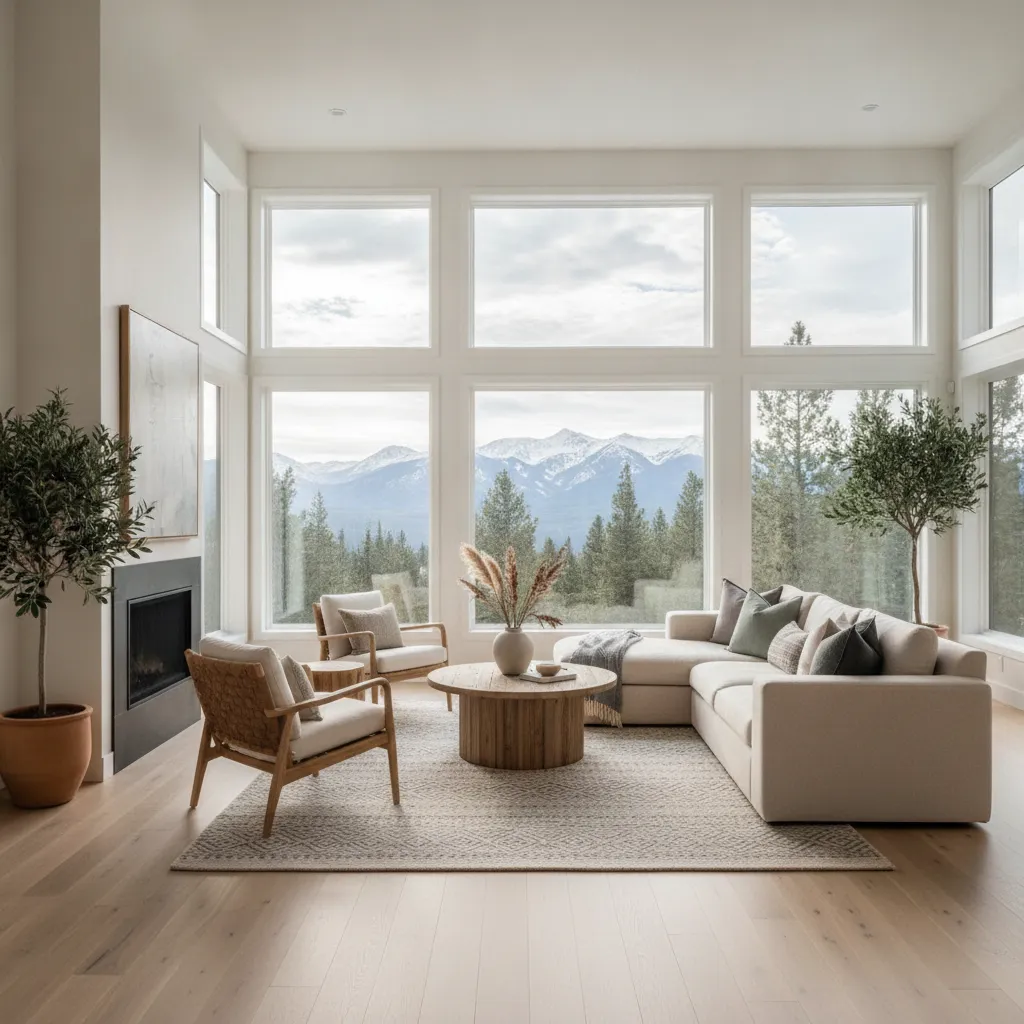
Flooring Comparison
Luxury Vinyl Plank vs. Engineered Hardwood
Two floors that both handle Idaho slabs and radiant heat well — but one wins on waterproofing and price, the other on real-wood look and resale. Here is the honest breakdown.
Luxury vinyl plank and engineered hardwood are the two floors we get asked to compare most often in the Treasure Valley, and for good reason: both perform far better over Boise-area slabs and radiant heat than solid hardwood ever could. That is the part most homeowners already sense but can't quite articulate — solid 3/4-inch oak nailed to a subfloor is a risky choice in a house with a concrete slab, a finished basement, or dry forced-air winters. Both LVP and engineered hardwood solve that problem in different ways.
The core trade-off is straightforward once you strip away the marketing. Luxury vinyl plank is a fully synthetic, waterproof product that shrugs off spills, mud rooms, pet accidents, and basement humidity swings. Engineered hardwood is a real-wood floor — a genuine hardwood veneer over a stable plywood or HDF core — that gives you the look, warmth, and resale value of hardwood while resisting the seasonal movement that wrecks solid planks in a dry climate.
Neither is 'better' in the abstract. LVP typically costs less to buy and install, and it is the more forgiving floor day to day. Engineered hardwood costs more, needs a bit more care, and is not fully waterproof — but it looks and feels like wood because it is wood, and it can often be refinished at least once, which vinyl can never do.
Below we lay out where each floor genuinely wins, tie the decision to Idaho conditions like dry winters and slab-on-grade construction, and give you a clear recommendation for different situations rather than a vague 'it depends.'
Head to Head
Luxury vinyl plank vs. engineered hardwood at a glance
| Factor | Luxury Vinyl Plank | Engineered Hardwood |
|---|---|---|
| Water resistance | Fully waterproof core; handles spills, mud rooms, basements, pet accidents | Water-resistant, not waterproof; wipe spills promptly, avoid standing water |
| Look & feel | Realistic printed wood look; feels like a synthetic surface underfoot | Genuine hardwood veneer — authentic grain, warmth, and depth |
| Durability | Excellent scratch, dent, and moisture resistance; great for kids and pets | Durable, but a real wood surface can scratch and dent |
| Cost (material + install) | Generally the lower-cost option | Higher material and install cost |
| Refinishing | Cannot be refinished — replace planks when worn | Often refinishable once (depends on veneer thickness) |
| Resale value | Solid, practical appeal to buyers | Real hardwood carries stronger resale and buyer preference |
| Slab & radiant compatibility | Excellent — floats or glues over slab; radiant-friendly | Excellent — engineered for stability over slab and radiant |
Ranges vary by product line, grade, and subfloor prep. We confirm the right build for your specific room during a walkthrough.
Why Both Work in Idaho — and Where They Diverge
The Treasure Valley throws two things at a floor that matter here: dry winters with forced-air heat, and a lot of homes built on concrete slabs or with finished basements. Dry indoor air in January pulls moisture out of wood, causing solid planks to shrink and gap; humid summer stretches swell them back. Solid hardwood fights that battle constantly. Both LVP and engineered hardwood are built to sidestep it — LVP because it isn't wood at all, and engineered hardwood because its cross-layered plywood core resists expansion and contraction far better than a solid plank.
Slabs and basements are where the two products separate. LVP's waterproof core means it doesn't care about the occasional slab moisture or a basement humidity swing — it is genuinely the safer choice below grade and in any room where water is a real risk. Engineered hardwood handles slabs and radiant heat well when installed correctly with the right moisture barrier and acclimation, but it is still real wood: a burst supply line or a slow dishwasher leak can damage it in a way it can't damage vinyl.
Radiant heat is common in Idaho custom and remodel work, and here the two are close to even. Both are radiant-compatible when the product is rated for it and the floor comes up to temperature gradually. We size the acclimation and startup ramp to the specific product so you don't get gapping or delamination the first cold snap after install.
Installation, Longevity, and Real-World Living
In day-to-day life, LVP is the more forgiving floor. It handles snow-melt and mud at entries, dog nails, dropped pans, and kids without much thought, and cleanup is a damp mop. That makes it a natural fit for mud rooms, kitchens, basements, laundry rooms, and busy family spaces. The honest limitation: when LVP eventually wears or a plank is gouged, you replace planks — you can't sand it back to new. Over a long horizon, it is a replace-not-refinish floor.
Engineered hardwood asks for a little more attention — prompt spill cleanup, felt pads under furniture, and mindfulness in the wettest rooms — but it rewards you with something vinyl can't fake: the look and feel of actual wood, and often the ability to refinish the surface once down the road to erase years of wear or change the stain. For living rooms, bedrooms, dining rooms, and main-level living areas where you want warmth and resale strength, it is frequently the better long-term choice.
Installation quality is what makes either floor last. Both need a flat, clean, moisture-tested subfloor; over slab, both need the correct moisture mitigation; and both need proper acclimation to your home's actual humidity before a single plank goes down. As an Idaho Registered Contractor (Idaho RCE-6681702), insured, with 20+ years combined experience and a workmanship warranty behind our installs, we handle the slab testing, moisture barriers, and radiant ramp-up that determine whether a floor stays flat for decades. Reach out for a walkthrough and we'll tell you honestly which product fits your rooms and budget.
Choose Luxury Vinyl Plank If…
- You have a slab, finished basement, or below-grade rooms where full waterproofing matters
- You want the more budget-friendly option without giving up a convincing wood look
- Kids, pets, mud-room traffic, or spills are a daily reality
- You'd rather a low-maintenance, replace-a-plank floor than one you baby
- You're flooring a kitchen, laundry, or bathroom where standing water is a risk
Choose Engineered Hardwood If…
- You want genuine real-wood look, warmth, and grain — not a printed surface
- Resale value and buyer appeal are a priority for the space
- You're flooring living, dining, and bedroom areas over slab or radiant
- You value the option to refinish the surface once down the road
- You're comfortable with a bit more care in exchange for authenticity
Want the full picture? See every option in our flooring comparison guide, the best pick per space in our room-by-room guides, or what it all costs in the cost guide.
More Comparisons
Other Head-to-Head Matchups
Good to Know
Frequently Asked Questions
Can both go over a concrete slab and radiant heat?
Yes. Both luxury vinyl plank and engineered hardwood are well suited to Treasure Valley slabs and radiant systems when installed with proper moisture testing, the right barrier, and gradual acclimation. Solid hardwood is the one we'd steer you away from in those conditions. We verify the product's radiant rating and set the startup ramp so the floor doesn't gap or delaminate.
Is engineered hardwood actually waterproof like LVP?
No — this is the key difference. Engineered hardwood is water-resistant: it handles humidity swings and quick-wiped spills, but it is real wood and standing water or a leak can damage it. LVP has a fully waterproof core, which is why it's the safer pick for basements, mud rooms, kitchens, and any room where water is a real risk.
Which one adds more resale value in the Boise metro?
Real hardwood — including engineered — generally carries stronger resale appeal because buyers recognize and prefer authentic wood. LVP still has solid, practical appeal, especially in basements and high-traffic areas. Many homeowners split the difference: engineered hardwood in main living spaces, LVP where water resistance matters most.
Can either floor be refinished?
Only engineered hardwood, and only if its veneer is thick enough — many can be refinished once to erase wear or change the stain. LVP cannot be sanded or refinished; when a plank is damaged or worn, you replace planks instead. That's worth weighing over a long ownership horizon.
Which is better for dry Idaho winters and forced-air heat?
Both handle our dry winters far better than solid hardwood. LVP doesn't move with humidity at all since it isn't wood. Engineered hardwood's cross-layered core keeps it far more stable than solid planks, though proper acclimation to your home's winter humidity still matters. We acclimate every wood product on site before installing.
Still Not Sure? Let's Talk It Through
Call (208) 779-4248 or request a free estimate — we'll give you a straight recommendation for your rooms and budget.