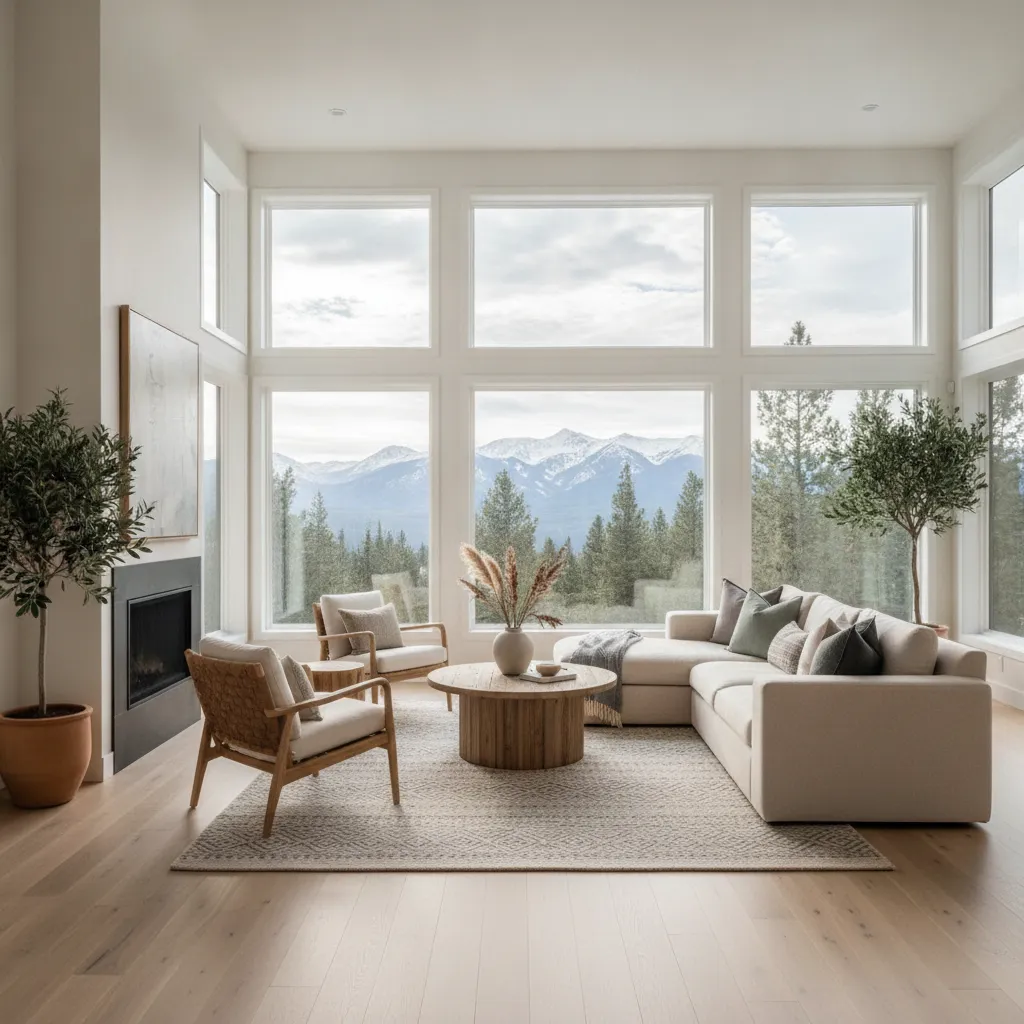
Builder Program
Builder-Grade Material Selection
We spec and install base-grade flooring built for tract production — packages that order at volume, run consistent lot to lot, and still look right when the buyer walks the finished home.
On a production community, base-grade flooring is not one decision. It is the same decision repeated into 40 or 80 homes over a build cycle that can run a year or more. A spec that looks fine in a hand sample can turn into a supply problem, a color-drift complaint, or a walkthrough callback once it is on the ground at scale. The right base material is boring in the best way: predictable to order, predictable to install, and predictable to look at from the first home to the last.
The trap is picking the standard floor the way you would pick a floor for your own house, by the prettiest board in the display rack. Base grade lives or dies on the questions nobody asks at the sample stage. Can the distributor hold this SKU for the length of the phase? How much lot-to-lot shade variation is baked into the product line? What happens to the homes still framing the week the manufacturer runs that SKU for the last time? We qualify the base package around those answers first and aesthetics second.
Our approach is to treat the community as the unit, not the individual house. Before a base floor gets locked, we confirm it is a running-line product with real volume behind it, we check the manufacturer's run and lot practices, and we identify a compatible fallback in the same color family so a discontinuation mid-phase does not strand the last twenty lots. We would rather stand up one durable, deep-inventory SKU than let a plan carry a boutique product that vanishes in month eight and leaves you matching against a floor that no longer exists.
Most new Treasure Valley tract stock sits on slab-on-grade, which pushes moisture behavior and adhesive compatibility to the top of the checklist. Add high-desert winters, where forced-air heat can pull indoor humidity down into the teens, and the base product has to tolerate real seasonal movement without telegraphing gaps or edge peel. We build slab moisture testing, radiant compatibility where it exists, and dimensional stability into the spec, not just a wear rating on a cut sheet. Send us the community plan set and we will qualify a base package against all of it.
Ordering at Volume Without Mid-Community Surprises
Orderability is the first filter, not the last. A base floor has to be a running-line product with distributor inventory deep enough to feed a phase without backorders, and it needs a pricing tier that holds across the volume you are committing to. If a SKU can only be sourced in small batches or long lead times, it does not belong in a production base package no matter how good it looks in the corner sample.
Lot consistency is where volume orders quietly go wrong. Resilient and engineered products carry shade and pattern variation from run to run, so we track dye lots and run numbers and sequence deliveries so that adjacent homes and continuous open runs draw from compatible material. Two houses side by side pulling from mismatched lots is the kind of thing an owner notices at the property line, and it is entirely avoidable with disciplined ordering.
The last piece is planning for the day the manufacturer sunsets the SKU. We document a qualified fallback in the same color family and construction class up front, so a discontinuation partway through the community becomes a clean substitution instead of a scramble. That single step protects the homes still under construction and keeps the whole phase reading as one cohesive product line.
- running-line SKUs with real distributor depth
- volume pricing held across the phase
- dye-lot and run tracking on every order
- delivery sequencing for continuous runs
- documented same-family fallback SKU
- no boutique products with thin supply
Durability Rated for the Build, Not Just the Brochure
A base floor takes its worst beating before the buyer ever sees it. Trades roll carts across it, drop tools on it, track in gravel and mud, and stage material on it for weeks. The spec has to survive that abuse and still present clean at close, which means wear layer and core construction matter more than the photo on the box. For a rigid-core resilient plank we treat a 12 mil wear layer as a sane base minimum and lean toward 20 mil in entries and traffic paths; 6 mil is where scratch and scuff callbacks start.
High-desert conditions add a second durability demand that brochures rarely address. Very low winter indoor humidity means the product has to hold dimension through a dry season without shrinking into visible gaps, and slab-on-grade construction means the assembly has to manage moisture from below. We favor rigid-core and waterproof constructions over slab for that reason, and where radiant heat is present we specify engineered or radiant-rated goods and install to the manufacturer's thermal and acclimation requirements. Installation is handled as an Idaho Registered Contractor (Idaho RCE-6681702), insured.
Not every room needs the same floor, and a smart base package spends its durability budget where the wear actually lands. Entries, mudrooms, and stairs see the heaviest grit and snowmelt, so those zones get the tougher wear layer and finish even within a base tier, while bedrooms can trade some hardness for cost and comfort.
- 12 mil wear layer as a base minimum
- 20 mil in entries and traffic paths
- rigid-core and waterproof over slab
- engineered or radiant-rated over radiant
- dimensional stability for dry winters
- tougher spec in mudrooms and stairs
A Base Package That Reads Well at Walkthrough and Resale
The base color is a resale decision disguised as a design pick. Broad-appeal neutrals in mid-tone browns and warm grays photograph well, hide the fine desert dust that finds every floor, and do not fight whatever cabinets and paint the plans carry. We steer base selections toward finishes that flatter a wide buyer pool rather than a single taste, because the floor has to look intentional in the model of the home and defensible when it resells years later.
Standardizing the spec across plans is what keeps a community looking cohesive and keeps your orders clean. We build a single base spec sheet so every plan pulls from the same qualified products, transitions, and thresholds, which cuts ordering errors and makes each home read as part of one deliberate program. The table below shows how a typical base package is distributed by room, with the durability priority and resale logic behind each zone.
Continuity is the resale payoff. A base floor that flows through the main living field, holds up at the entry, and matches cleanly at the stairs presents as one considered home rather than a patchwork of standard finishes. That coherence is cheap to design in at the spec stage and expensive to fix once it is installed across a phase.
- broad-appeal neutral tones
- finishes that hide desert dust
- one standardized base spec sheet
- consistent transitions and thresholds
- continuous flow through living zones
- cohesive look for resale
At a Glance
Typical base package by room for production single-family homes
| Room / Zone | Base-Grade Spec | Durability Priority | Resale Note |
|---|---|---|---|
| Entry / Mudroom | Rigid-core LVP, 20 mil wear layer | Grit, scratch, snowmelt, tracked gravel | First impression at the door |
| Kitchen / Dining | Waterproof rigid-core plank, 12-20 mil | Spills, chair scuff, appliance rollout | Continuous flow into living field |
| Great Room / Living | LVP or engineered plank | Dent resistance, UV fade at big windows | Largest visible surface |
| Bedrooms | Base carpet or matching plank | Comfort and cost control | Soft-underfoot expectation |
| Baths | Waterproof rigid-core LVP | Standing water and humidity | No open seams in wet zones |
| Stairs | Matched plank treads or bound carpet | Heaviest concentrated wear path | Ties main level together |
Specs shown are typical base-package starting points; final selection depends on slab condition, plan, and available lots.
The Builder Program
More of the Program
Tract & Subdivision Flooring
Model Homes & Design Centers
Spec vs. Custom Upgrades
Scheduling & Site Coordination
Punch & Warranty Service
Flooring Allowances & Upgrade Management
Back to the builder program overview, or see our trade program for remodelers, designers, and property managers.
Good to Know
Frequently Asked Questions
How do you keep the base floor color consistent across a whole community?
Resilient and engineered products vary from run to run, so we order against tracked dye lots and run numbers rather than just a SKU. Deliveries are sequenced so that adjacent homes and continuous open runs pull from compatible material, which prevents the shade mismatch owners notice at the property line. For long phases we also confirm the manufacturer's run cadence up front so later homes stay in family with the earlier ones.
What happens if our base SKU gets discontinued before the phase finishes?
We plan for it before it happens by documenting a qualified fallback in the same color family and construction class when the base package is first locked. If the manufacturer sunsets the primary SKU mid-community, the substitution is already vetted, so the homes still under construction stay visually consistent with the completed ones. That turns a discontinuation into a clean swap instead of a scramble to match a floor that no longer exists.
Over slab in the Treasure Valley, is base LVP or engineered wood the better call?
For most slab-on-grade tract homes we lean toward rigid-core or waterproof LVP as the base, because it handles moisture from the slab and the very dry winter indoor air with far less risk of gaps or edge peel. Engineered wood is a strong option where the plan wants a real-wood surface, especially over radiant, provided we run slab moisture testing and follow the acclimation and adhesive requirements. The decision comes down to slab condition, whether radiant is present, and the price point the base package is targeting.
How does a base floor hold up to the trades before the home closes?
A base floor takes its hardest use before the buyer arrives, from carts, dropped tools, and staged material over weeks of finish work. We spec wear layer and core construction with that in mind, treating 12 mil as a base minimum and 20 mil in entries and traffic paths, and we favor tougher constructions in the zones that see the most grit. That is why the durability budget goes to mudrooms, kitchens, and stairs rather than being spread evenly across every room.
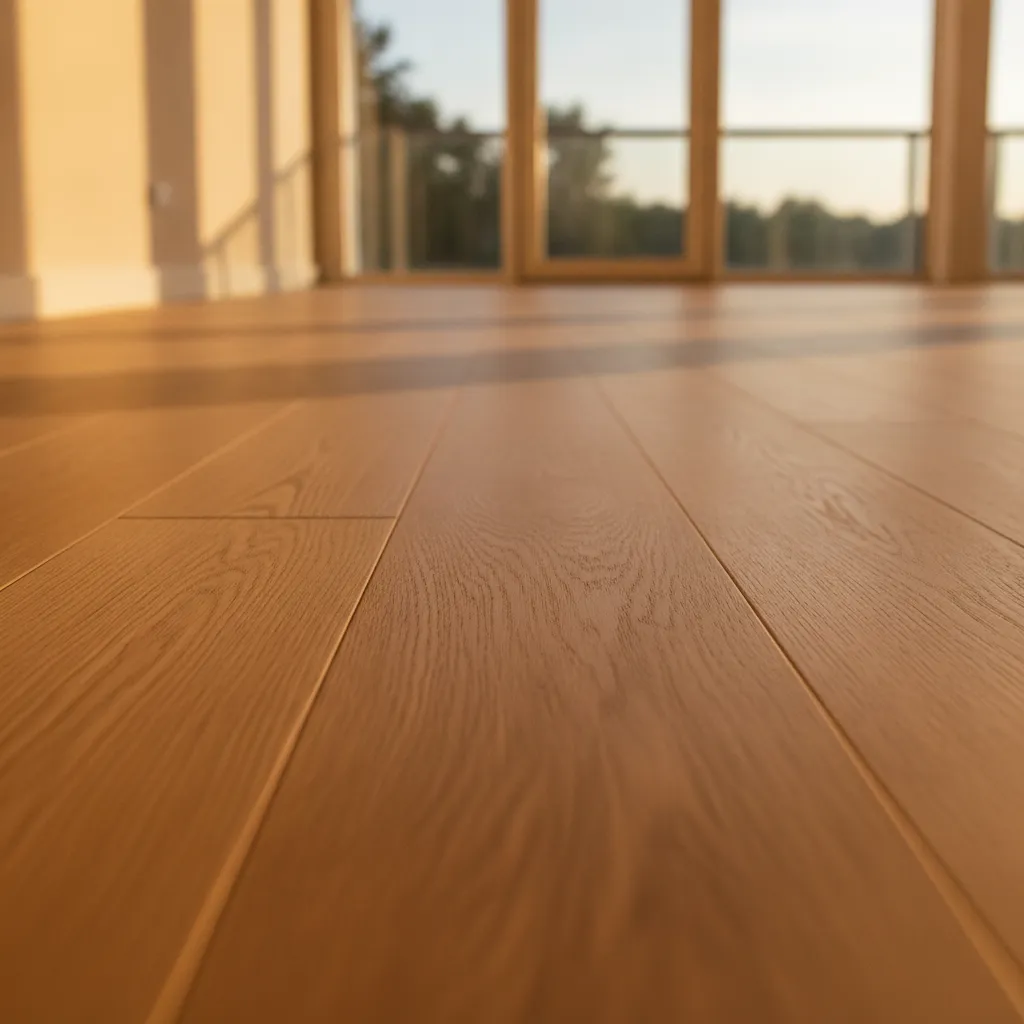
Talk to Us About Builder-Grade Material Selection
Call (208) 779-4248 or send a plan set through the contact form — we'll give you a straight read on package and schedule fit.