Payette Lakes Region
Flooring in McCall's Outlying Cabins
Up Warren Wagon Road and out the forest roads beyond town, cabins sit dark for weeks and freeze hard between visits — then get warmed from cold to comfortable in a single afternoon. Floors out here need constructions that forgive that cycle, acclimation finished before install day, and deliveries planned around what winter does to the road in.
Mountain & Luxury Flooring
Custom Flooring Across McCall's Outlying Cabins
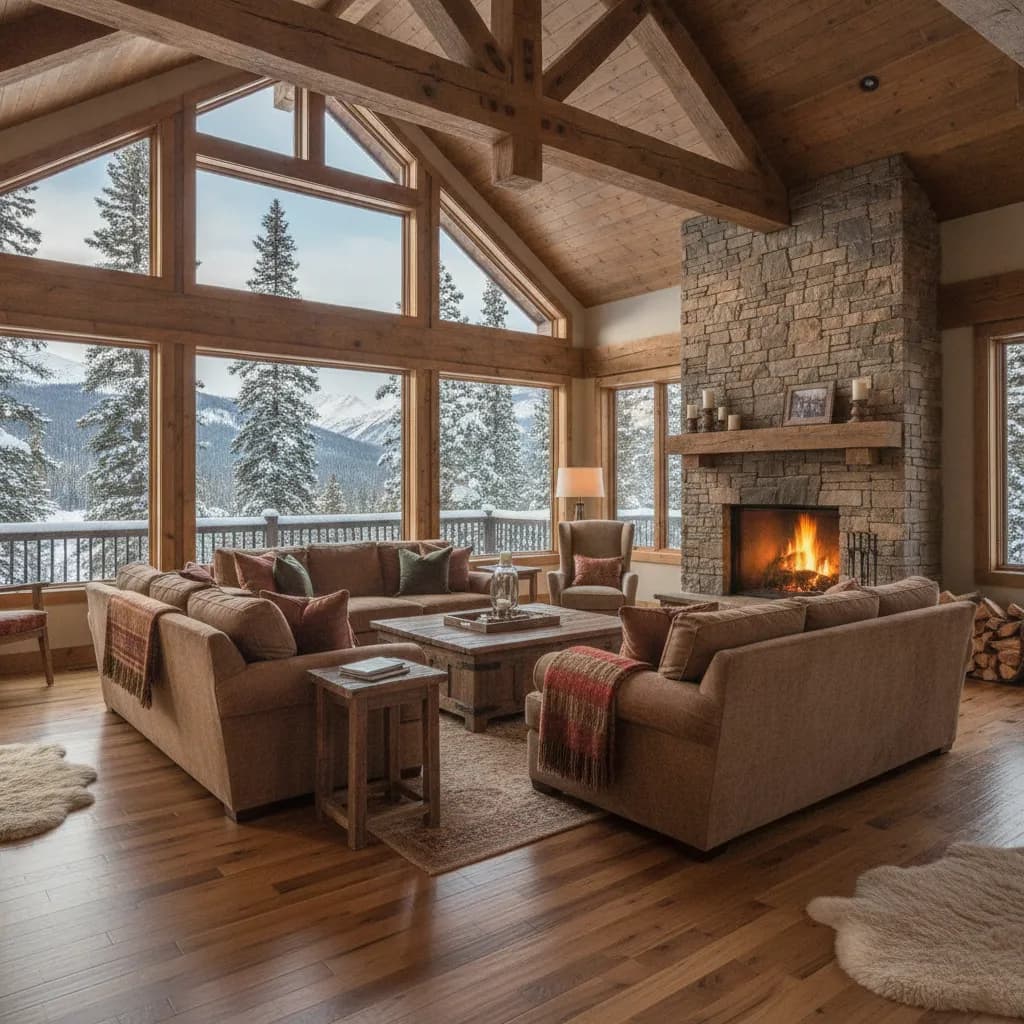
North and east of McCall the pavement thins out fast. Warren Wagon Road climbs past the top of Payette Lake toward Upper Payette Lake and the Secesh country; other forest roads scatter cabins through the timber of the surrounding Payette National Forest. Out here the buildings range from hand-built family camps to serious off-grid retreats, and they share one defining trait: for much of the year, nobody is home and nothing is heated.
A cabin that freezes solid between visits is the most demanding environment we floor. Interior temperatures can ride below zero for weeks, then jump fifty or sixty degrees in an afternoon when the owners fire the stove — and the relative humidity whipsaws with every swing. Materials carry ratings for exactly this reason: floating vinyl floors have published temperature ranges, adhesives have service minimums, and wood seeks a moisture equilibrium that a deep-freeze building never lets it keep. Product selection out here starts by disqualifying most of the catalog, and we consider that step the service you're paying for.
The second defining constraint is access. Many of these roads close or become snow-machine routes in winter, and even in summer, a cabin at the end of ten miles of gravel changes how materials get staged, stored, and conditioned. We treat logistics as part of the flooring design: install windows chosen for weather, deliveries consolidated, and material brought to the building's real conditions before a single fastener is set.
Elevation ~5,000–6,000 ft · Valley County
What We Install
Popular Flooring Choices in McCall's Outlying Cabins
The materials and details mountain and luxury homeowners in this area tend to choose — and how we install them to last at altitude.
Thick-Wear-Layer Engineered Planks
Our backbone spec for freeze-cycled cabins: engineered boards whose sacrificial oak surface is thick enough to sand in the future, on multi-ply cores proven against the widest swings. Buy the stability once and refinish the beauty for decades.
Glue-Down Where Floating Can't Cope
Full-spread adhesive installation costs more labor but anchors each board through temperature extremes that make floating floors drift and gap at the seams. In a building with no winter heat, we'll often argue for it.
The Case Against Wide Solid Boards
We'd rather lose the sale than install fourteen-inch solid planks in an unheated cabin. When a client wants that look, we get there with engineered formats or reclaimed-style visuals that survive the freeze cycle.
Mineral Surfaces at the Working Doors
Where firewood, snowshoes, and wet gear come through, porcelain or stone handles subzero mornings and stove-side heat with total indifference. It's the one material out here with nothing to prove.
Mountain Considerations
What McCall's Outlying Cabins Homes Need From a Floor
Altitude, freeze/thaw cycles, seasonal humidity, and snow-melt entries all shape the right flooring — here's what we account for.
Freeze-Ups Between Visits
Weeks below freezing push every material to its rated limits. We check the fine print — temperature ranges, adhesive service windows, warranty exclusions for unconditioned spaces — before a product ever gets proposed.
The Fifty-Degree Afternoon
Firing a cold cabin to comfortable in hours is a thermal shock event for floors. Assemblies that tolerate rapid change, fastening methods that restrain movement, and generous perimeter gaps are how a floor rides it out.
Acclimation to the Truth
Flooring must be conditioned to what the cabin will genuinely hold through the year — not to a construction heater's seventy degrees in July. That means deciding the building's heating plan first and letting material equalize on site, sometimes for longer than anyone likes.
Roads That Set the Calendar
Seasonal closures, load limits, and long gravel approaches make delivery a planning problem. We consolidate loads, stage materials during open-road months, and set install dates the mountains will actually permit.
Local Resources & References
Helpful McCall's Outlying Cabins Resources
Authoritative local and industry references for permits, community info, and flooring standards.
- Payette National ForestU.S. Forest Service
- Wood Handbook — equilibrium moisture contentUSDA Forest Products Laboratory
- NWFA Installation GuidelinesNational Wood Flooring Association
- Idaho contractor registrationIdaho Division of Occupational and Professional Licenses
External links are provided for reference. Always confirm current requirements with the issuing agency or association.
What We Install
Flooring Services in McCall's Outlying Cabins
Explore our mountain-home flooring approach and our wood species & wide-plank options.
Good to Know
Frequently Asked Questions
Do you install flooring in McCall's Outlying Cabins?
Yes. Alderwood Flooring installs custom hardwood, engineered wood, and luxury flooring throughout McCall's Outlying Cabins and the surrounding Valley County area. Call (208) 779-4248.
What flooring holds up best at McCall's Outlying Cabins's elevation?
At mountain elevations with big seasonal swings, engineered hardwood and quality wide-plank white oak are dependable choices, and we prep and acclimate every floor for the local climate. We'll recommend the right product for your home during a free walkthrough.
Are you licensed and insured?
Yes — we're registered with the Idaho Division of Building Safety (Idaho RCE-6681702) and carry insurance.
Can flooring be installed in a backcountry cabin in winter?
Almost never well. The building needs sustained, stable heat for acclimation and for adhesives and finishes to cure — conditions a snowed-in cabin can't provide. The honest schedule is a warm-season install, planned around when your road opens.
What actually happens to a wood floor when the cabin freezes?
Cold itself does little; it's the dryness and the swings that do the work. Boards shed moisture and shrink through the freeze, then reabsorb and expand when the building warms and people add humidity. Products built for that cycle shrug it off; the wrong ones gap, peak, or delaminate.
Should we keep some heat on all winter?
If the building and its systems allow it, even a very low holding temperature dramatically widens your flooring options and protects everything else in the structure. If true freeze-down is the reality — as it is for many forest cabins — tell us, and we'll spec for that truthfully.
When should we schedule a cabin flooring project?
Start the conversation in winter or early spring, install in summer or early fall. That sequence leaves time for product selection, consolidated delivery over open roads, and on-site acclimation — the three things remote projects can't rush.
Does an off-grid cabin change the flooring plan?
It changes the finish and adhesive plan most: curing products need workable temperatures, which may mean generator-supported heat during the install window or choosing prefinished materials that cure nothing on site. It's solvable — it just has to be designed in, not discovered.
Custom Flooring for McCall's Outlying Cabins
Call (208) 779-4248 for a free estimate on hardwood, engineered, and luxury flooring in McCall's Outlying Cabins.